Retreat-ready pickleball drill plan boosts skills and match play
A compact, retreat-ready drill plan pairs coached clinics with high-repetition practice to sharpen dinks, third-shot drops, serves, and footwork. Hosts and players can use it to build skill transfer and faster improvement.
.jpeg&w=1920&q=75)
Retreat organizers and coaches now have a practical, ready-to-run drill plan that focuses on coached instruction followed immediately by repetition and match play. The structure alternates 60–90 minute themed clinics with open-play or repetition sessions so players receive targeted coaching, immediate practice, and match-context feedback. Tailor intensity by level: beginners 1.0–2.5, intermediate 3.0–3.5, and advanced 3.5+.
Start each clinic with a clear technical objective and a short warmup. Core drills center on net control, transition game, kitchen exchanges, serving strategy, and footwork. The volley-to-volley drill places partners at the kitchen line for short, controlled volleys designed to increase reaction speed, keep the ball low, and practice blocking versus attacking. Cue players to hold the paddle out front, use a minimal backswing, and absorb pace through wrist and shoulder alignment. Run 3–5 sets of 60 seconds with 30–60 seconds rest to build fast-twitch stability.
Third-shot drop work is the retreat’s transition mastery block. One player at the baseline receives a live feed and aims for a soft, shallow kitchen landing on the third shot to allow approach. Emphasize a soft wrist and high-to-low contact, stepping up feed speed as players improve. Use phone video or coach feedback to accelerate motor learning and correct contact points.
Cross-court dinking at the kitchen line teaches patience, placement, and paddle reading. Start with stationary exchanges, then add movement and directional targets. Encourage a neutral grip, short compact strokes, and watching opponents’ paddle angle. Introduce point-play scenarios, first to five forced errors, to bring pressure into short-court exchanges.
Serve-and-return work targets variety and strategy. Servers mix deep, body, and short serves while returners aim for zones that set up offense, especially deep returns to slow a server’s transition. Drill sequencing from short to deep returns conditions the pair to punish weak serves and set the net approach.

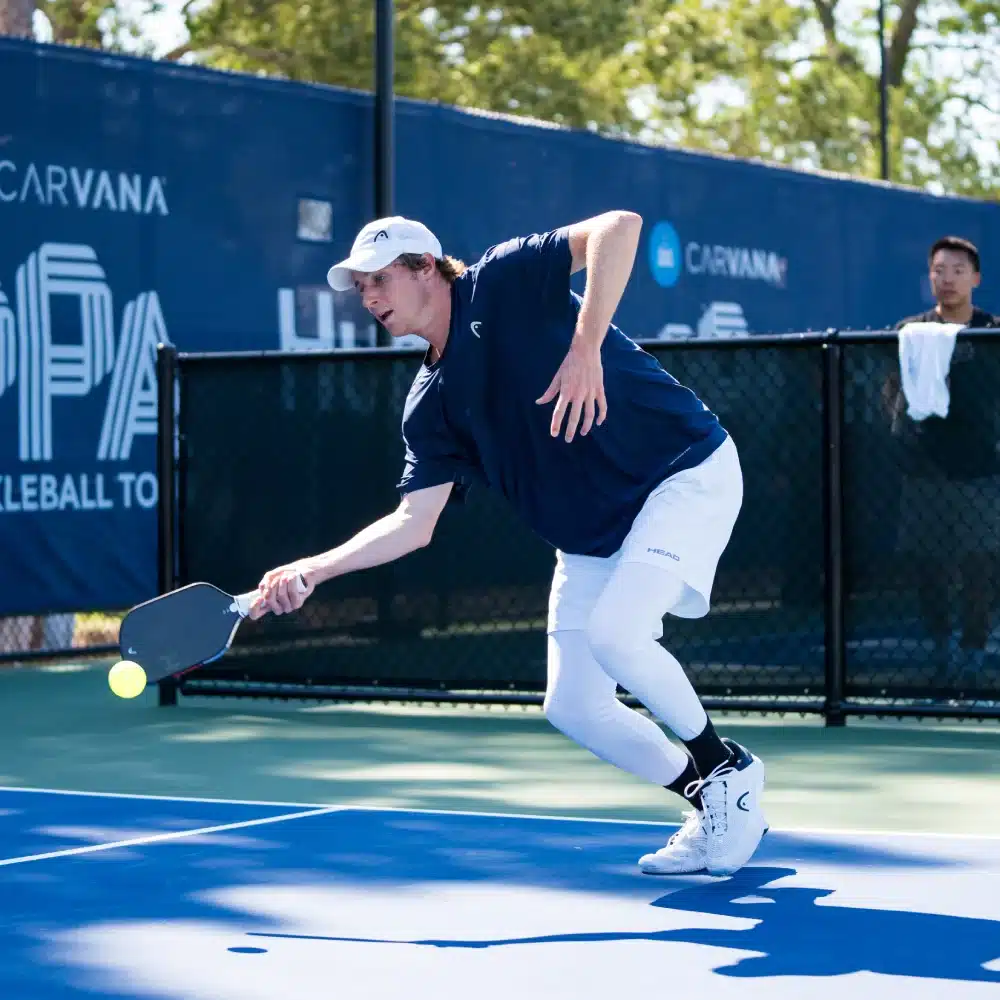
Footwork and agility blocks of 5–10 minutes between clinics keep the legs sharp. Ladder work, shadow movement, and recovery-to-kitchen drills teach short choppy steps, staying low, and splitting before contact. For advanced groups add Erne timing, attack-recovery sequences, and simulated tournament point-play with multi-ball feeding to keep repetition high.
Logistics matter: multiple courts or staggered sessions, extra balls for continuous feeds, cones and targets for serve-return accuracy, agility ladders, and a camera or phone for video review. Rotate fresh balls for drill feeds and game-appropriate balls for match play to preserve consistency.
For players and hosts, this plan turns retreat time into measurable gains: tighter dinks, more reliable third-shot drops, cleaner serve patterns, and quicker court recovery. Run the templates over a week, record key reps, and prioritize repetition with feedback to see skills stick on the scoreboard.
Know something we missed? Have a correction or additional information?
Submit a Tip