Reuters report casts doubt on Tesla's self-driving claims and safety
Former Tesla employees said they saw self-driving videos of crashes and near misses, while seven of 10 said they would not trust the software.

Tesla’s self-driving promise is running into a credibility problem that goes beyond marketing. Former employees who helped train the system said they reviewed videos of Teslas striking animals, missing pedestrians and failing to respond properly to emergency vehicles, school buses and construction zones, and seven of 10 former workers interviewed said they would not trust the software to drive them anywhere.
The doubts matter because Tesla has tied its market story to the idea that Full Self-Driving will one day make every vehicle capable of operating without a human behind the wheel. Tesla’s public safety page says FSD, with active supervision, can drive “almost anywhere” and says its fleet has logged 10,658,406,549 miles overall, including 4,010,327,598 city miles. But the internal accounts described a system that still appears to depend heavily on human oversight and highly managed training.
One former employee described a “Mad Max” mode that could run 20 to 30 miles per hour over the speed limit. Others said the videos they reviewed showed Teslas hitting dogs, cats and deer, as well as near misses involving pedestrians, including children. They also saw cases where vehicles failed to pull over for approaching emergency vehicles, did not stop for school buses, or entered construction zones and nearly struck workers. Reuters also said Tesla trained the software on specific streets and intersections in Austin for its robotaxi demonstration, evidence that the system can be tuned for controlled conditions but not necessarily scaled broadly.
That gap is now under sharper regulatory scrutiny. In October 2025, the National Highway Traffic Safety Administration said it had 58 incident reports involving Tesla vehicles violating traffic safety laws while operating in Full Self-Driving mode, covering about 2.9 million vehicles equipped with the software. The agency’s investigation resume later said it identified six reports in which a Tesla using FSD approached a red light, entered the intersection and was later involved in a crash.
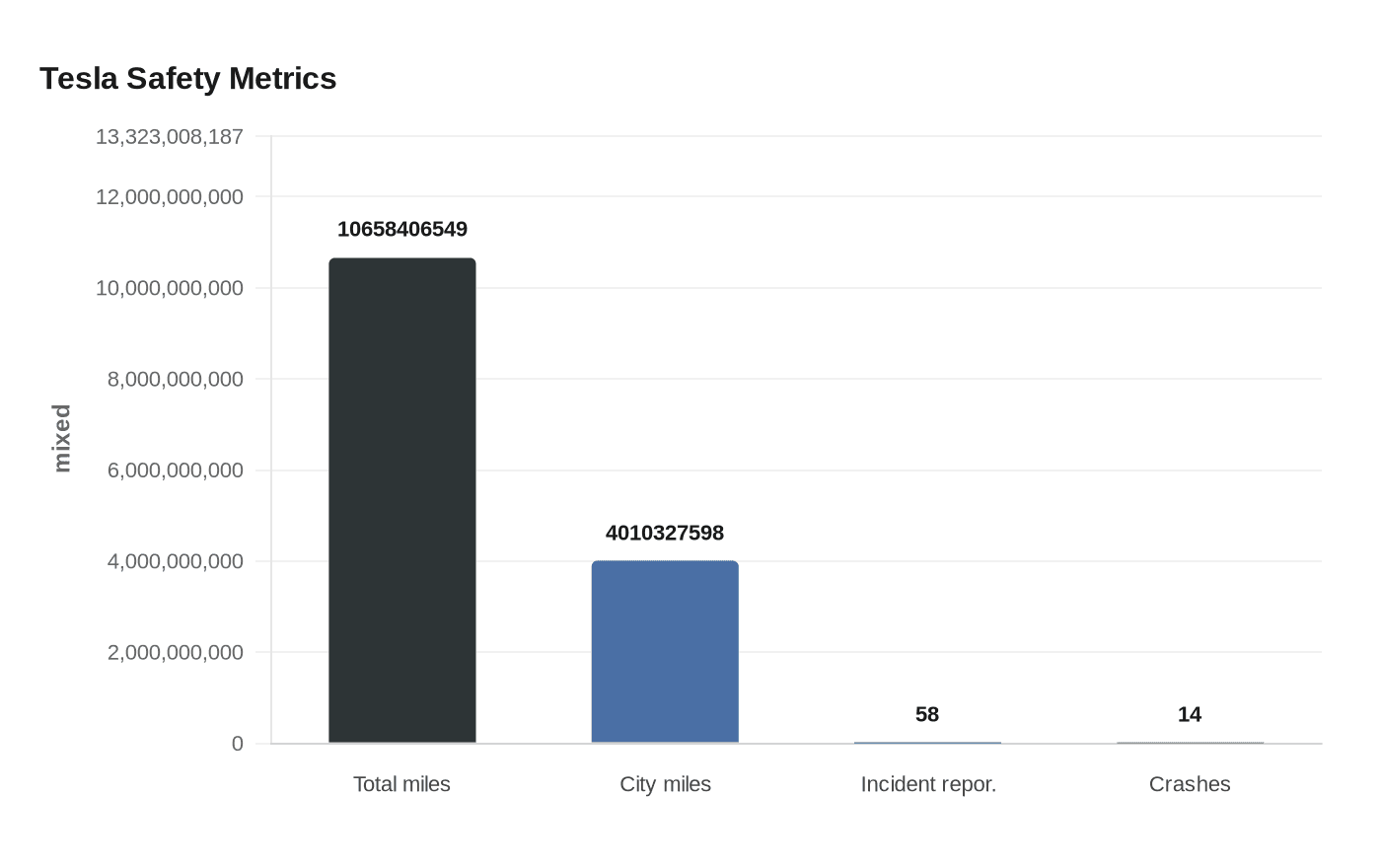
The pressure on Tesla grew further after its Austin robotaxi pilot began in June 2025 with Model Y vehicles. By February 2026, data disclosed to federal regulators showed the fleet had already been involved in 14 crashes since launch. Taken together, the internal warnings, the federal probes and Tesla’s own mileage claims suggest a company still trying to prove that its autonomous system can work safely outside tightly controlled demonstrations.
This article was produced by Prism’s automated news system from verified source data, official records, and press releases, then run through automated quality and moderation checks before publishing. The system is built and supervised by the people who set the standards it runs under. Read our full AI policy.
Know something we missed? Have a correction or additional information?
Submit a Tip