Rick Pitino Signs Extension, Becomes St. John's Highest-Paid Big East Coach
Rick Pitino's new St. John's deal through 2029-30 makes him the Big East's second-highest paid coach, a contract that also reveals who really funds modern college basketball.
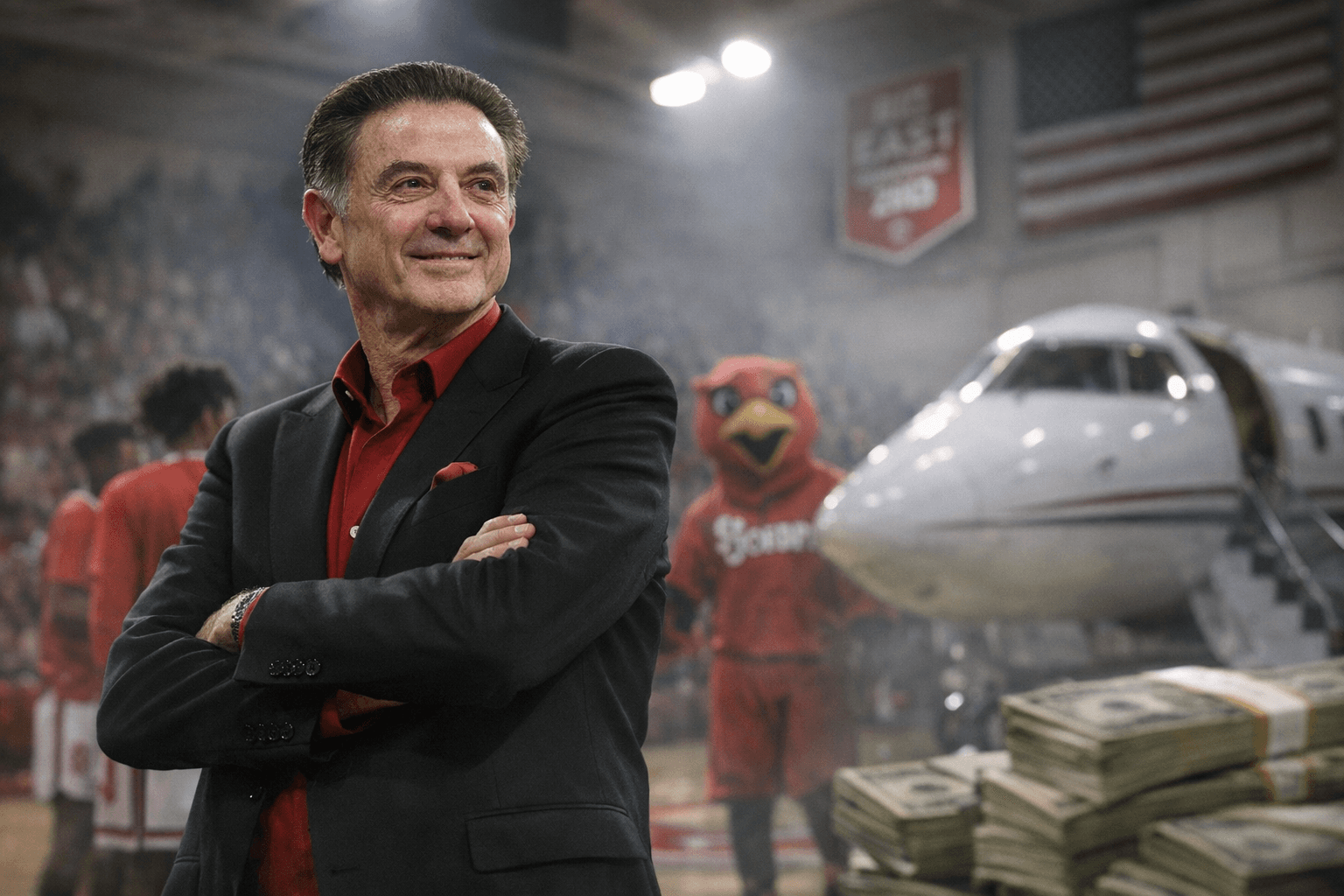
The paperwork was signed while the defeat was still fresh. Hours after St. John's NCAA Tournament run ended against top-overall seed Duke in the Sweet 16, Rick Pitino sent a video message to Red Storm fans. "I have signed the contract," he said. "Will I be back? I'm going to take a few weeks off and see if I'm up to it physically. Now, don't read anything into this because I've said this the last 15 years."
The 73-year-old had just secured a significant pay increase that makes him the second-highest-paid coach in the Big East, trailing only UConn's Dan Hurley. The restructured deal adds an additional year to Pitino's existing agreement, keeping him at St. John's through the 2029-30 season. The architecture of that contract tells a precise story: Pitino has 915 on-court victories, needs 1,000 to reach college basketball's most storied milestone, and the university has designed the deal to make sure he gets there in Queens. He has stated that St. John's will be his final coaching stop before retirement.
But the extension is as much a statement about the new financial machinery of college basketball as it is about one coach's twilight career. The deal is expected to include enhanced NIL resources and facility upgrades, provisions Pitino has cited as essential for competing with programs like Duke. At St. John's, that NIL infrastructure runs heavily through one man: billionaire alum Mike Repole, who has said he contributes north of 50 percent of the program's approximately $10 million NIL budget. Earlier this year, Repole matched up to $1 million in donations to the Flat Top Fund, one of the school's collectives, raising more than $657,000 from donors who had never before contributed to the program. That dynamic, a program's competitive viability dependent on a single benefactor's enthusiasm, is now structural, not incidental.
What the contract does not publicly itemize is how those NIL investments compare to spending on athlete academic support, physical rehabilitation, or mental health resources. St. John's, as a private Catholic university, operates without the public-records accountability that state schools face, meaning the full distribution of athletic revenues remains largely shielded from external scrutiny. Across college basketball broadly, NIL spending reached an estimated $932.5 million in 2025-26, with direct revenue-sharing between schools and players now also permitted under new rules, creating a financial complexity that athletic departments are still navigating. The coach's pay is visible; the athlete welfare ledger is not.
The performance that justified the contract revision was legitimately historic. St. John's became the first program in Big East history to win outright regular-season and tournament championships in back-to-back years, then advanced to the program's first Sweet 16 since 1999. Dylan Darling's buzzer-beating layup sealed a 67-65 Round of 32 upset of Kansas, the signature moment of the Red Storm's deepest tournament run in more than two decades. The No. 5 seed fell to top-seeded Duke, but university president Rev. Brian Shanley and athletic director Ed Kull had seen enough to act quickly. Both are described as aligned with Pitino on the program's long-term vision.
Pitino needs 85 wins to reach 1,000. St. John's is betting that the man who has said he might be done coaching for roughly 15 consecutive years will mean it this time, but not quite yet.
SUMMARY: Rick Pitino's new St. John's deal through 2029-30 makes him the Big East's second-highest paid coach, a contract that also reveals who really funds modern college basketball.
CONTENT:
The paperwork was signed while the defeat was still fresh. Hours after St. John's NCAA Tournament run ended against top-overall seed Duke in the Sweet 16, Rick Pitino sent a video message to Red Storm fans. "I have signed the contract," he said. "Will I be back? I'm going to take a few weeks off and see if I'm up to it physically. Now, don't read anything into this because I've said this the last 15 years."
The 73-year-old had just secured a significant pay increase that makes him the second-highest-paid coach in the Big East, trailing only UConn's Dan Hurley. The restructured deal adds an additional year to Pitino's existing agreement, keeping him at St. John's through the 2029-30 season. The architecture of that contract tells a precise story: Pitino has 915 on-court victories, needs 1,000 to reach college basketball's most storied milestone, and the university has designed the deal to make sure he gets there in Queens. He has stated that St. John's will be his final coaching stop before retirement.
But the extension is as much a statement about the new financial machinery of college basketball as it is about one coach's twilight career. The deal is expected to include enhanced NIL resources and facility upgrades, provisions Pitino has cited as essential for competing with programs like Duke. At St. John's, that NIL infrastructure runs heavily through one man: billionaire alum Mike Repole, who has said he contributes north of 50 percent of the program's approximately $10 million NIL budget. Earlier this year, Repole matched up to $1 million in donations to the Flat Top Fund, one of the school's collectives, raising more than $657,000 from donors who had never previously contributed to the program. That dynamic, a program's competitive viability dependent on a single benefactor's enthusiasm, is now structural, not incidental.
What the contract does not publicly itemize is how those NIL investments compare to spending on athlete academic support, physical rehabilitation, or mental health resources. St. John's, as a private Catholic university, operates without the public-records accountability that state schools face, meaning the full distribution of athletic revenues remains largely shielded from external scrutiny. Across college basketball broadly, NIL spending reached an estimated $932.5 million in 2025-26, with direct revenue-sharing between schools and players now permitted under new rules, creating financial complexity that athletic departments are still navigating. The coach's pay is visible; the athlete welfare ledger is not.
The performance that justified the contract revision was legitimately historic. St. John's became the first program in Big East history to win outright regular-season and tournament championships in back-to-back years, then advanced to its first Sweet 16 since 1999. Dylan Darling's buzzer-beating layup sealed a 67-65 Round of 32 upset of Kansas, the signature moment of the Red Storm's deepest tournament run in more than two decades. The No. 5 seed ultimately fell to top-seeded Duke, but university president Rev. Brian Shanley and athletic director Ed Kull had seen enough to act without delay. Both are described as aligned with Pitino on the program's long-term vision.
Pitino needs 85 more wins to reach 1,000. St. John's is betting that the man who has been saying he might be finished coaching for roughly 15 consecutive years will mean it this time, just not yet.
This article was produced by Prism’s automated news system from verified source data, official records, and press releases, then run through automated quality and moderation checks before publishing. The system is built and supervised by the people who set the standards it runs under. Read our full AI policy.
Did this article answer your question?