Rio streets turn green and yellow as World Cup fever returns
Rio neighborhoods are turning walls and curbs green and yellow again, as Brazil’s World Cup run revives a ritual built around street parties and shared pride.
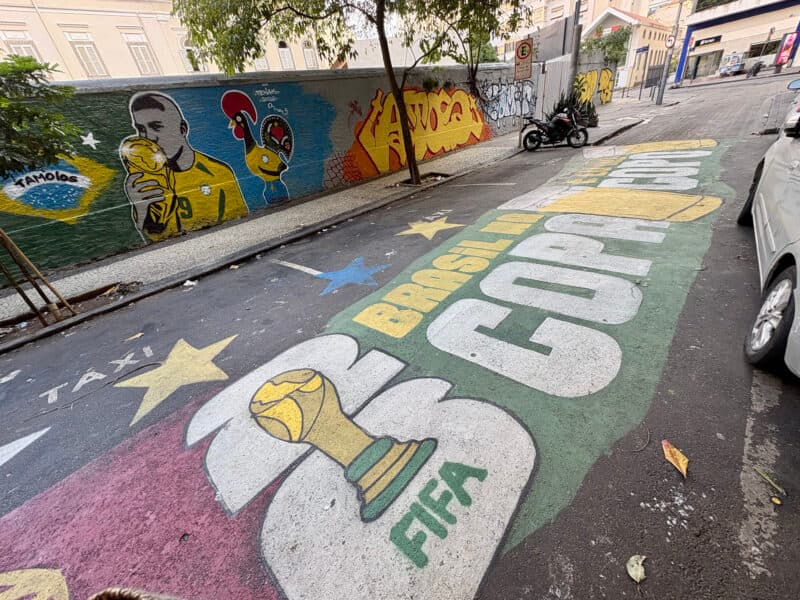
In Rio de Janeiro, the World Cup has spilled back into the streets. In Tijuca and Saude, residents have turned entire blocks into open-air murals, painting walls, curbs and street corners in Brazil’s green and yellow as confidence in the national team returned after years of thinner enthusiasm.
The revival is visible far beyond the affluent districts. Reuters images from June 9 showed the custom reappearing in the Mare favela and in Rocinha, where the same colors have again become a public sign of anticipation before the tournament. What looks like decoration also works as a neighborhood reset, bringing people out of their homes and back into shared spaces that had lost some of their old energy.

Nowhere is that ritual more established than Pereira Nunes Street in Vila Isabel. Residents there have gathered every four years for the past 48 years to paint murals on the ground and on the walls, keeping alive a tradition that stretches across generations. Reuters footage from May 4 showed organizer Celso Mendes painting alongside neighbors, with a mural featuring Brazil star Vinicius Junior, as residents prepared for the coming matches and planned a big screen and a neighborhood party.
The timing gives the paint work its edge. Brazil is chasing its first World Cup title since 2002 and a sixth overall crown, and its first match in the 2026 tournament is set for Sunday, June 14, 2026. That makes the return of street decoration more than nostalgia. It is a public bet that the national team can still pull people together in a country where sports triumphs often carry more emotional weight than politics or slogans.
Rio’s city hall has also moved to formalize the mood. On May 28, 2026, it published a decree creating the Carioca Street Decoration Contest for the Football World Cup, called Believing is an Art - Rio in the Colors of the Hexa. The city said the contest was meant to encourage themed decorations, community integration and tourism, turning a spontaneous neighborhood custom into a city-backed civic ritual.
The painted streets show how a tournament can do more than decorate a city. In Rio, the return of murals and block parties has become a measure of restored confidence, a sign that shared identity can still be built in public, one curb and wall at a time.
This article was produced by Prism’s automated news system from verified source data, official records, and press releases, then run through automated quality and moderation checks before publishing. The system is built and supervised by the people who set the standards it runs under. Read our full AI policy.
Did this article answer your question?