Rising Fuel Costs From War Push Airlines to Hike Fares
Jet fuel has more than doubled since the Feb. 28 war began, costing Delta, American and United roughly $400 million each — and fares are rising fast with no relief in sight.
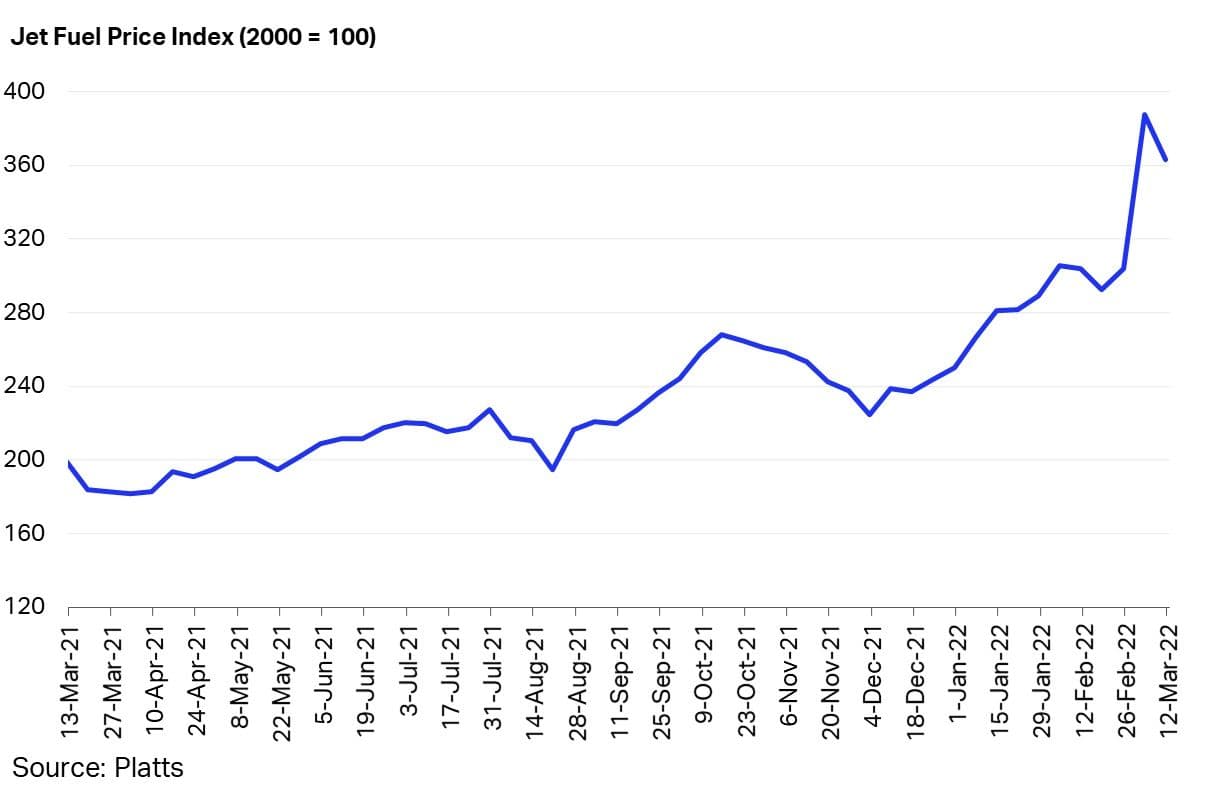
A gallon of jet fuel that cost $2.50 the day before U.S. and Israeli strikes on Iran hit $3.93 within weeks, according to Argus Media, and has kept climbing since. Jet fuel prices are now up roughly 106% compared with a month ago, according to the International Air Transport Association, which measured data for the week ended March 20. For an industry where fuel accounts for roughly a quarter of operating costs, the arithmetic is brutal.
Delta Air Lines CEO Ed Bastian said the spike added as much as $400 million in costs in March alone, and speaking at the J.P. Morgan Industrials Conference, he said airlines are moving quickly to pass those higher costs through fare increases. American Airlines expects fuel to add about $400 million to its first-quarter expenses as well.
United CEO Scott Kirby has offered the starkest projection of the three. In a March 20 note, Kirby wrote: "The reality is, jet fuel prices have more than doubled in the last three weeks. If prices stayed at this level, it would mean an extra $11 billion in annual expense just for jet fuel." Kirby also said United will cut about 5% of planned flights in the near term as costs surge.
Despite the cost shock, demand has held firm. Delta CEO Bastian said sales in the week before March 17 rose about 25% from a year prior, and five of Delta's top 10 ticket sales days ever have happened since the war began. Executives at all three major carriers told investors at the J.P. Morgan conference that they were not revising first-quarter profit forecasts because ticket sales remained strong.
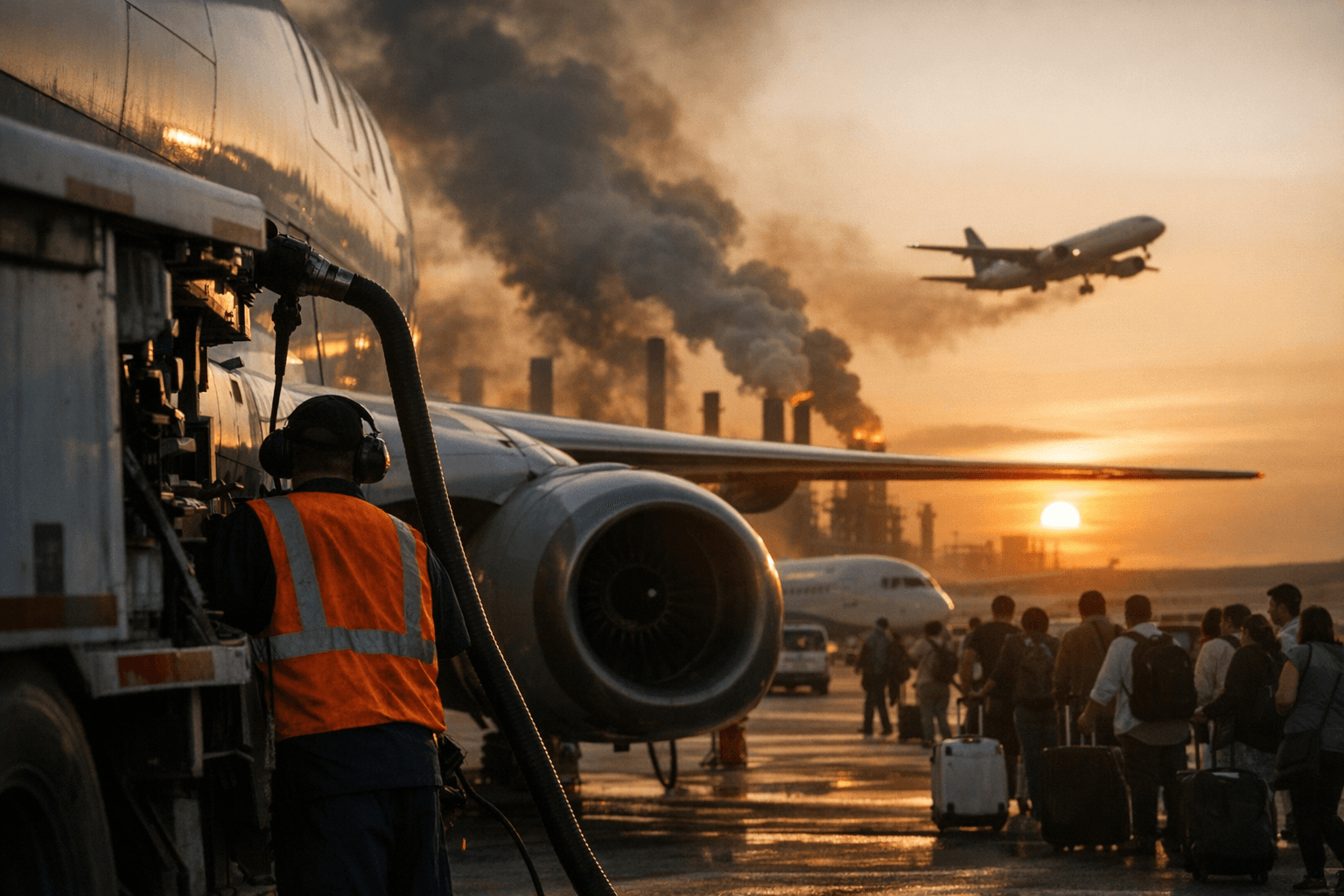
The root cause sits in a narrow stretch of water. The price spike came after tanker traffic through the Strait of Hormuz came to a virtual halt, as Iran announced it would close the waterway that normally handles about 20% of the world's oil. Mideast refineries had been sending some 470,000 barrels of jet fuel each day through the strait to airports in Europe and elsewhere. The Middle East exports about 1.1 million barrels per day of jet fuel, roughly 17% of global consumption.
The disruption is reshaping flying patterns far beyond the Middle East. Finnair has scrapped Doha and Dubai flights and is not flying through the airspace of Iraq, Iran, Syria and Israel. ITA Airways suspended flights to Tel Aviv and extended Dubai cancellations. KLM halted Dubai service and cancelled Tel Aviv flights for the remainder of its winter season. Lufthansa Group has scrapped flights to Tel Aviv through April and Dubai through late March. These flight disruptions have pushed up fares as demand surges for alternative routes that bypass the Middle East.
Non-U.S. carriers have been quicker to formalize the cost pass-through. Cathay Pacific announced it would double its fuel surcharge on all tickets, with the current charge of $72.90 rising to $149.20. Thai Airways told reporters it expects airfares to increase by 10% to 15%. U.S. airlines, which do not typically levy explicit fuel surcharges, have instead been building the costs into base fares and adjusting fees on add-ons such as seat upgrades.
U.S. airlines rely less on hedging than their European and Asian rivals in managing fuel costs, making their shares more vulnerable to oil's volatility. That exposure is now being tested at a scale few modeled. David Goodger, a managing director and head of tourism forecasting at Tourism Economics, expects airfares to be "5-10% higher than we previously expected over 2026 and 2027."
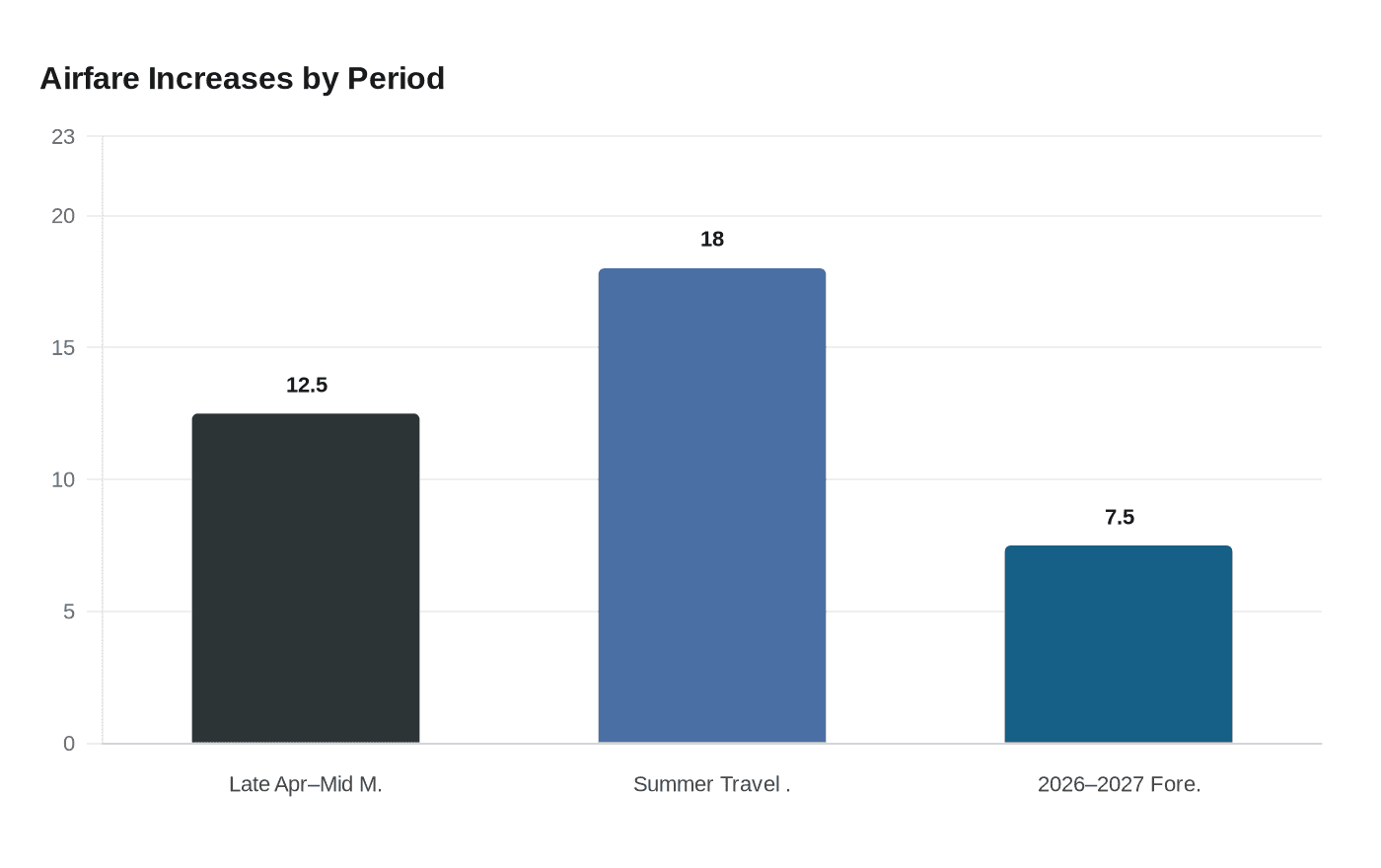
Average airfare for travel between late April and mid-May has already increased about 10% to 15% at the median relative to prices just before the war started, while fares for summer travel are up about 18% versus a year ago, according to Going, a flight deal provider. The International Air Transport Association's director general, Willie Walsh, has said the cost of plane tickets may jump as much as 9%.
The fuel spike adds particular pressure to financially fragile low-cost carriers. Spirit Airlines, which recently reached a deal with lenders to emerge from its second bankruptcy, could see those plans upended by the surge. If Spirit were taken out of the market, that would free other airlines to raise fares further due to the lack of low-fare competition.
The International Energy Agency noted in a March 12 report that diesel and jet fuel are "particularly vulnerable to an extended loss of Middle East production and exports, given limited flexibility elsewhere to increase output," and that jet fuel prices have surged despite a reduction in demand from suspended Middle East flights. Until the Strait of Hormuz reopens to normal traffic, airlines will keep threading the same needle: raising what travelers pay while hoping enough of them keep buying seats.
This article was produced by Prism’s automated news system from verified source data, official records, and press releases, then run through automated quality and moderation checks before publishing. The system is built and supervised by the people who set the standards it runs under. Read our full AI policy.
Did this article answer your question?

