Rising Oil Prices and a Strong Dollar Are Squeezing Asian Economies
The Philippines declared a national emergency over energy supplies as oil tops $119 a barrel, squeezing Asian currencies and shaving GDP growth across the region.
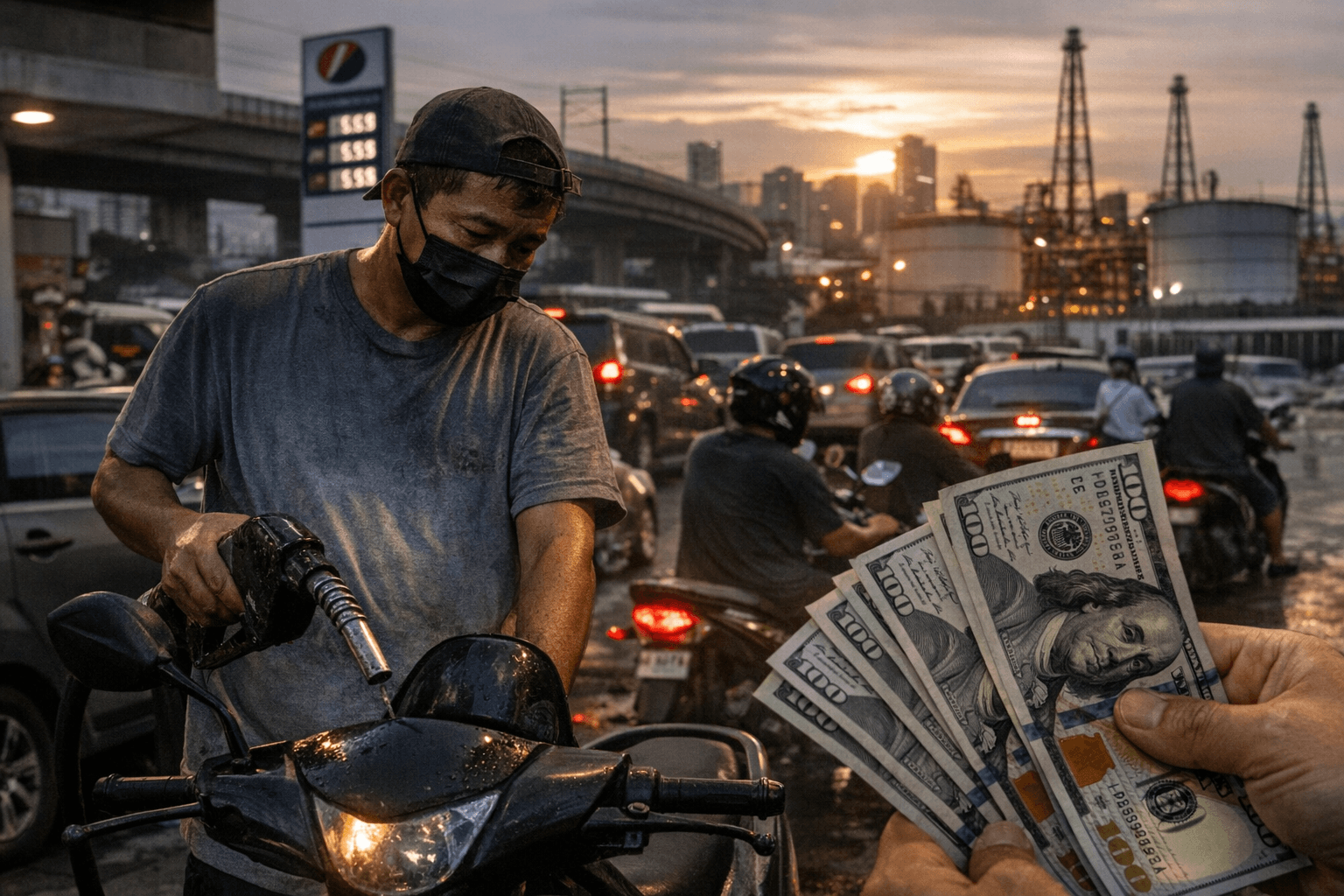
Long lines stretched for blocks at gas stations in Hanoi this week. Bangladesh closed its universities and moved up Eid al-Fitr holidays to conserve electricity and fuel. The Philippines declared a national emergency, citing "imminent danger of a critically low energy supply." The arithmetic behind all of it is the same: oil priced in dollars, a dollar that keeps strengthening, and a region that imports almost everything it burns.
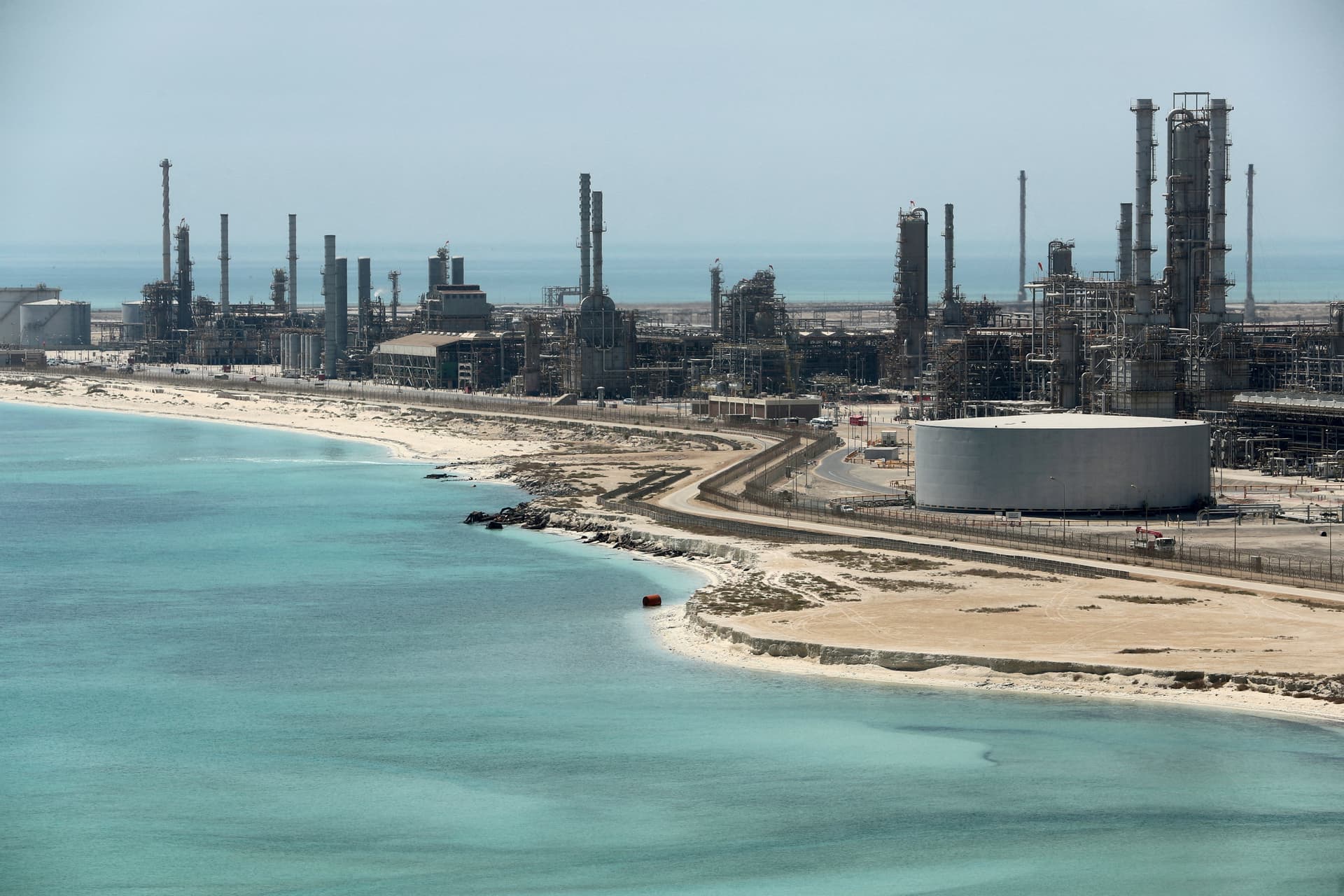
Brent crude surpassed $100 per barrel on March 8 for the first time in four years, rising to $126 per barrel at its peak, before pulling back to various levels across different market readings. Oil prices gyrated wildly after the United States and Israel launched joint air strikes on Iran on February 28, with disruptions to Middle Eastern supplies and the cessation of tanker traffic through the Strait of Hormuz sending Brent futures soaring, trading within a whisker of $120 per barrel. Morgan Stanley, modeling the damage, put Brent near $105 as of late March, approximately $30 per barrel above the pre-war level of late February. Shane Oliver of AMP put the ceiling higher still. "This war could last for weeks ahead and push oil prices up to US$150 per barrel," he said.
The mechanism squeezing Asian economies runs in two directions at once. Every dollar rise in crude forces Asian importers to buy more dollars to pay for it, which pushes their currencies lower, which makes the next barrel of oil more expensive in local terms. Morgan Stanley estimates that each sustained $10 per barrel increase in oil reduces Asia's regional GDP growth by 20 to 30 basis points. Asia accounted for approximately 84% of the crude oil and condensate shipped through the Strait of Hormuz in 2024, with China, India, Japan, and South Korea collectively representing 69% of total flows. With Brent now roughly $30 above pre-war levels, the region has already absorbed the equivalent of three such increments back to back.
The peso's breach above ₱60 to the dollar captures the feedback loop in its clearest form. The dollar index climbed to 99.53, with the yen trading at 159.11 per dollar. Goldman Sachs sharply raised its oil price forecasts, expecting Brent to average $110 in March-April. HSBC analysts tracked the downstream damage: jet fuel prices in Singapore rose 175% this year, while Asian LNG prices climbed 130%.
The government responses ranged from creative to desperate. Vietnam urged citizens to work from home and limit vehicle use. The Philippines initiated a four-day workweek for government employees before escalating to a national emergency declaration. South Korea shifted into crisis mode, setting up an emergency economic task force to urgently prepare for adverse scenarios. The Eurasia Group said Seoul would likely ramp up nuclear and coal-fired power plant production to offset higher fuel costs. Bangladesh, Sri Lanka, and the Maldives all turned to India, with Indian foreign ministry spokesperson Randhir Jaiswal confirming Thursday that all three had requested supplies from New Delhi.
Japan finds itself in an acutely exposed position. Japanese refiners asked the government to release stockpiled oil; those refiners obtain about 95% of their crude from Saudi Arabia, Kuwait, the United Arab Emirates, and Qatar. Japan pledged to release a record 80 million barrels from its national oil reserves, equivalent to roughly 45 days of supply, and asked Australia, its largest LNG supplier, to increase output. The Nikkei 225 fell 3.9% and shed more than 13% throughout March; Japan's 10-year government bond yield rose to 2.189%.
China urged all parties to refrain from disrupting international trade. Its exposure is layered: the country imports nearly a third of its oil through the Strait of Hormuz and relied on discounted barrels from Iran and Venezuela. A U.S. military operation in Venezuela eliminated the latter source before the current crisis even began.
The closure of the strait has been described as the largest disruption to the energy supply since the 1970s energy crisis, as well as the largest in the history of the global oil market. The Nikkei Shimbun captured the mood across regional trading floors in seven words: "Fear of a prolonged war has completely engulfed Asian financial markets."
The KOSPI swung 18.4% lower on the 3rd and 4th of the month, bounced 9.63% on the 5th, then fell nearly 6% again on the 9th, when oil topped $119 per barrel and South Korea's 3-year government bond yield hit 3.420%, the highest since June 2024. Morgan Stanley's modeling shows that if prices reach a $120 scenario, Asia's combined oil and gas burden would consume 6.3% of regional GDP. Each incremental $10 rise narrows central banks' room to cut rates further, leaving governments to choose between defending their currencies and supporting growth — a choice that, for much of the region, was already difficult before the first strike landed on Tehran.
This article was produced by Prism’s automated news system from verified source data, official records, and press releases, then run through automated quality and moderation checks before publishing. The system is built and supervised by the people who set the standards it runs under. Read our full AI policy.
Did this article answer your question?