Rising Oil Prices and Iran Tensions Threaten to Slow U.S. Job Growth
Goldman Sachs estimates the Iran war's oil shock is suppressing U.S. payroll growth by 10,000 jobs a month, pushing unemployment toward 4.6% by Q3.
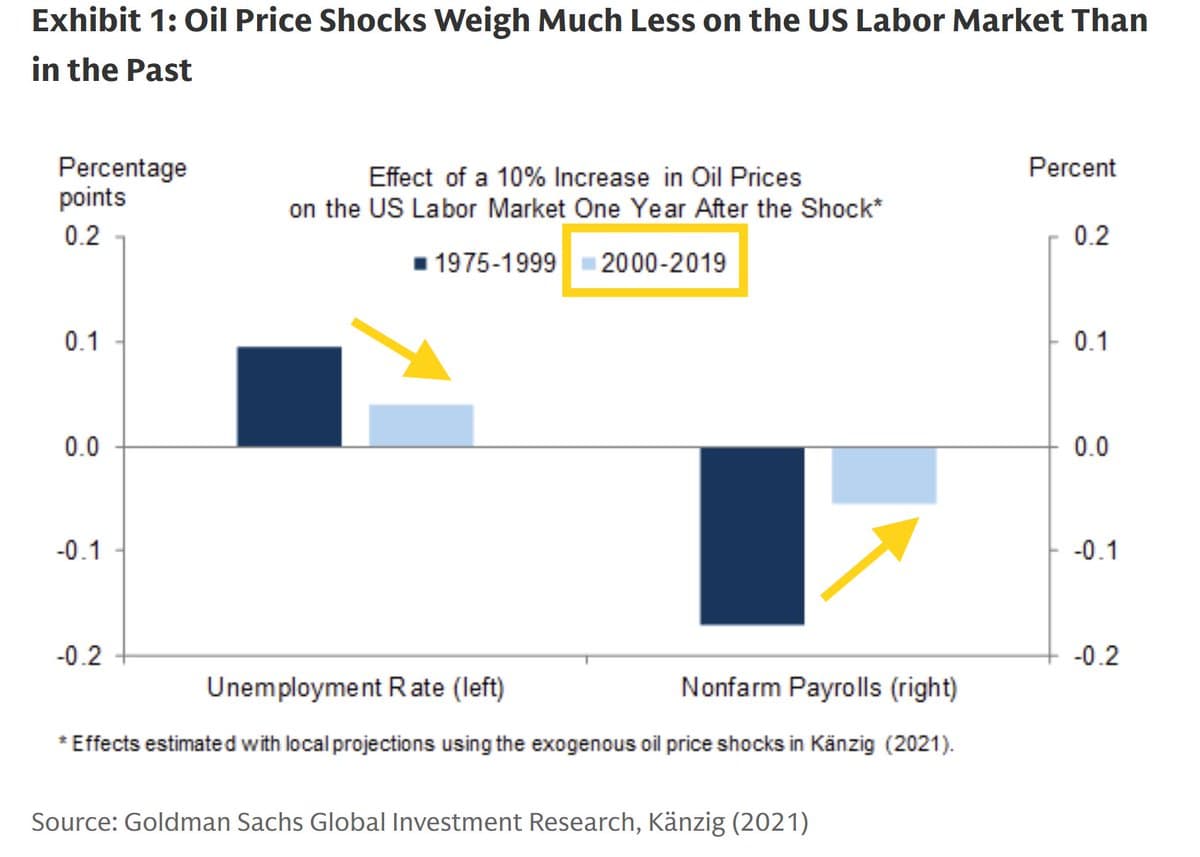
Goldman Sachs estimates that the oil price shock triggered by the U.S. military conflict with Iran will suppress payroll growth by roughly 10,000 jobs per month through the end of the year, with the damage concentrated in the restaurants, hotels, and retail stores that form the backbone of working-class employment.
The bank projected the U.S. unemployment rate will climb 0.2 percentage points to 4.6% by the third quarter of 2026, with the oil shock accounting for roughly half of that rise. The other half reflects job growth that was already running too slowly to keep pace with labor supply before the conflict began. Goldman noted that its unemployment projections align closely with simulations run through the Federal Reserve's own FRB/US model.
Brent crude, the global benchmark for oil, rose more than 40% since the conflict began on Feb. 28, reaching approximately $102 per barrel. The national average gasoline price climbed to $3.79 a gallon, up about 87 cents per gallon from a month ago, according to AAA. Average gasoline prices are higher than at any point since October 2023, according to the U.S. Energy Information Administration. The war effectively halted traffic through the Strait of Hormuz, a critical maritime shipping route for global oil supplies, amounting to the biggest oil supply disruption in history.

Goldman economist Pierfrancesco Mei's sector-level analysis points to leisure and hospitality as the single hardest-hit industry, accounting for roughly 5,000 lost jobs per month, with retail trade shedding another 2,000. When energy prices surge, consumers cut back on discretionary spending first, skipping vacations, eating out less, and trimming shopping trips, while continuing to pay for essentials like healthcare and housing.
That dynamic is amplifying existing economic inequalities. "Higher gasoline prices act like a regressive tax, as lower-income households devote a higher share of their budget to energy," said Mark Zandi, chief economist at Moody's. If households spend more of their income on gasoline, they have less to spend on other goods and services, a shift that could weigh on the broader U.S. economy since consumer spending accounts for the bulk of the nation's gross domestic product. U.S. diesel prices also topped $5 per gallon for the first time since 2022, when Russia's invasion of Ukraine disrupted global energy markets, driving up trucking costs and, in turn, the prices of food and other goods.

Goldman's commodities strategists expect Brent crude to average $105 in March, spike to $115 in April, and then gradually retreat to $80 in the fourth quarter, assuming flows through the Strait of Hormuz remain severely disrupted for roughly six weeks. In an adverse scenario where the conflict deepens, Brent could peak as high as $140 a barrel, or $160 in a "severely adverse" case.
In a severely adverse oil price scenario, the unemployment hit could reach 0.3 percentage points above the baseline, a scenario that would push joblessness meaningfully higher and potentially force the Fed's hand on interest rates. Protracted oil-supply disruptions in the Strait of Hormuz could fan consumer inflation and slow household consumption further, leaving policymakers with shrinking room to maneuver as the war's economic toll compounds with each passing week.
This article was produced by Prism’s automated news system from verified source data, official records, and press releases, then run through automated quality and moderation checks before publishing. The system is built and supervised by the people who set the standards it runs under. Read our full AI policy.
Did this article answer your question?

