Roseate Spoonbills Thrive in Florida's Orlando Wetlands, Captivating Observers
Florida's roseate spoonbills thrive in an Orlando wastewater wetland even as Florida Bay nest counts plummeted from 547 to just 69 in under a decade.
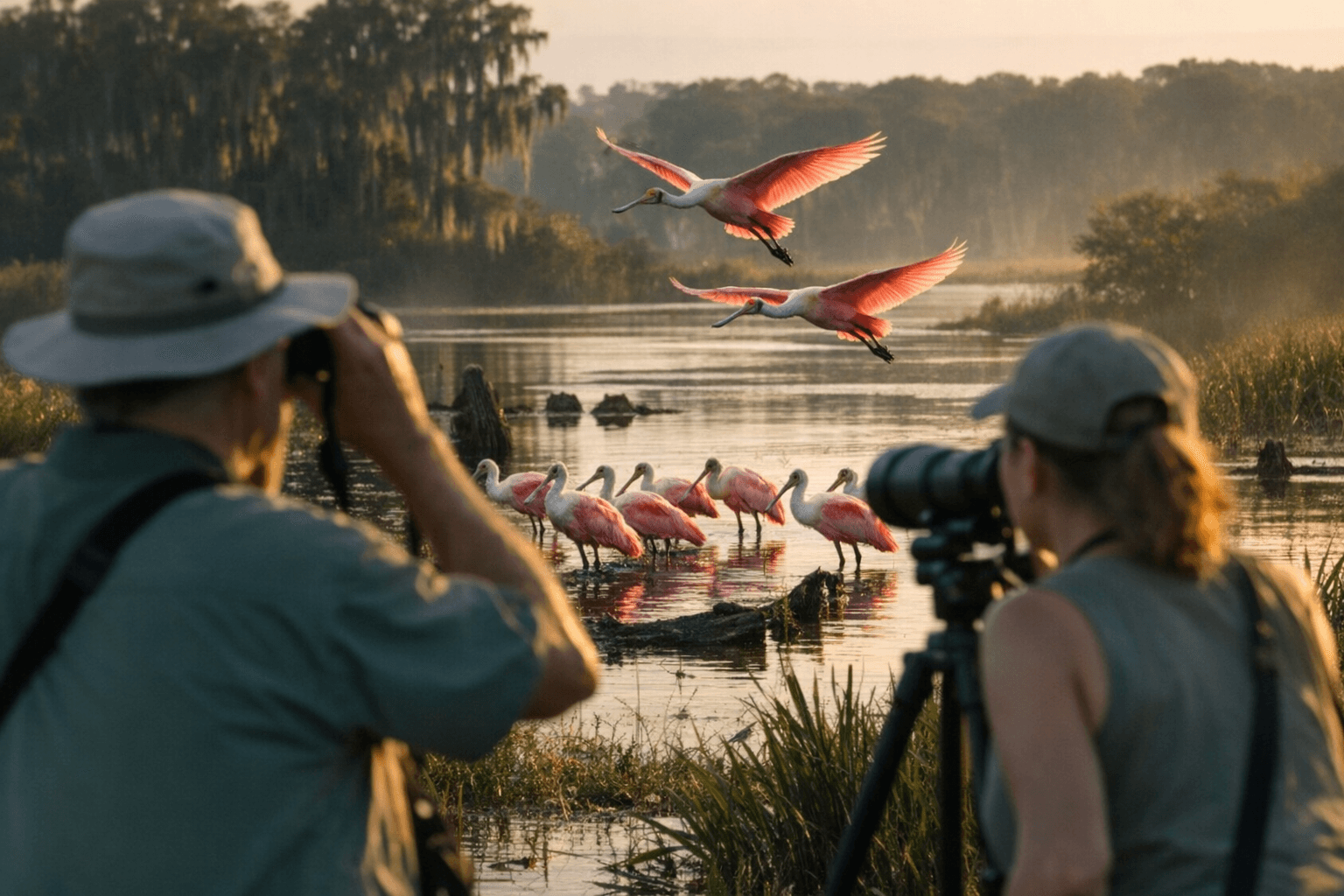
The pink was unmistakable against the fog. Standing on the boardwalk at Orlando Wetlands one Sunday morning, wildlife photographer Synnatschke watched roseate spoonbills wade, fumble their landings, and court each other in the mist. "Being surrounded by fog in the swamps near a roseate spoonbill rookery on a day like that was definitely one of my best birthdays gifts I have ever had," Synnatschke wrote.
What makes the scene stranger, and more significant, is where it unfolded. Orlando Wetlands is, as Synnatschke describes it, "a man-made environment" that functions as part of the City of Orlando's wastewater treatment system. Yet the site supports a wildlife assemblage dense enough to fill a field guide: great egrets displaying mating plumage, bald eaglets in oversized nests, limpkins catching snails, green herons, red-shouldered hawks, and wood storks. A new boardwalk gives photographers and visitors direct sight lines into the rookery. "Roseate spoonbills are amazing birds, sometimes a little bit clumsy," Synnatschke wrote of the encounter.
That a wastewater facility hosts active spoonbill colonies while the birds' historic southern strongholds have sharply contracted tells a pointed story about Florida's wetland health. Nest counts in Florida Bay registered 547 in 2006. Less than a decade later, that figure had crashed to 69. A more recent count reached approximately 200, up from 179 the prior season, a partial recovery but still less than 40 percent of the 2006 baseline.
Naturalist Roger Tory Peterson called the roseate spoonbill "one of the most breathtaking of the world's weirdest birds," and the species remains among Florida's most iconic wildlife, though tourists routinely mistake it for the non-native flamingo. Audubon estimates the national breeding population at roughly 5,500 pairs, already well below pre-plume-hunting numbers. The species holds "Species of Special Concern" status in both Florida and Louisiana.
Audubon identifies the greatest current threats as wetland draining, development, and coastal marsh pollution. The birds' documented response has been to move: spoonbills have been "vacating South Florida in droves, heading north to more hospitable (read: often less developed) lands," according to Audubon Magazine. Engineered sites like Orlando Wetlands, designed for water treatment rather than wildlife, have become inadvertent beneficiaries of that displacement.
Restoration work targeting the spoonbill's historic range has advanced. The Tamiami Trail bridging project, designed to let water flow freely through Shark River Slough, aims to rehydrate Everglades National Park and Florida Bay, both of which served as primary nesting grounds. State and federal agencies have been working alongside conservation scientists to improve wetland management and monitor how vulnerable species respond to those changes.
Audubon Florida's online campaign at restorefloridabay.org provides concrete entry points: guidance on responsible boating in sensitive areas, backyard habitat creation, and reporting banded spoonbill sightings to support population tracking.
The spoonbill's presence at a municipal wastewater wetland in central Orlando, while its ancestral colonies in Florida Bay shed more than 60 percent of their nests in under a decade, captures the central tension in the state's water management crisis. The bird adapts. The question is whether the ecosystems meant to sustain it can do the same.
This article was produced by Prism’s automated news system from verified source data, official records, and press releases, then run through automated quality and moderation checks before publishing. The system is built and supervised by the people who set the standards it runs under. Read our full AI policy.
Did this article answer your question?