Royal Observatory Greenwich marks 350 years, warns against AI dependence
The Royal Observatory Greenwich marked 350 years by praising human curiosity and warning that instant AI answers can erode judgment, questioning and expertise.

The Royal Observatory Greenwich used its 350th anniversary to underline a stark message: the institution that helped Britain solve longitude still sees human judgment as irreplaceable in an age of instant AI answers.
Paddy Rodgers, chief executive of Royal Museums Greenwich, said the observatory’s long history showed the power of human knowledge and the need to avoid dependence on AI. He warned that “a reliance solely on instant answers” risks weakening the habits of questioning and evaluation that support knowledge, expertise and innovation.
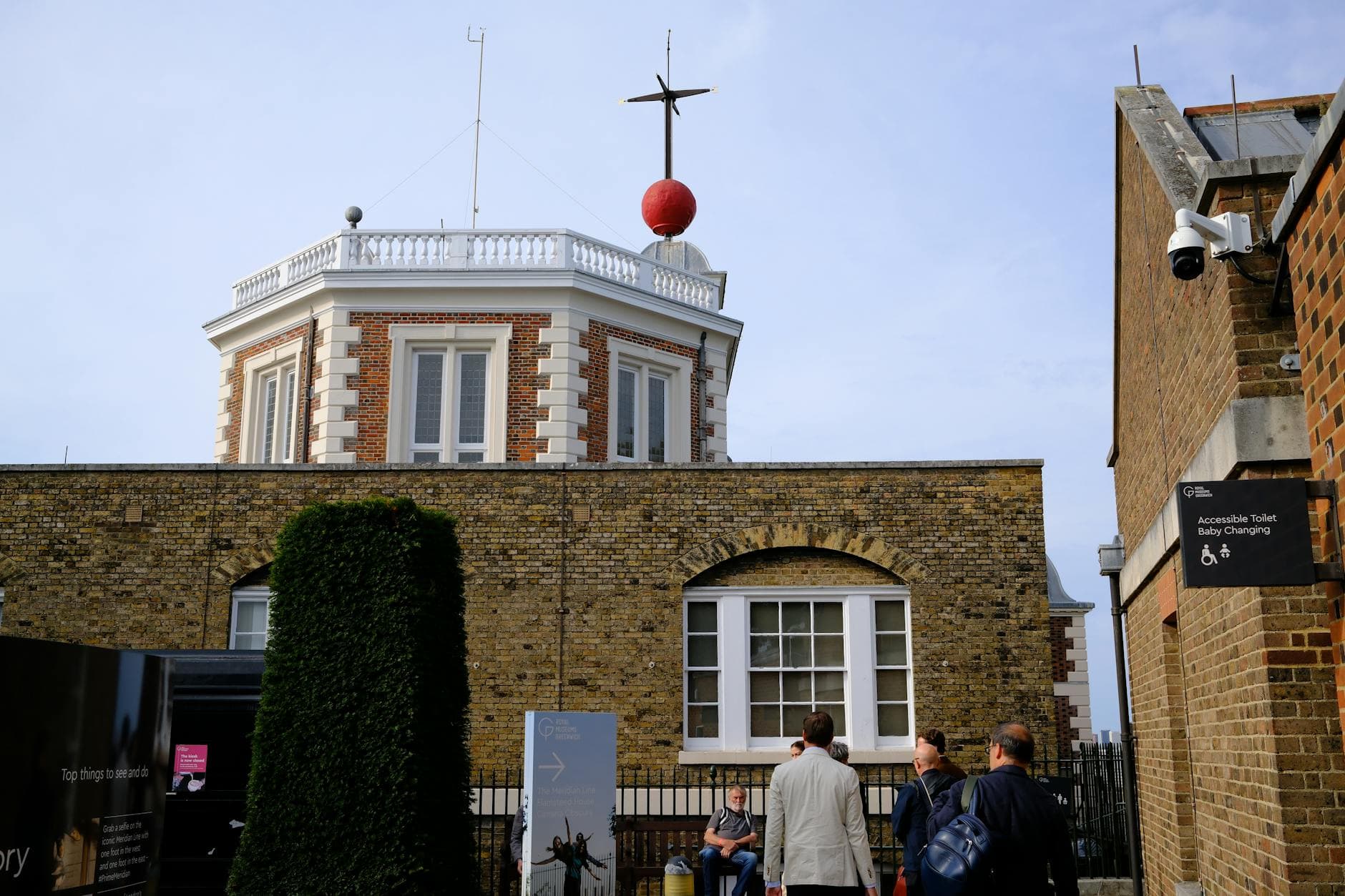
Founded in 1675 by King Charles II, the observatory was built to solve longitude and improve navigation at sea. Royal Museums Greenwich says it was Britain’s first state-funded scientific research institution, a distinction that still carries weight in 2025 as the site celebrates 350 years at the heart of Greenwich Park in London. It remains the home of Greenwich Mean Time and the historic location of the Prime Meridian at 0° longitude, where timekeeping and global navigation were once anchored to a single line.

That scientific legacy is not confined to the past. The observatory is part of the Maritime Greenwich UNESCO World Heritage Site and remains a public centre for astronomy, time, space and navigation. Visitors can still stand on the Prime Meridian Line, and the site also houses the UK’s largest refracting telescope, a reminder that the observatory’s role has always been to turn observation into understanding.
Rodgers’s warning lands in a moment when schools, universities and newsrooms are under pressure to speed up answers rather than slow down for verification. The observatory’s own history offers a counterargument. The long arc from longitude charts to Greenwich Mean Time shows that progress has depended not just on information, but on the disciplined habit of testing it. In science communication, that means making complexity legible without flattening it. In education, it means preserving the work of interpretation, not just retrieval. And in public life, it means keeping space for expertise that can be checked, challenged and improved.

Royal Museums Greenwich, which also oversees the National Maritime Museum, the Queen’s House and Cutty Sark, presented the anniversary as more than a milestone for one landmark. It framed the observatory as a living case for why human curiosity still matters: not because machines cannot answer, but because institutions lose something vital when answering becomes too easy.
This article was produced by Prism’s automated news system from verified source data, official records, and press releases, then run through automated quality and moderation checks before publishing. The system is built and supervised by the people who set the standards it runs under. Read our full AI policy.
Did this article answer your question?