Rubio and Jaishankar discuss Iran crisis, trade and maritime security
Rubio said there had been fresh movement on Iran’s Strait of Hormuz crisis as he met Jaishankar in New Delhi. Trade, visas and maritime security were also on the table.

Marco Rubio said the United States had made meaningful movement in the previous 48 hours on an outline that could help address the crisis around the Strait of Hormuz as he met Subrahmanyam Jaishankar in New Delhi, a discussion that linked Iran, shipping security and the broader strategic bargain between Washington and New Delhi. Rubio also raised the possibility of good news soon, repeated that Iran must never be allowed to possess a nuclear weapon and said attacks on commercial vessels were “totally illegal.”
The meeting went well beyond Middle East diplomacy. Jaishankar said India and the United States shared interests and common challenges, and he stressed that India supports safe maritime passage at a moment when the Strait of Hormuz remains one of the world’s most important routes for oil shipments. The two sides also discussed trade, visas, maritime security and energy supplies, underscoring how closely the relationship now tracks global security and commerce as much as bilateral ties.
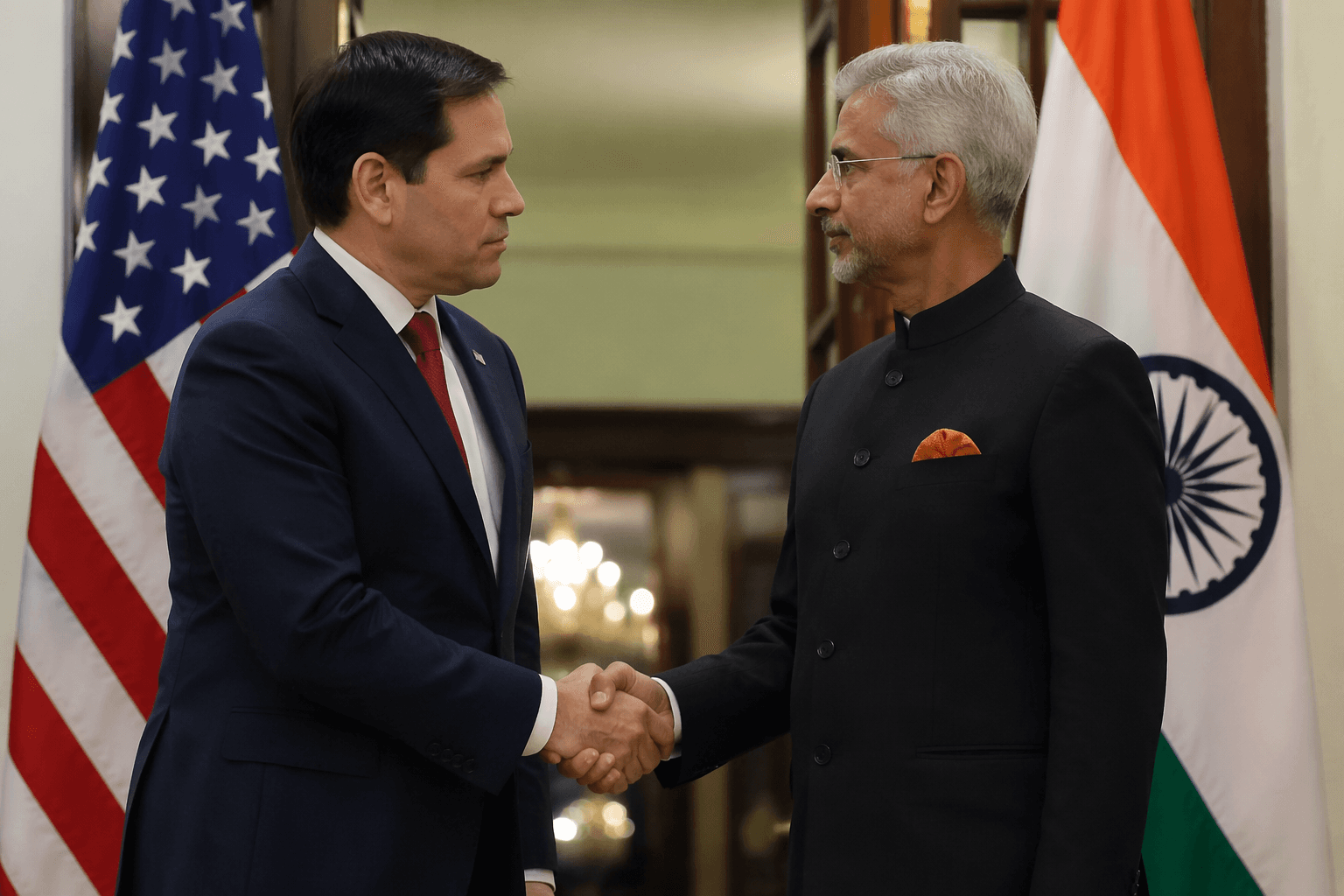
Rubio and Jaishankar both cast the relationship in sweeping terms. Jaishankar described it as a “Comprehensive Global Strategic Partnership,” while Rubio called the two countries “strategic allies” and one of the most important partnerships in the world. The language matched the substance of the talks: the U.S. and India discussed efforts to conclude a bilateral trade deal quickly, and visa problems faced by Indian workers remained part of the conversation. Jaishankar also said the United States had become a reliable energy source for India as Indian officials continue to diversify supply and reduce dependence on any single source.
The State Department said Rubio’s four-day India trip, from May 23 to May 26, included Kolkata, Agra, Jaipur and New Delhi, with energy security, trade and defense cooperation central to his meetings. That broader itinerary framed the New Delhi stop as part of a sustained push to deepen ties with India, not a routine diplomatic call.
The stakes are wide. Successive U.S. administrations have sought to draw India closer as a counterweight to China, even as ties have been strained by steep tariffs on Indian goods and by India’s determination to preserve strategic autonomy, including its relationships with Iran and Russia. New Delhi has also watched Washington try to stabilize relations with China and improve engagement with Pakistan. A White House fact sheet in February said the two countries had already announced a historic trade deal framework, and a joint statement said the interim agreement would include India reducing or eliminating tariffs on a broad range of U.S. goods. If the Iran talks advance, shipping lanes, oil markets and U.S.-India diplomacy could all move together.
Know something we missed? Have a correction or additional information?
Submit a Tip