Rubio Pitches U.N. Deal to Shift Aid Toward Investment
Rubio is pressing countries to back a U.N. declaration that swaps aid for investment, recasting Washington from donor to dealmaker. Poorer nations could face more pressure and less grant support.
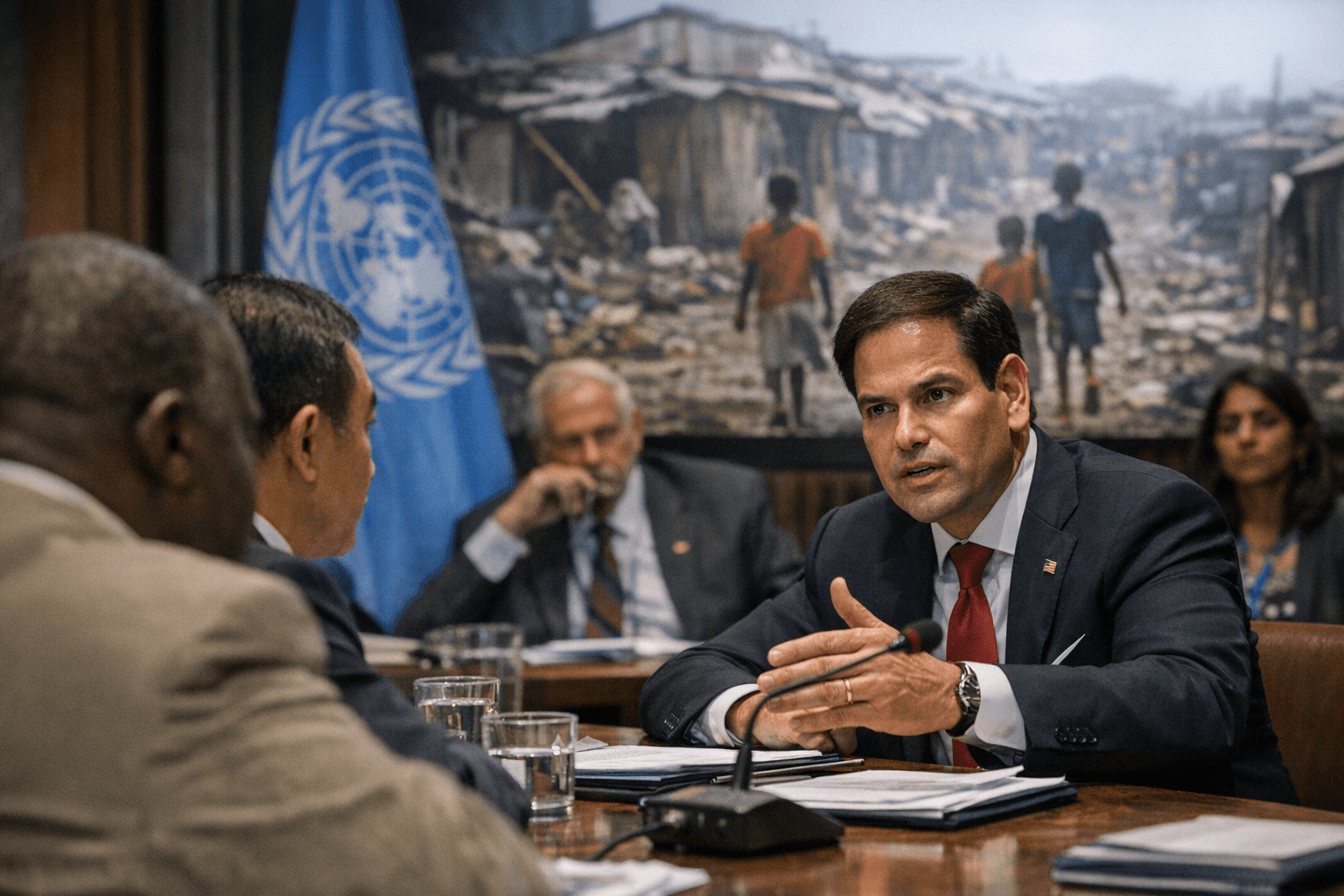
Marco Rubio is pressing countries to sign a U.N.-related declaration that elevates commerce and private investment over traditional foreign aid, a move that would recast the United States from the world’s biggest donor into a far more transactional power inside the U.N. system. Rubio has described the U.N. as an opportunity to “promote America First values,” and the administration has framed the change as a break from a “charity-based model” toward assistance that is “targeted and limited.”
The policy push sits inside a broader rewrite of U.S. development policy. In a March 28, 2025 statement, Rubio said foreign assistance should be reoriented to align directly with U.S. national interests. The State Department later said Rubio had implemented an “America First foreign policy agenda” in his first 100 days. Rubio also said in July 2025 that USAID would stop implementing foreign aid, signaling that future assistance would be narrower and tied more tightly to American priorities.
That shift matters because it changes the leverage Washington brings to New York and Geneva. For decades, U.S. funding helped anchor humanitarian work and development programs across the U.N. system. Now, the administration is using that weight to push trade, market access, and private capital as the preferred path for poorer countries. That approach can benefit American firms, investors, and governments that can offer commercial openings in return. It can also reward countries already positioned to attract outside money, while leaving poorer nations with fewer grants and more pressure to bargain for investment on unequal terms.
The consequences reach beyond one declaration. The State Department says the United States helped found the United Nations and has been both the largest funder of the U.N. system and the most generous humanitarian donor in history. Pulling aid back while asking other countries to sign onto a trade-first vision risks straining alliances with governments that still see development finance as a public good, not a market transaction. It also narrows the space for multilateral cooperation on health, food security, and disaster response, where grants and emergency relief often matter more than private investment.
The timing is striking. Wealthy countries have been cutting development aid, even as the OECD-WTO Aid for Trade framework has continued to support developing countries trying to integrate into global commerce. OECD said those flows remained largely resilient in 2024, and trade-for-development efforts have mobilized hundreds of billions of dollars since 2006. But the administration’s U.N. push goes further than that model by explicitly making trade over aid a diplomatic doctrine, redefining America’s role from humanitarian anchor to dealmaker.
This article was produced by Prism’s automated news system from verified source data, official records, and press releases, then run through automated quality and moderation checks before publishing. The system is built and supervised by the people who set the standards it runs under. Read our full AI policy.
Did this article answer your question?

