Rupee Falls to Record Lows, Tests Resilience After 8.2 Percent Growth
The Indian rupee slid to intraday and closing record lows on December 1, 2025, even after data showed an 8.2 percent GDP expansion in the September quarter. The move highlights how external pressures can overwhelm strong domestic growth, raising risks for inflation, corporate margins and investor sentiment.
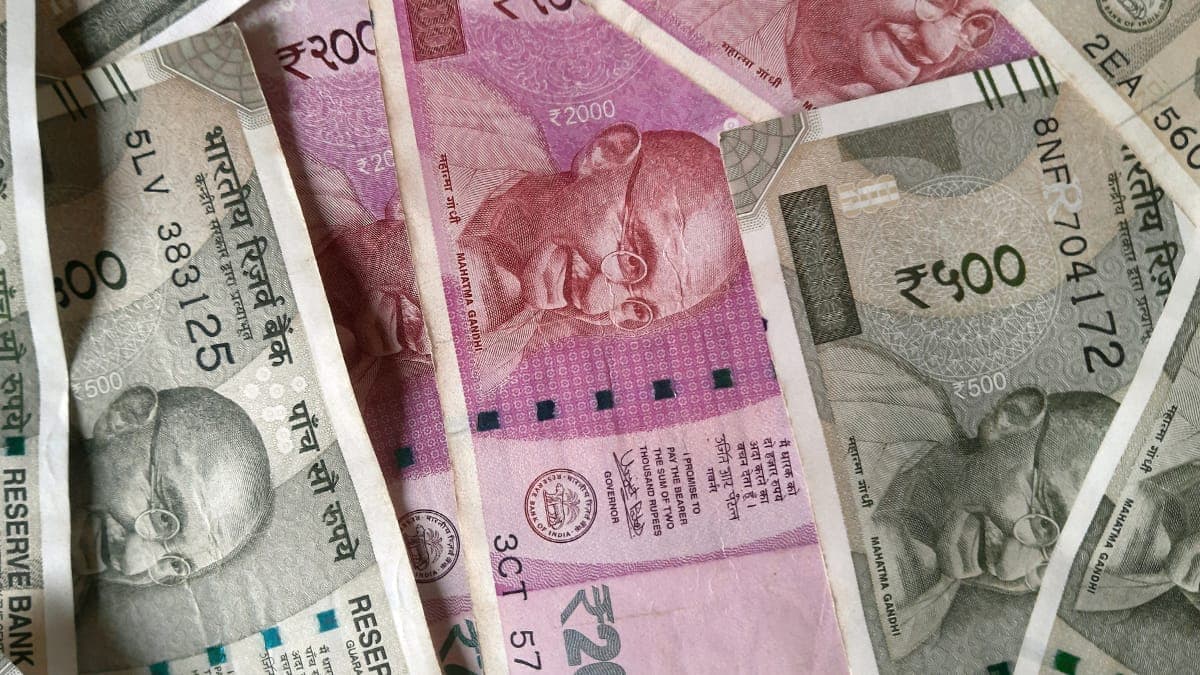
The Indian rupee slid to fresh intraday and closing lows on Monday, touching about 89.7575 per U.S. dollar intraday and ending the day weaker, despite a blockbuster 8.2 percent expansion in gross domestic product for the September quarter. The juxtaposition of surprisingly strong growth and a weakening currency underscores mounting external stresses on Asia's third largest economy.
Traders cited a combination of weak trade and portfolio flows, stalled U.S. India trade negotiations, and maturing positions in the non deliverable forwards market as the principal drivers of the rupee's decline, Reuters reported. Those factors appear to have offset supportive domestic fundamentals, including record highs in Indian equities and active intervention by the Reserve Bank of India to steady the currency.
The episode lays bare a common vulnerability for fast growing economies. Strong GDP figures reflect robust domestic demand and investment, but they do not directly counteract an adverse external environment. A widening trade deficit or intermittent capital outflows can put sustained pressure on the currency, raising the cost of imports and feeding into headline inflation. For India, where energy and commodity imports remain significant, a weaker rupee will tend to push import bills higher even as domestic growth accelerates.
Portfolio flows have been volatile in recent months as global investors reassess allocations amid rising U.S. interest rates and geopolitical uncertainty. Maturing positions in the non deliverable forwards market can exacerbate moves when hedges are rolled or unwound, amplifying volatility in onshore markets. The reported stall in trade negotiations with the United States also appears to have dented confidence among foreign counterparties, reducing the willingness of some investors to extend new capital.

Policy makers face a delicate trade off. The Reserve Bank of India has intervened to cushion the rupee, drawing on foreign exchange reserves and market operations, while monetary policy must weigh persistent inflation risks against growth momentum. Economists in market commentary flagged that gradual depreciation of the rupee may be inevitable under current external dynamics and absent progress on a trade deal, implying further scope for RBI action or higher domestic interest rates if inflation climbs.
For businesses and households the implications are immediate. Import dependent firms will see costs rise in rupee terms, potentially squeezing margins or prompting price increases. Corporates with dollar denominated debt face higher servicing costs. For equity markets, record highs signal continued domestic investor appetite, but sustained currency weakness can deter long term foreign investors and increase financial volatility.
Looking ahead, the trajectory of the rupee will hinge on three variables. First, the pattern of trade flows and any deterioration in the current account. Second, the behavior of global capital with respect to U.S. rates and risk appetite. Third, diplomatic progress on trade talks that could unlock new flows or reduce uncertainty. Until those pressures ease, the rupee's drop shows that strong GDP growth alone may not be enough to insulate the currency from global and external shocks.
This article was produced by Prism’s automated news system from verified source data, official records, and press releases, then run through automated quality and moderation checks before publishing. The system is built and supervised by the people who set the standards it runs under. Read our full AI policy.
Did this article answer your question?

