Russia condemns EU move to inspect shadow fleet tankers
Brussels is authorizing naval boardings of suspected shadow-fleet tankers, and Moscow says it will fight back with every legal and political tool it has.
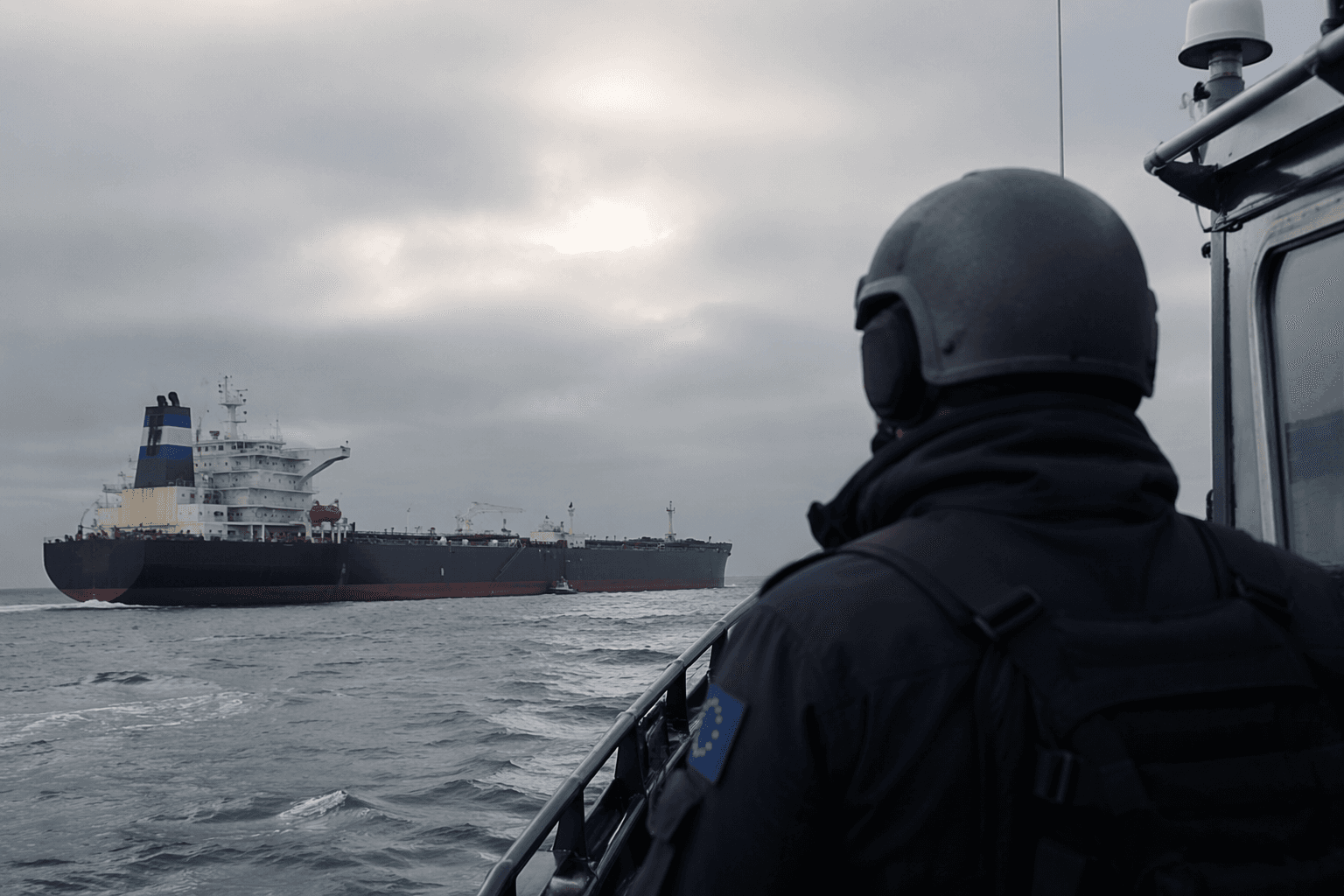
The European Union has moved from sanctioning Russia’s shadow fleet on paper to preparing to stop suspicious tankers at sea, a shift that raises the stakes for shipping in the Mediterranean Sea and beyond. After Kaja Kallas said in Cyprus that member states had authorized Operation EUNAVFOR MED IRINI to begin boarding and inspecting vessels suspected of carrying Russian oil, Moscow denounced the move as unlawful and warned it would use every available instrument to protect the ships.
The dispute turns on more than freight routes. Brussels sees the shadow fleet as a sanctions-evasion machine that helps Russia keep oil revenue flowing, while the Kremlin is trying to strip the term itself of legal force. Russia’s foreign ministry said there is no such category as a shadow fleet in international law, a line that matters because it frames any interception as intimidation of civilian vessels rather than enforcement. Maria Zakharova said Russia reserved the right to use the full arsenal of political, legal and other instruments at its disposal.
Kallas said Western sanctions had already cost Moscow an estimated $1.2 trillion to $1.5 trillion, and she tied the new boarding authority to the wider campaign to cut off revenue used to finance the war. The EU’s 17th sanctions package, adopted on May 20, 2025, listed 189 additional vessels tied to Russia’s shadow fleet or energy revenues, bringing the total to 342. The European Commission said the package was the largest single G7 sanctions action targeting shadow-fleet vessels and said Russian crude oil deliveries on those listed vessels had fallen by 76%.
Operation IRINI gives the EU a legal and operational platform for the escalation. Created in 2020 to implement the UN arms embargo on Libya, the mission uses aerial, satellite and maritime assets, and Kallas said updated rules of engagement now allow boardings of suspect shadow-fleet vessels. That makes the Mediterranean not just a patrol zone but a test case for whether Europe can police oil shipments without stumbling into a broader maritime confrontation.
The risk is not theoretical. On March 20, 2026, French forces boarded the tanker Deyna in the western Mediterranean, and in early June France boarded the Russia-linked tanker Tagor with UK support. The International Institute for Strategic Studies said that by early March at least eight European coastal states, plus the United States, had boarded, detained or seized Russian-linked vessels, marking a shift from symbolic action to sustained maritime law enforcement.

That shift carries operational hazards. The EU has warned that shadow-fleet ships may use false flags, forged documents and AIS manipulation, creating both sanction-busting and safety threats at sea. As enforcement expands across the Mediterranean, Baltic Sea and North Sea, Europe is betting that tighter maritime pressure can choke off covert oil revenue without triggering a crisis over who controls the right to inspect ships on the open water.
This article was produced by Prism’s automated news system from verified source data, official records, and press releases, then run through automated quality and moderation checks before publishing. The system is built and supervised by the people who set the standards it runs under. Read our full AI policy.
Did this article answer your question?