Russian Defence Minister Visits Pyongyang as Wartime Alliance Deepens
Belousov’s Pyongyang trip followed Volodin’s and showed a pact now tied to arms flows, troop deployments and pressure on Europe and East Asia at once.
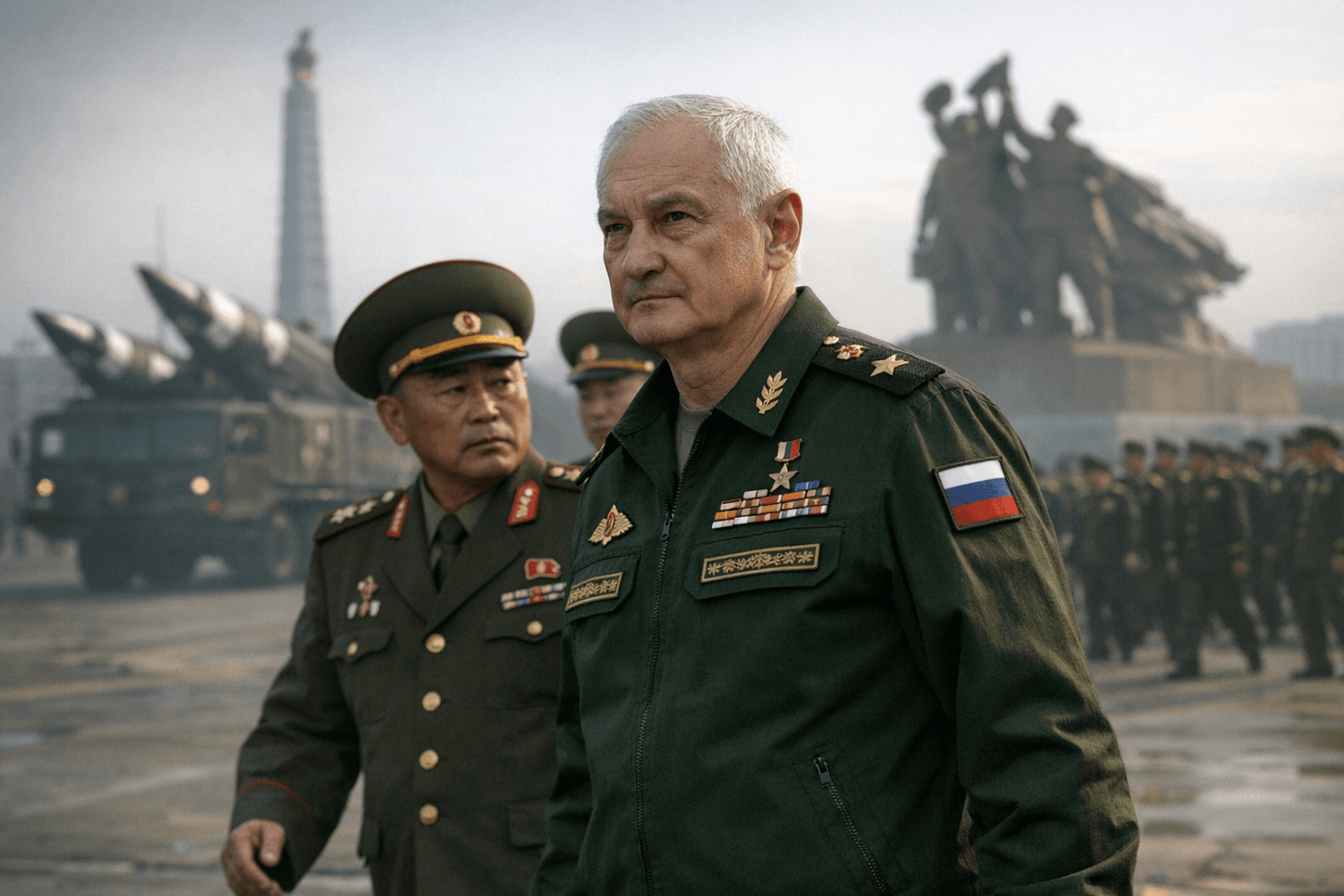
Russian Defence Minister Andrei Belousov arrived in Pyongyang on April 26 for talks with North Korea’s top leadership and armed forces command, a visit that followed closely behind State Duma Chairman Vyacheslav Volodin’s trip. Russian state media said Belousov would also take part in ceremonial and commemorative events, including the public display of a relationship that Moscow and Pyongyang are now treating as a wartime partnership rather than a discreet exchange of favors.
The immediate backdrop is the Treaty on Comprehensive Strategic Partnership that Vladimir Putin and Kim Jong Un signed in Pyongyang on June 19, 2024. North Korea’s foreign ministry later said the treaty took effect on December 4, 2024, after ratification documents were exchanged in Moscow, replacing the 2000 treaty on friendship, good-neighborliness and cooperation. That sequence turned a once-loose alignment into an institutionalized security arrangement with a legal basis for deeper military coordination.
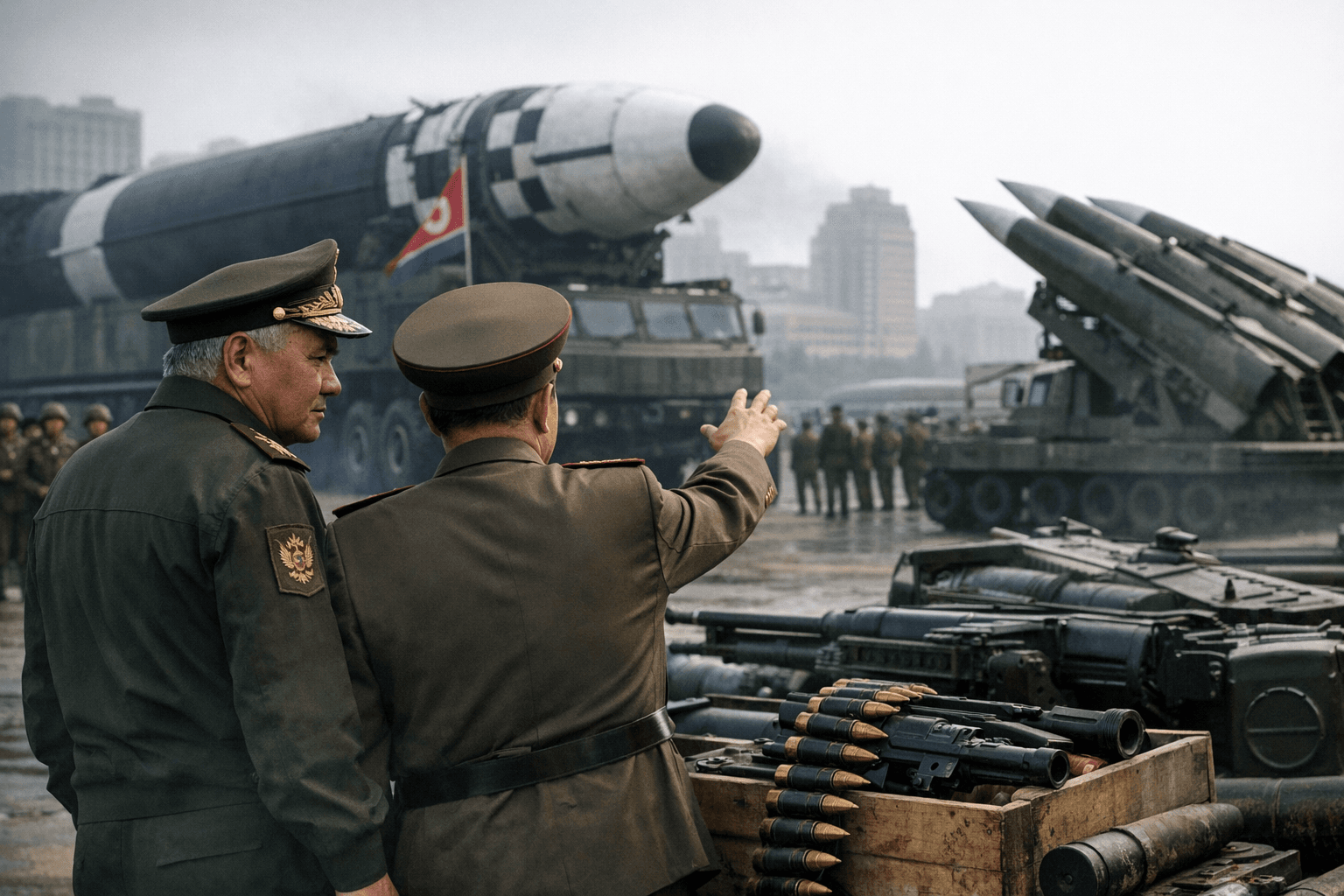
The symbolism in Pyongyang matched the substance on the battlefield. Volodin’s visit was tied to the opening of a newly built memorial for North Korean troops who died fighting in the Ukraine war, and the Kremlin said Putin sent Kim a telegram marking the opening while thanking Kim and North Korean soldiers for helping Russia repel a major Ukrainian incursion into the western Kursk region. Belousov’s trip, arriving on the heels of that ceremony, underscored how openly both sides are now showcasing the partnership.
What each side gains is increasingly clear. Russia has relied on North Korea for ammunition, manpower support and political backing as Western pressure has intensified. North Korea has gained prestige, modern warfare experience and a stronger channel to a major power. Moscow’s willingness to stage the relationship publicly signals that the alliance is no longer an embarrassment to be hidden but a badge of resilience against isolation.
The wider strategic cost is landing in both Europe and East Asia. The United States, South Korea and Japan condemned the deepening DPRK-Russia military cooperation in June 2024, warning that it threatened stability in Northeast Asia and Europe. A Multilateral Sanctions Monitoring Team report in May 2025 said North Korea and Russia had carried out unlawful arms transfers by sea, air and rail, including artillery, ballistic missiles and combat vehicles, and said more than 11,000 North Korean troops had been deployed to Russia since October 2024. The same report said the cooperation helped Moscow intensify missile attacks on Ukrainian cities while giving North Korea battlefield experience and resources for its missile program. That is why Belousov’s stop in Pyongyang matters far beyond ceremony: it shows a wartime axis that now complicates U.S. strategy on two fronts at once.
This article was produced by Prism’s automated news system from verified source data, official records, and press releases, then run through automated quality and moderation checks before publishing. The system is built and supervised by the people who set the standards it runs under. Read our full AI policy.
Did this article answer your question?