Russian drone strike sets Kharkiv Art Museum ablaze, injures baby
A Russian drone tore through Kharkiv’s art museum district, wounding a one-month-old girl and four women while flames threatened thousands of works.
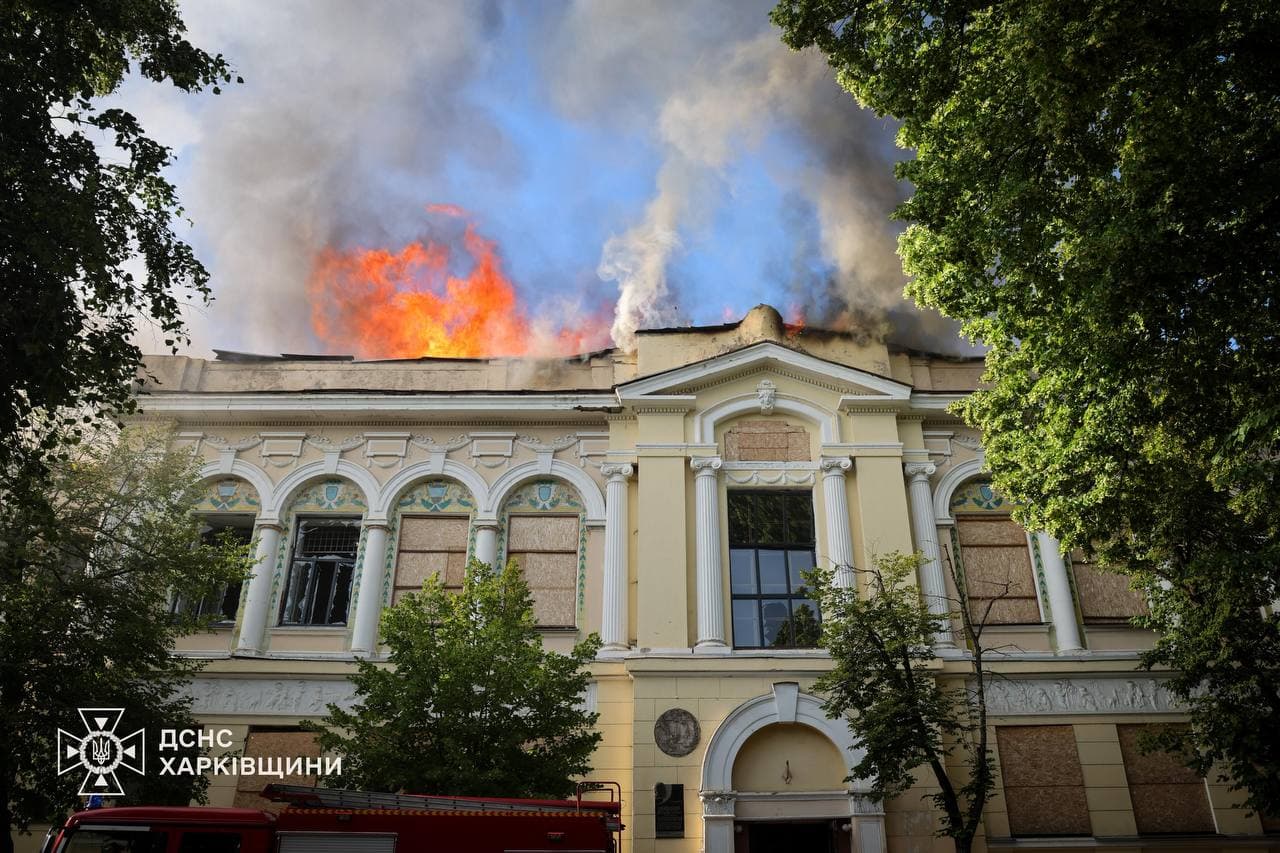
A one-month-old girl and four women were wounded when a Russian drone struck Kharkiv’s Kyivskyi district and set the Kharkiv Art Museum on fire, turning one attack into both a public health emergency and a cultural loss. The blast left museum staff and rescuers racing to pull paintings and other works from a building threatened by flames, smoke and firefighting water.
The infant was hospitalized after the strike. The injured women were reported to be 62, 34, 28 and 22 years old, and local officials said their condition was stable. Kharkiv regional governor Oleh Syniehubov called the attack “another act of Russian terrorism,” a phrase that reflected the way city and regional officials framed the strike, not as collateral damage from battlefield activity but as a direct hit on civilians and heritage.
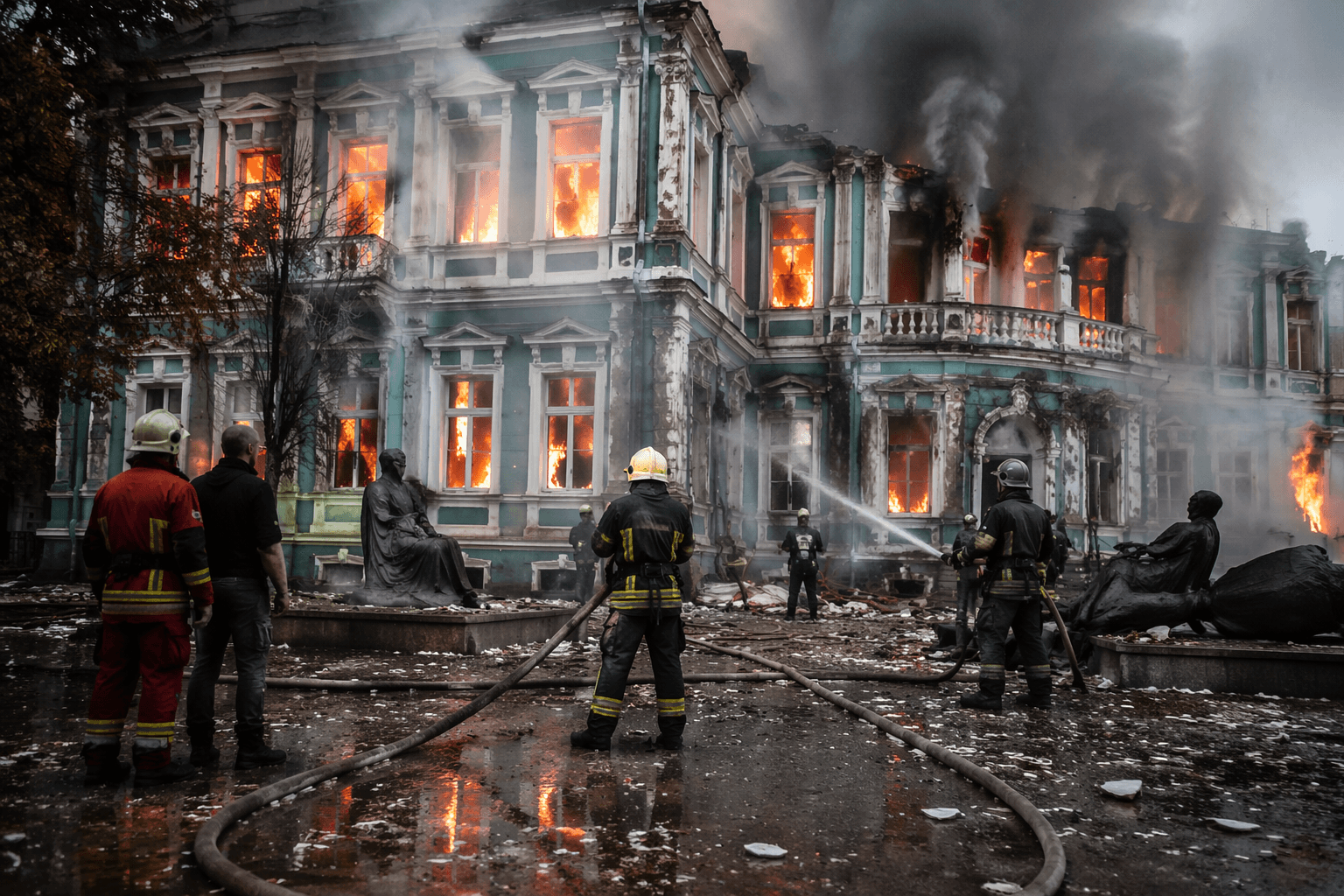
Kharkiv Mayor Ihor Terekhov said the fire created an urgent risk that exhibits could be destroyed or damaged beyond repair, forcing a hurried rescue operation inside one of Ukraine’s most important museums. Photographs and video from the scene showed flames consuming the building while volunteers and city workers carried art to safety. The museum has described its collection as one of the oldest and most valuable art collections in Ukraine, and background sources place the collection’s origins in 1805, with the museum’s later institutional form dating to 1920.
That depth of history helps explain why the fire resonated far beyond one building. The museum is widely reported to hold about 25,000 works, including paintings, graphics, sculpture and decorative arts from the 15th through the 21st centuries. For Kharkiv, a city that has endured repeated missile and drone attacks because of its proximity to the Russian border, the loss threatened more than art. It threatened memory, identity and the public institutions that survive war only when people are able to save them.
Kharkiv is Ukraine’s second-largest city and had an estimated pre-invasion population of about 1.42 million. The museum’s own wartime history underlines the stakes: one account says the collection was evacuated and the institution later reopened in 1944 after World War II losses, when retreating German troops set fire to the building. That earlier rescue and the emergency on June 14 now sit side by side, showing how the war has pushed violence into homes, streets and cultural landmarks at the same time.
This article was produced by Prism’s automated news system from verified source data, official records, and press releases, then run through automated quality and moderation checks before publishing. The system is built and supervised by the people who set the standards it runs under. Read our full AI policy.
Know something we missed? Have a correction or additional information?
Submit a Tip