Russia’s deadliest strike this year kills 16 across Ukraine, hits Kyiv hard
Russia’s overnight barrage hit Kyiv, Odesa and Dnipro, killing 16 and forcing emergency crews to battle fires through the morning.

Russia unleashed its heaviest aerial assault of the year in a two-wave overnight barrage that stretched across roughly 24 hours, striking Kyiv, Odesa, Dnipro and other Ukrainian cities with missiles and drones and leaving civilian neighborhoods scarred by fire, smoke and debris. The scale of the attack, 44 missiles and 659 drones, underscored how Russia is still able to mount mass strikes even as Ukraine’s air defenses intercept much of the incoming fire and as Western governments debate how much more support to provide.
Ukrainian officials said 16 people were killed, including a 12-year-old child, and that the number of wounded climbed into the scores, with at least 100 injured reported in some accounts. In Kyiv alone, city officials later said 54 people were hurt. Mayor Vitali Klitschko said four people died in the capital, including the child.
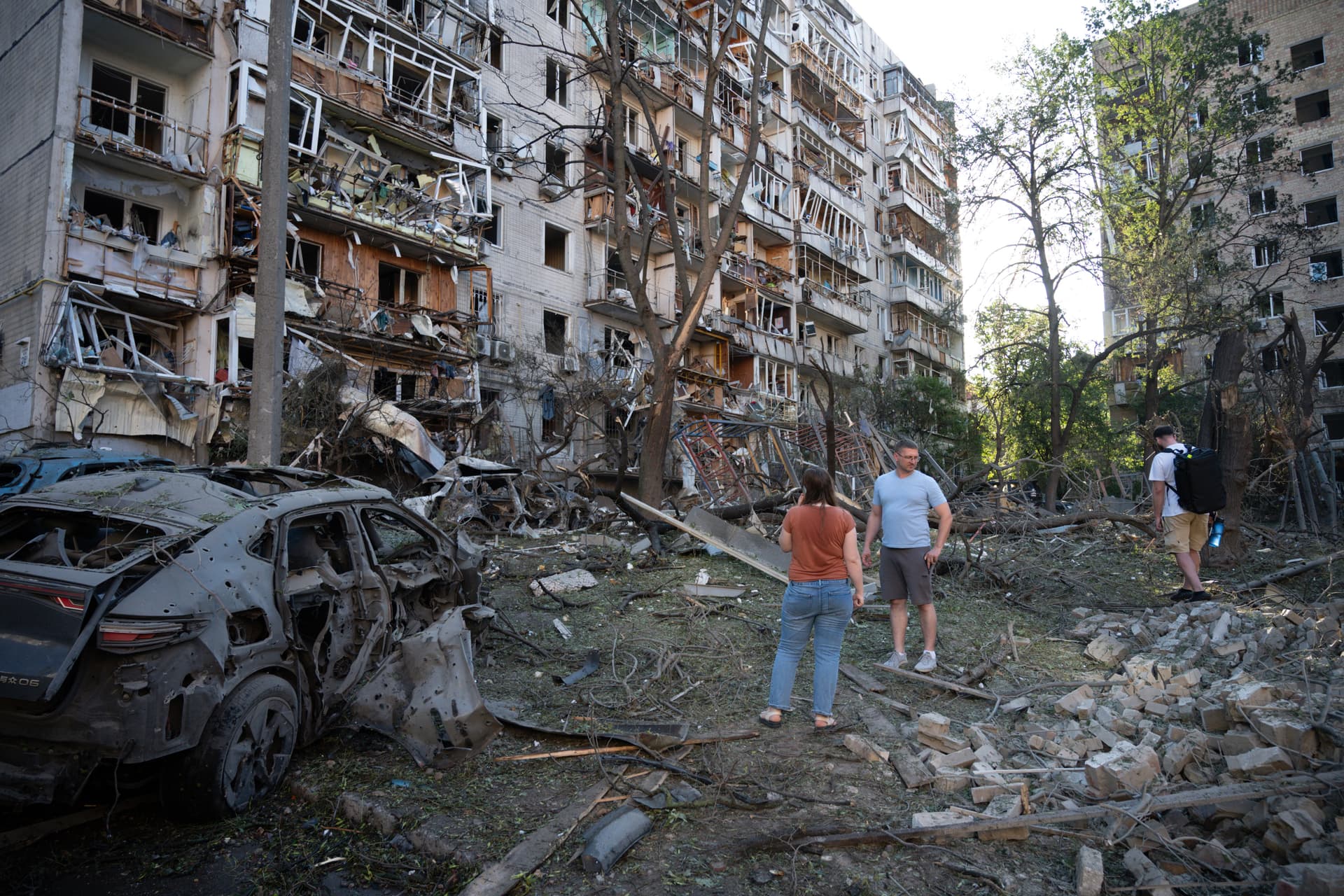
The capital took damage across several districts, including Podilskyi, Obolonskyi, Shevchenkivskyi and Desnianskyi, as emergency crews moved through apartment blocks, courtyards and streets littered with shattered glass and fallen masonry. Fires burned in parts of the city and black smoke rose into the night sky as firefighters and medics worked to contain multiple blazes. The State Emergency Service of Ukraine and local officials said emergency workers, police officers and children were among those injured.
Ukraine’s Air Force said it neutralized 31 missiles and 636 drones, a sign of the intensity of the attack and the pressure on air-defense systems to absorb repeated salvos. The barrage also showed how Russia has widened its target set, hitting not just Kyiv but also southern and eastern cities. Officials said nine people were killed in Odesa and at least two in Dnipro, where residential buildings caught fire. Kharkiv was also reported hit in the broader assault.
The strike landed at a moment when air-defense capacity has become a central issue for Ukraine and its allies. Each mass attack forces Ukrainian crews to decide where to concentrate scarce interceptors, while the debris from intercepted weapons still threatens neighborhoods, power systems and rescue teams on the ground. The pattern of repeated, large-scale strikes this year has kept civilian areas under sustained threat and raised the stakes for every shipment of missiles, launchers and radar systems from the West.
President Volodymyr Zelenskiy used the attack to argue that Moscow should face more pressure, saying Russia did not deserve any easing of global policy or lifting of sanctions. Later that day in the Netherlands, while accepting the International Four Freedoms Award, he observed a moment of silence for the victims of the overnight attacks, a stark reminder that the war’s toll now reaches far beyond the front line and continues to test Ukraine’s defenses, diplomacy and resilience.
This article was produced by Prism’s automated news system from verified source data, official records, and press releases, then run through automated quality and moderation checks before publishing. The system is built and supervised by the people who set the standards it runs under. Read our full AI policy.
Did this article answer your question?