Rwanda genocide financier Félicien Kabuga dies in Hague detention
Félicien Kabuga died in Hague detention with no verdict, ending a long-running genocide case that had already stalled over his dementia.

Félicien Kabuga died in a Hague hospital with no verdict in the genocide case that had followed him for decades, closing one of the final major prosecutions tied to the 1994 killings while leaving survivors without a final judgment on the charges.
The International Residual Mechanism for Criminal Tribunals said Kabuga died on May 16, 2026, while hospitalized in The Hague, and ordered a full inquiry into the circumstances of his death. Dutch authorities also began standard procedures under national law. Kabuga, born in 1935 in Muniga secteur, Mukarange commune, in Rwanda’s Byumba préfecture, had been held in detention as the court sought a state willing to accept him for provisional release.
His case had moved slowly from arrest to collapse. Kabuga was seized in Asnières-sur-Seine, France, on May 16, 2020, after more than two decades on the run, then transferred to the tribunal’s Hague branch on October 26, 2020. He made his initial appearance on November 11, 2020, and entered a not-guilty plea on his behalf. Trial began on September 29, 2022, but proceedings were indefinitely stayed on September 8, 2023, after judges found him unfit to stand trial because of dementia and cognitive impairment.
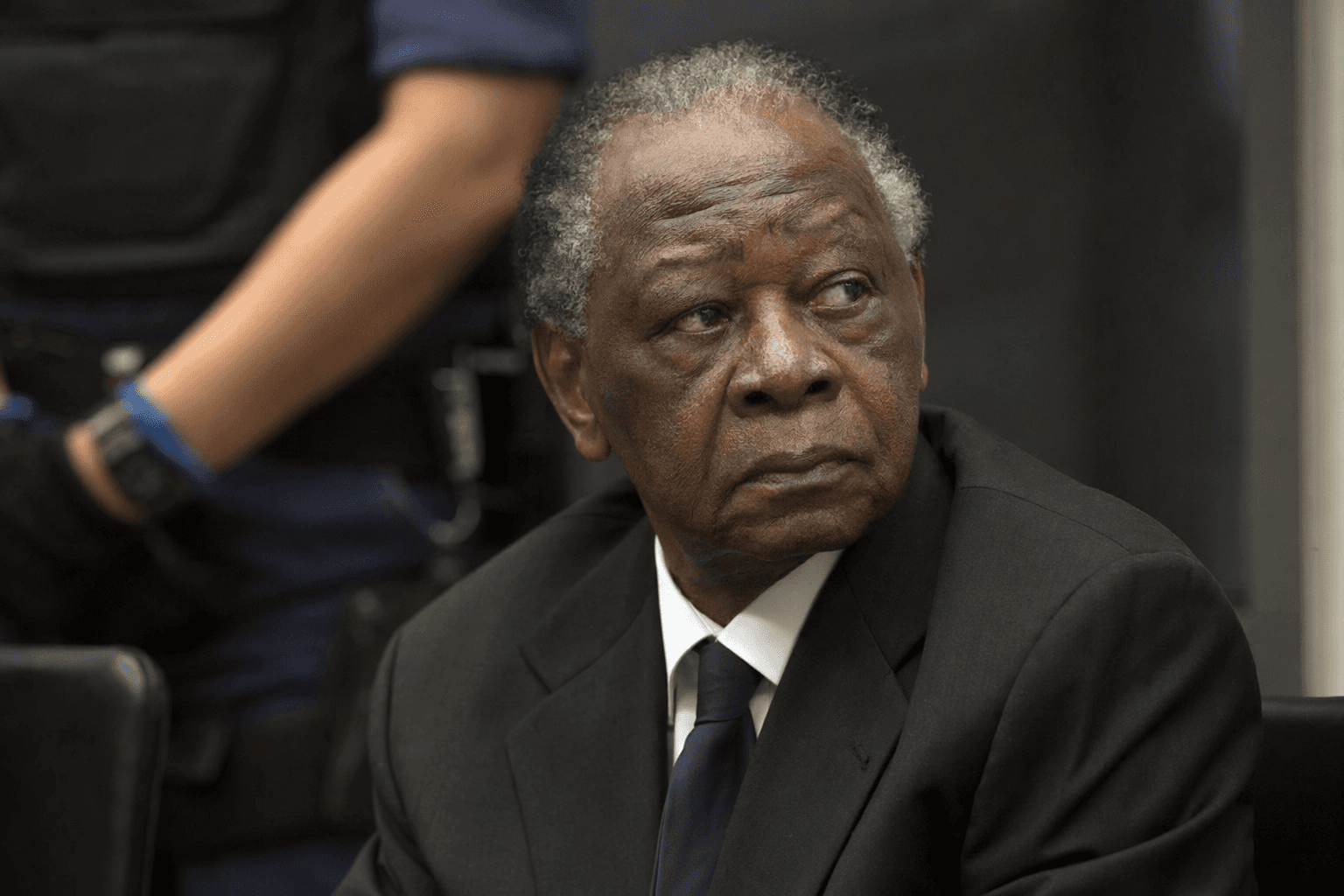
Prosecutors accused Kabuga of helping finance Radio Télévision Libre des Mille Collines, the station that broadcast anti-Tutsi propaganda during the genocide, and of serving as president of the National Defence Fund during the period covered by the indictment. The tribunal charged him with genocide, conspiracy to commit genocide, direct and public incitement to commit genocide, and crimes against humanity including persecution, extermination and murder.
The case had roots in the work of the International Criminal Tribunal for Rwanda, which issued an arrest warrant for Kabuga on April 29, 2013. It was later transferred to the Mechanism after United Nations Security Council Resolution 1966 in 2010, part of the U.N. system’s effort to wind down the Rwanda and former Yugoslavia tribunals. The Mechanism began operating in Arusha on July 1, 2012, and in The Hague on July 1, 2013.

Kabuga’s death underscores a hard truth about international justice: suspects can outlive the legal process even in one of the most heavily documented cases of mass atrocity. The genocide killed more than 800,000 Tutsis and moderate Hutus in about 100 days, and Kabuga had long been described as one of the men most closely linked to the machinery that enabled it. His death ended the prosecution, but not the question of how much justice can be delivered when accountability arrives late.
This article was produced by Prism’s automated news system from verified source data, official records, and press releases, then run through automated quality and moderation checks before publishing. The system is built and supervised by the people who set the standards it runs under. Read our full AI policy.
Did this article answer your question?