Rybakina blasts electronic line-calling after disputed Madrid Open call
Elena Rybakina said she no longer trusts electronic line-calling after a disputed clay-court point against Zheng Qinwen in Madrid. The call revived questions about whether tennis tech can be trusted when players can still see the mark.
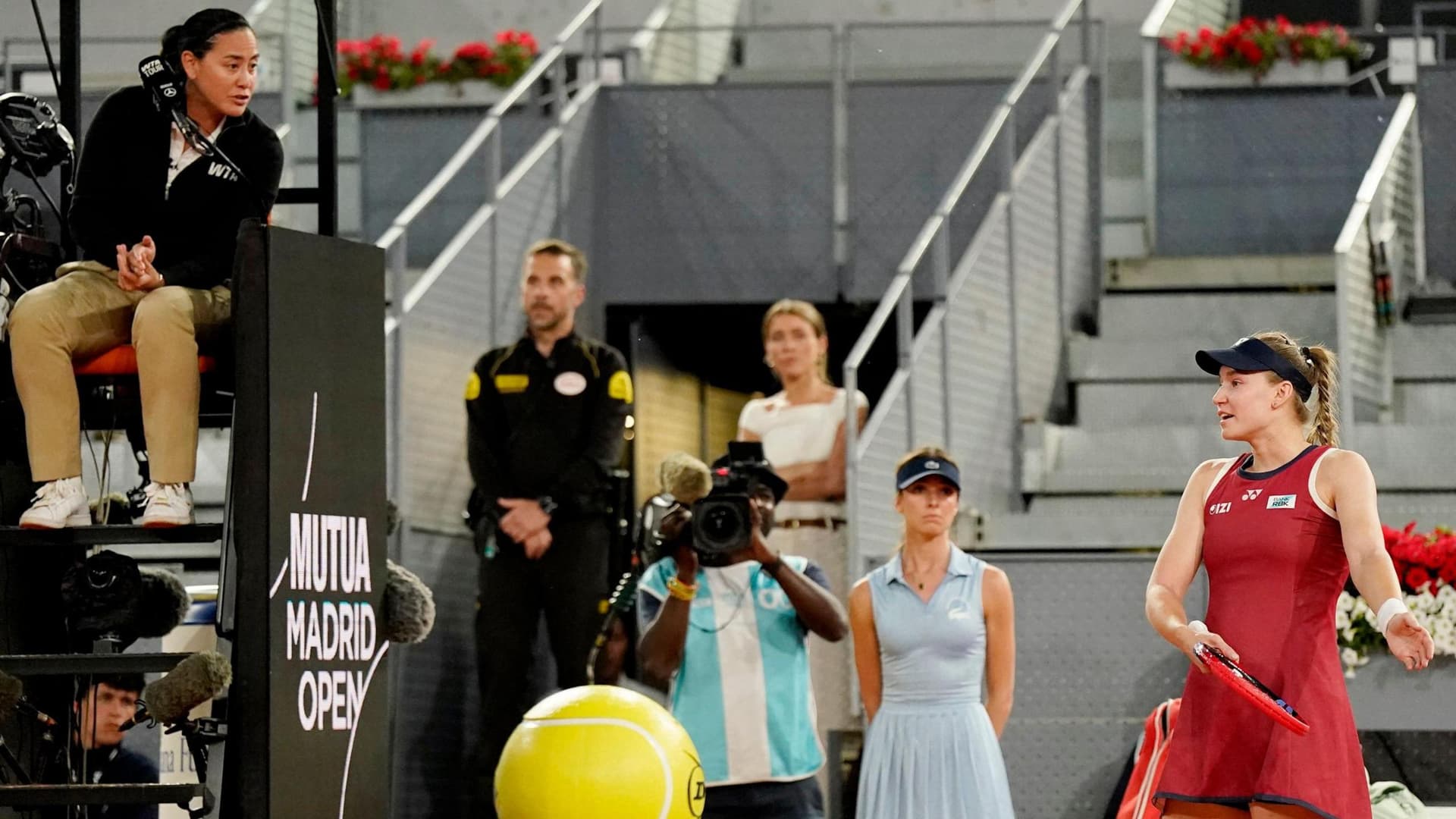
Elena Rybakina left the Caja Mágica furious after a disputed second-set call against Zheng Qinwen turned a routine point into a bigger argument about whether tennis has traded one kind of officiating controversy for another.
Rybakina beat Zheng 4-6, 6-4, 6-3 in Madrid on Sunday, April 26, 2026, rallying from a set down to reach the Mutua Madrid Open last 16. But the result was overshadowed by the moment when, leading 4-1 in the second set, Rybakina challenged a Zheng serve that the electronic line-calling system had ruled in. Rybakina pointed to a clay mark she believed showed the ball was out and argued with chair umpire Julie Kjendlie, saying the system was wrong and calling it a "stolen point."

After the match, Rybakina said she does not trust the electronic line-calling system and described the incident as "really frustrating," even as she acknowledged that Zheng had been serving well. The reaction turned a single point into a broader test of confidence in a technology now used to make out calls across the sport.
That matters because the ATP moved to tour-wide Electronic Line Calling Live in 2025, part of a broader push to remove human judgment from line calls and standardize officiating. In theory, the system should reduce arguments and eliminate the errors that once came from split-second decisions by line judges. On clay, though, players can still see physical ball marks on the surface, and when those marks appear to conflict with the call on the screen, the technology can look less like a solution than a new source of doubt.
Rybakina's complaint cuts to a deeper issue than whether one serve was in or out. Electronic line-calling is being asked to deliver not only accuracy, but legitimacy. When a player can point to a visible clay mark and feel the system is overruling what she sees with her own eyes, the dispute becomes about transparency, trust and whether tennis has left too little room for review when confidence in the machine starts to crack.
Rybakina, the second seed and Australian Open champion, advanced to the round of 16 and was scheduled to face Anastasia Potapova for a place in the quarter-finals. The match was a reminder that in tennis, the burden of technology is not just getting the call right, but convincing players that the call can be believed.
This article was produced by Prism’s automated news system from verified source data, official records, and press releases, then run through automated quality and moderation checks before publishing. The system is built and supervised by the people who set the standards it runs under. Read our full AI policy.
Did this article answer your question?

.jpg&w=1920&q=75)
