Sabalenka powers to fourth straight Australian Open final
Sabalenka beat Elina Svitolina 6-2, 6-3 to reach her fourth straight Australian Open final and move within one win of a third title in four years.
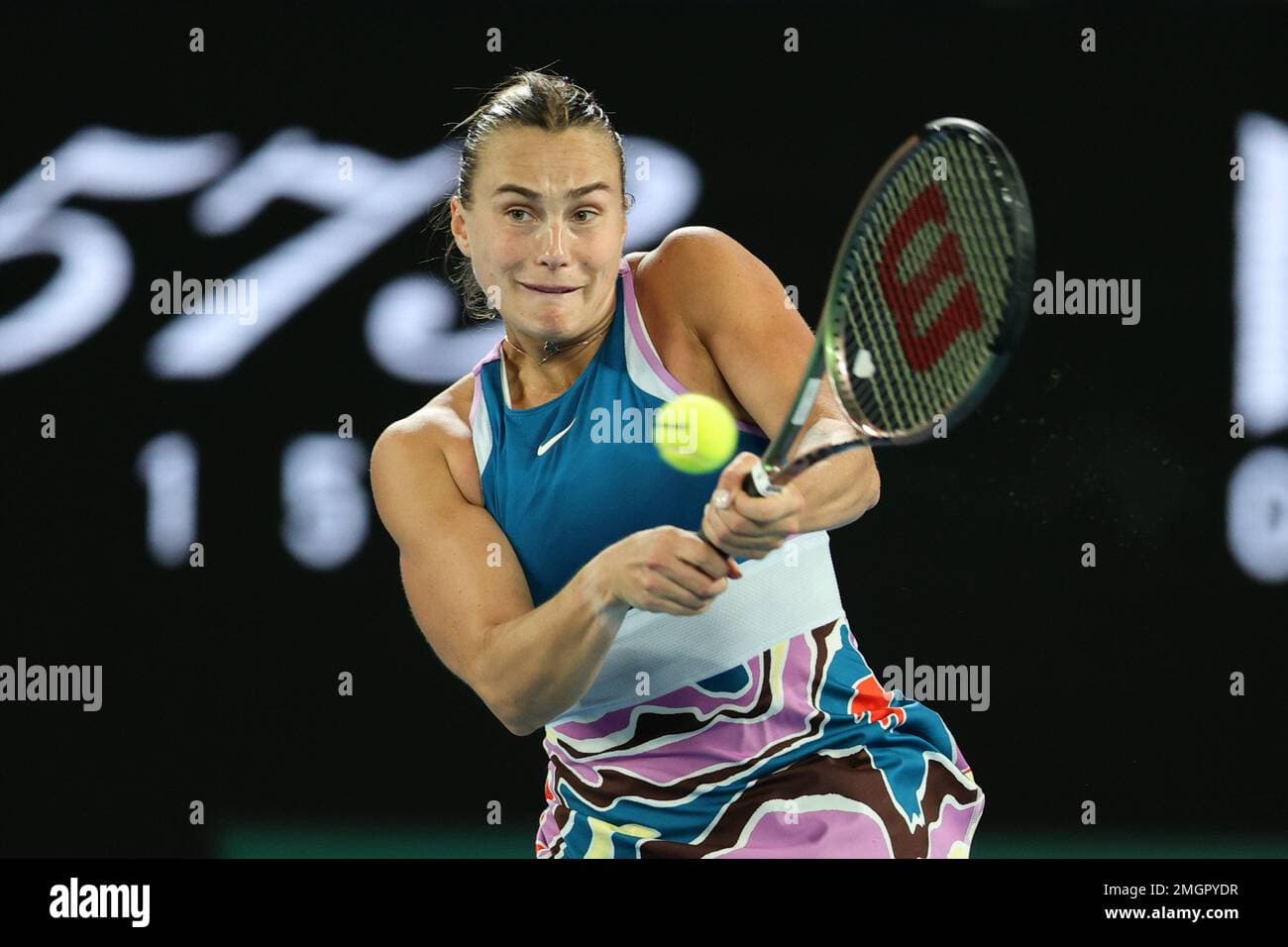
Aryna Sabalenka overpowered Elina Svitolina 6-2, 6-3 in Melbourne to reach her fourth consecutive Australian Open singles final, extending a run that has defined the early season and reshaped the conversation around power tennis.
Sabalenka, the world No. 1, overwhelmed Svitolina with blistering aggression from the baseline, hitting 19 winners in the opening set and finishing with 29 winners to Svitolina’s 12. She broke serve twice in the first set and never allowed the Ukrainian to build sustained pressure, closing the match in straight sets to preserve a dominant start to 2026.
The victory moves Sabalenka within one win of a third Australian Open crown in four years and marks her as only the third woman in the Open era to reach four straight finals at Melbourne Park, joining Evonne Goolagong and Martina Hingis. It also extended a winning trajectory that has made her the tournament’s defining figure and a frequent finals attraction for broadcasters and sponsors.
The match contained a notable officiating moment that highlighted ongoing debates about player behavior and stadium etiquette. Umpire Louise Azemar Engzell assessed Sabalenka a point penalty for hindrance at the start of the fourth game after ruling that a prolonged grunt following a shanked forehand distracted Svitolina. The forehand looked destined to be long but landed in, giving Svitolina the chance to play on before the intervention. Hindrance is called for a distraction that prevents a player from making a shot and can include an opponent’s loud noise. The call did not derail Sabalenka’s rhythm, but it underscored tensions around noise, pace and the boundaries of gamesmanship that officials and players must navigate.
After the match Sabalenka was visibly emotional in her on-court television interview. “It’s an incredible achievement but the job’s not done yet,” she said. “I've been watching her game, (Svitolina) was playing incredible. I felt like I had to step in and put as much pressure as I could back on her. I’m glad the level was there. I think I played great tennis.”

The broader tableau at Melbourne Park also carried cultural weight. There were no handshakes at the net and no group photo prior to the match, a practice that has become customary when Ukrainian players face opponents from Russia and Belarus. The gesture served as a reminder that Grand Slam courts remain stages for political expression, and that athletes continue to negotiate personal and national loyalties under global scrutiny.
Tournament dynamics further amplified the significance of Sabalenka’s win. All four semifinalists reached that stage without dropping a set, the first time that has happened in Australia in 56 years, and both Sabalenka and Svitolina had entered the week on 10-match winning streaks after warmup titles. Sabalenka now awaits the winner of the second semifinal between sixth-seeded Jessica Pegula and fifth-seeded Elena Rybakina, the 2022 Wimbledon champion who was runner-up in Melbourne to Sabalenka in 2023.
Beyond the scoreboard, Sabalenka’s consistency on hard courts is reshaping the women’s tour narrative, reinforcing the commercial appeal of a dominant, marketable champion and intensifying tactical conversations about how to counter raw power. Fan forums were already buzzing with unverified claims that her run represents one of the most sustained hard-court streaks in the Open era, a reminder that social media shapes how sporting legacies are debated even as official records continue to accumulate on the court.
This article was produced by Prism’s automated news system from verified source data, official records, and press releases, then run through automated quality and moderation checks before publishing. The system is built and supervised by the people who set the standards it runs under. Read our full AI policy.
Did this article answer your question?