Sacred Geometry Jewelry: Origins, Motifs and Contemporary Designers
Sacred geometry jewelry ties pattern, nature and ritual into wearable form — but many claims are retailer-authored; ask for provenance, metal hallmarks and clear sourcing before you buy.
A living visual language
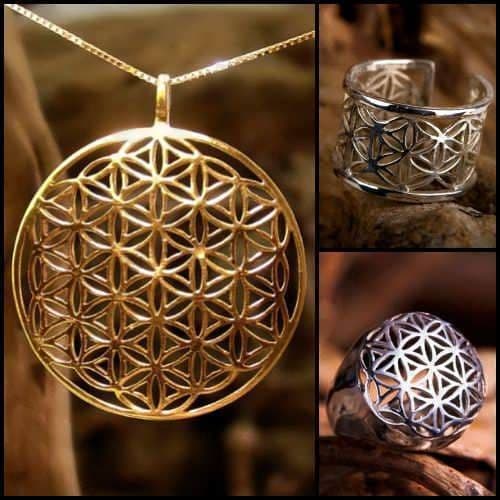
Sacred geometry appears in shells, snowflakes and temple friezes — and now in pendants, cuffs and malas sold online and in small galleries. Retail copy across several vendors frames these patterns as both aesthetic and energetic: Rare Earth Gallery writes that “sacred geometry might sound mystical or abstract at first, but it's truly all around us—in the spirals of shells, the symmetry of snowflakes, and the structure of ancient temples.” That mixture of natural pattern and spiritual meaning explains why designers are translating motifs into fine and artisanal jewelry today.
What sacred geometry means (and who says so)
Multiple retailer sites offer concise definitions and a rationale for wearing these forms. Sincerely Silver summarizes the idea this way: “sacred geometry ascribes symbolic or spiritual meanings to specific geometric proportions and geometric shapes. The term, sacred geometry, is used by archaeologists, mathematicians and anthropologists to explain the spiritual, philosophical and religious beliefs regarding geometric shapes and patterns.” Lunar Vines adds a spiritual framing: “Sacred geometry encompasses geometric shapes and patterns that are found throughout nature and the cosmos… believed to hold energetic properties that resonate with the fundamental laws of creation and existence.” Treat these statements as the vendors’ positioning: they explain why many buyers seek these pieces, but they are not independent verification of therapeutic effect.
Core motifs you’ll see
A concise list of the motifs most frequently invoked in contemporary sacred-geometry collections appears in the guide published March 5, 2026: Flower of Life, Vesica Piscis, Seed of Life, Sri Yantra, Merkaba, Metatron’s Cube, Golden Spiral/Phi. Retailers extend that list: Culture Cross and Sincerely Silver sell numerous Flower of Life pieces; Rare Earth Gallery highlights the Tree of Life and provides images named for “crystal-grid-metatrons-cube”; Culture Cross even displays a heading for “## The Fibonacci Sequence,” linking number, ratio and form.
Symbol-by-symbol snapshots
Sri Yantra — Culture Cross offers the fullest vendor description and a provenance note: “We collected this striking Sri Yantra pendant while traveling through the desert villages of Northwest India (Rajastahan).” Their product copy explains the symbol’s geometry and meaning in classical terms: “The Sri Yantra is one of the most sacred ancient symbols of India. It represents the divine manifestation of the forces of the universe. The upward triangles represent the divine masculine energy, while the downward triangles represent the divine feminine energy. They all radiate out of the central point, which represent the one force of energy which manifests into all consciousness and reality. According to ancient Hindu texts, meditation with the Shri Yantra is believed to help in connecting with this central force of the universe and attain enlightenment.” Note the source uses both “Sri Yantra” and “Shri Yantra,” and preserves a provenance phrase spelling of “Rajastahan.”
Merkaba — Rare Earth Gallery frames the Merkaba as a three-dimensional form and a meditation vehicle: “The Merkaba: Spiritual Protection And Ascension. Represents The Integration Of The Physical And Spiritual. A three-dimensional star tetrahedron. Often visualized in meditation as a vehicle for spiritual transformation and ascension.”
Tree of Life — Appearing on bracelets and charms at Rare Earth, the Tree is described in sacred-geometry language: “This bracelet features a Tree Of Life charm. In sacred geometry, the Tree of Life is represented as a pattern with interconnected circles (sepiroth) symbolizing aspects of the divine, through which the finite becomes infinite.”
Flower of Life, Seed of Life, Vesica Piscis, Metatron’s Cube, Golden Spiral/Phi — these motifs are named repeatedly across the sources. Culture Cross lists Flower of Life pendants, arm cuffs and harmony bells; the Original Report includes Vesica Piscis and Seed of Life in its list of motifs; Metatron’s Cube appears as a crystal-grid image on Rare Earth; Golden Spiral/Phi and the Fibonacci sequence are referenced in the Original Report and in Culture Cross headings. When sources describe energetic or healing properties for these motifs, they do so as vendor assertions or as connections to traditional meditative practices rather than as scientific fact.
Designs, materials and product examples
Contemporary sacred-geometry jewelry takes many forms: pendants, necklaces, rings, earrings, arm cuffs, spinner and gyroscope necklaces, harmony-bell pendants, silver items and mala beads. Culture Cross maintains a dedicated category with “# Sacred Geometry Jewelry — 43 products” including titles such as Spinning Star Sacred Geometry Pendant Necklace; Celtic Triskelion Pendant; Large Flower of Life Harmony Bell Pendant; Sacred Geometry Gyroscope Spinner Necklace; Silver Flower of Life Pendant; Sacred Sri Yantra Necklace; Cosmic Sri Yantra Pendant Necklace. Their Sri Yantra pendant ships with a complimentary chain in 16–18" or 30" lengths or a vegan leather cord in black or brown.
Magickcollective positions sacred geometry within ritual and chakra systems, offering malas and jewelry organized by intent: categories include Wisdom, Intention, Tantric Necklace, Long Mala - 108 Bead Japa Mala, and Short Mala - 54 Bead Half Mala Necklace. Their product framing connects gemstones (amethyst, lapis lazuli, moonstone, labradorite, rose quartz, tiger eye, turquoise, obsidian, pearl, agate) to chakra work (Root through Crown). Their site also invites visitors to “DOWNLOAD YOUR FREE GEMSTONE GUIDE,” a promotional asset displayed with a countdown at zero in the page excerpt.
Rare Earth Gallery’s assortment mixes crystal-based decor and wearable pieces and provides commerce details such as “Free Shipping On U.S. Orders Over $100 & Under 10 Lbs” and a free downloadable “Sacred Geometry Chart” aimed at beginners.
How vendors advise using the jewelry
Vendors consistently encourage wearing sacred forms with intention. Sincerely Silver writes that sacred jewelry “is used and worn with intention, making it one of the most meaningful jewelry items,” and that such pieces “are believed to facilitate healing, balance and self-discovery while the individual is wearing it.” Lunar Vines instructs wearers to “To harness the transformative power of sacred geometry jewelry, wear it with reverence and intention. Visualize the geometric shapes and patterns radiating their energy outward, harmonizing your energy field and connecting you to the higher realms of consciousness.” Magickcollective similarly notes: “Wearing sacred symbols as mala necklaces, pendants, or gemstone jewelry allows you to carry their vibrations with you in daily life.” These remain vendor-sourced practices rather than certified therapeutic claims.
Provenance, transparency and red flags
A single provenance claim appears in the material: Culture Cross’s note that the Sri Yantra pendant was “collected… while traveling through the desert villages of Northwest India (Rajastahan).” That specific phrasing is useful but limited — the copy provides no date, maker attribution or certification. Other commerce signals are practical but not proof of ethical sourcing: Lunar Vines lists markets and shows a site footer with many countries (the United States appears twice in the provided list), and their site shows “© 2026 LUNAR VINES, All rights reserved” and a “Powered by Shopify” badge. Rare Earth’s shipping threshold and downloadable chart and Magickcollective’s free guide are customer-facing conveniences, not provenance documentation.
- Clear metal hallmarks or karat/stamp information and a written materials breakdown.
- Stone origin statements and treatment disclosures (e.g., heat treatments, stabilization).
- Maker attribution or batch provenance if a piece claims to be collected or artisan-made.
- Documentation for ethical claims beyond marketing language; vendor descriptions of spiritual benefit should be treated as belief-based messaging.
When you evaluate a sacred-geometry piece, insist on:
Practical buying notes
Look for tangible details that appeared in vendor listings: chain length options (Culture Cross offers 16–18" or 30"), mala bead counts (108-bead or 54-bead variants at Magickcollective), metal types such as silver (several sites list “silver pendants” and “Silver Beehive Sacred Geometry Earrings”), and complementary offers (free chain or vegan cord; Rare Earth’s free sacred geometry chart). Confirm shipping policies — Rare Earth advertises “Free Shipping On U.S. Orders Over $100 & Under 10 Lbs” — and be cautious when promotional assets show malfunctions (Magickcollective’s free guide banner displayed with a zeroed countdown in the excerpt).
Final appraisal
Sacred geometry jewelry sits at a crossroads of craft, devotion and commerce: motifs with deep cultural histories are remade as silver pendants, gyroscope necklaces and mala beads for modern life. Vendors and galleries provide rich explanatory copy and practical touches — from chain length choices to downloadable charts — but much of the spiritual and therapeutic language comes from retailer positioning. Purchase confidently when a maker can show clear materials, hallmarks and provenance; otherwise treat the metaphysical claims as part of the product’s narrative rather than guaranteed effect. In the end, meaningful sacred-geometry jewelry marries careful design with transparent sourcing — and that combination is what will sustain the form beyond trend.
Know something we missed? Have a correction or additional information?
Submit a Tip