Safety Primer: How to Use Bath Bombs Without Irritation
A practical safety guide explains what bath bombs contain, how they produce fizz, and why some users experience skin reactions. The guidance highlights who is at greater risk and offers repeatable steps to reduce irritation while maintaining an enjoyable soak.
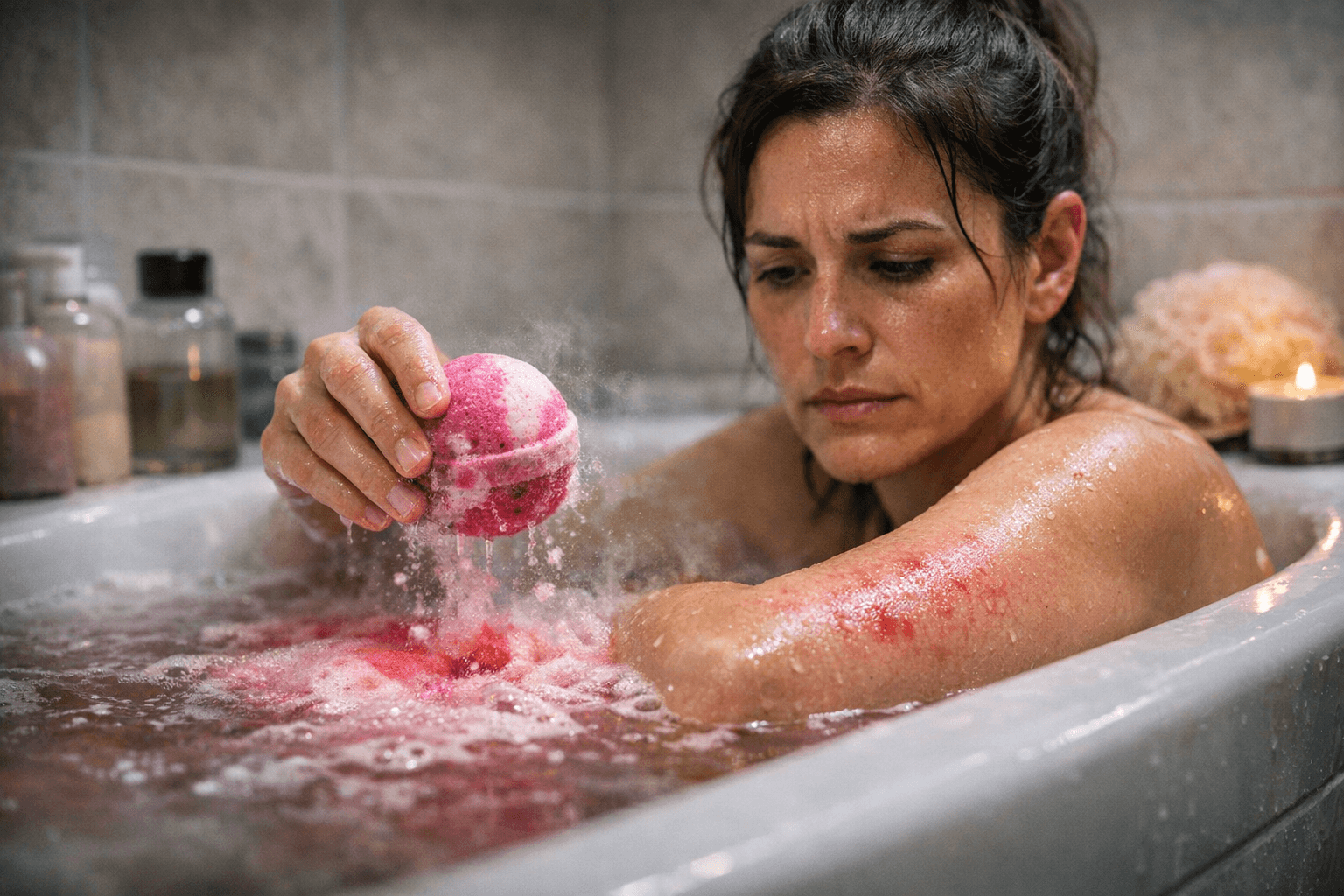
Bath bombs produce their characteristic fizz through a simple baking soda and citric acid reaction, but that pleasant effervescence often comes packaged with fragrances, dyes, preservatives, glitter, and botanical add-ins that can irritate skin. Understanding those ingredients and how they interact with individual skin sensitivities is the clearest way to reduce problems and keep bath time relaxing.
People with sensitive skin, eczema, or known allergies to fragrances or dyes face higher risk of reactions. Common responses include redness, itching, and scaling. Additives such as synthetic fragrances and bright dyes are frequent culprits, while glitter and loose botanical matter can abrade or trap irritants against the skin. Bath additives can also alter the pH of bathing water, which for vaginal and groin areas increases the risk of irritation or yeast infection. Those outcomes matter not only for comfort but for longer term skin health and infection risk.
Practical steps minimize those risks while preserving the experience. Limit soak time to about 10 to 15 minutes to reduce exposure to dissolved ingredients. Rinse off after bathing to remove residual dyes and fragrance oils left on the skin. Avoid using bath bombs that list ingredients you have reacted to in the past, and steer toward formulations that list few synthetic dyes or fragrances if you have sensitive skin. When choosing products, look for bombs with minimal additives and clear ingredient lists so you can match products to your skin’s tolerance.
The guidance focuses on safety and usage rather than ranking specific brands. That emphasis makes the information useful whether you buy bath bombs, receive them as gifts, or make them at home. If you make your own, consider keeping formulations simple and labeling ingredients so anyone using them knows what is inside. For community sellers and craft fair vendors, clear labeling reduces the chance a customer will experience an avoidable reaction.
Bath bombs remain a popular way to enhance baths, but a few simple precautions preserve the enjoyment. Limiting soak time, rinsing after use, avoiding known triggers, and choosing gentler ingredient lists give you control over the experience and help prevent common skin and mucosal irritations.
Know something we missed? Have a correction or additional information?
Submit a Tip