Samsung Aims to Double Galaxy AI Mobile Devices to 800 Million
Samsung announced plans to expand the number of mobile devices equipped with Galaxy AI features to about 800 million during 2026, a move that could reshape the AI services ecosystem for smartphones and tablets. The rollout, powered largely by Google’s Gemini, amplifies competition among platform providers and raises questions about supply chains, privacy and how quickly consumers will adopt on‑device AI.

Samsung Electronics told Reuters it expects to double the number of its mobile devices carrying Galaxy AI features to about 800 million units during 2026, up from roughly 400 million that had the capabilities by last year. The announcement came in the first Reuters interview with T M Roh since his elevation to co‑CEO in November, in which he outlined an aggressive company‑wide push to embed artificial intelligence across products.
T M Roh, who oversees Samsung’s mobile phones, televisions and home appliances, framed the expansion as part of an AI‑first strategy. “We will apply AI to all products, all functions, and all services as quickly as possible,” Roh told Reuters. He said Samsung’s surveys showed consumer awareness of the Galaxy AI brand climbed to about 80 percent from roughly 30 percent within one year, signaling a potentially rapid uptake of features across the installed base.
Samsung’s Galaxy AI capabilities are described as being largely powered by Google’s Gemini, a partnership that analysts say gives Alphabet a broader distribution channel for its large language and multimodal models. Reuters noted that deploying Gemini‑backed features across hundreds of millions of smartphones and tablets would strengthen Google’s position in the intensifying global race over generative AI services on consumer devices.
Roh also addressed consumer skepticism about emerging AI features. “Even though the AI technology might seem a bit doubtful right now, within six months to a year, these technologies will become more widespread,” he told Reuters, signaling Samsung’s expectation of rapid normalization of on‑device AI among users.
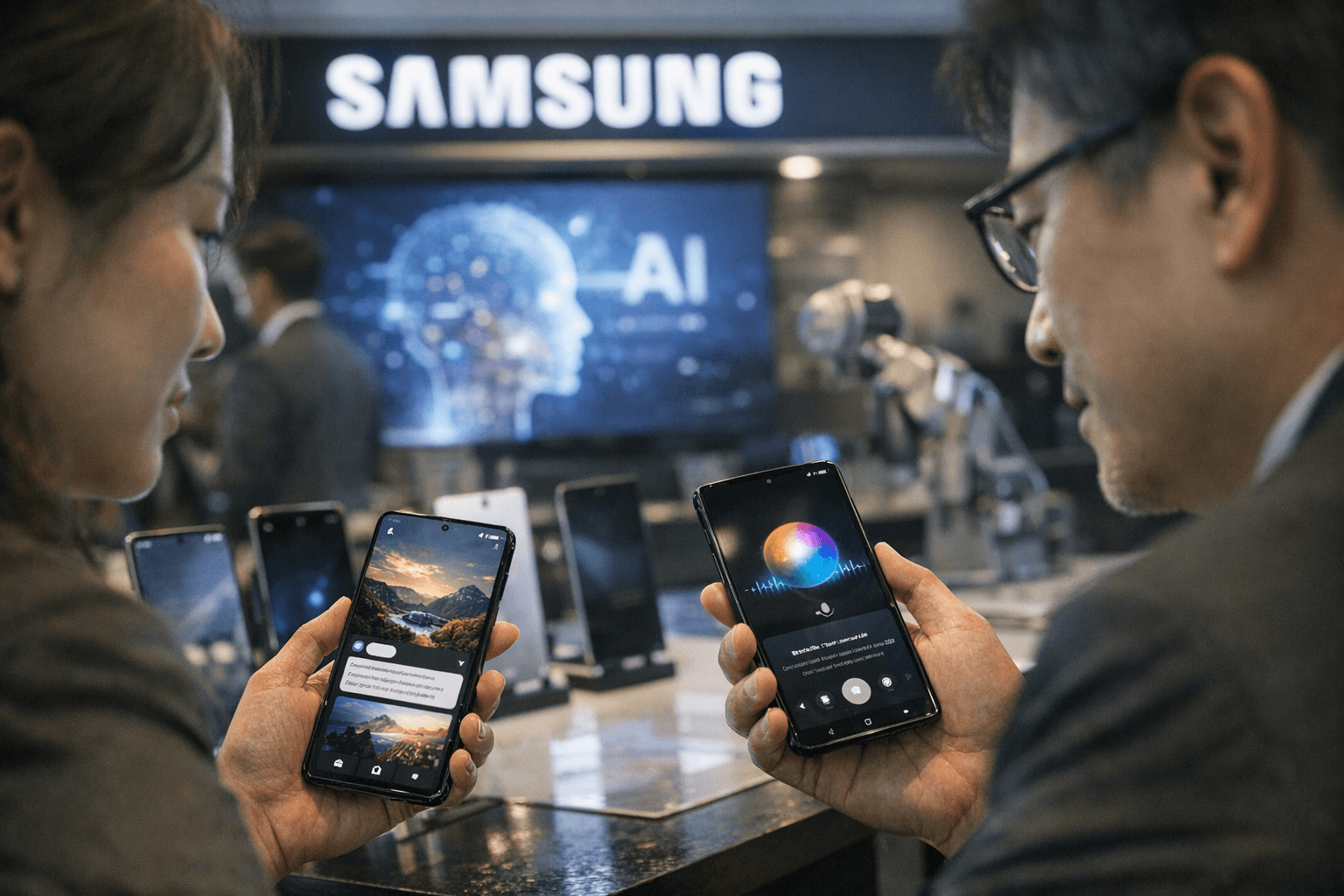
The planned expansion is concentrated on mobile device categories explicitly identified by the company as smartphones and tablets, with the broader corporate aim to extend intelligence across TVs, appliances and services. Achieving an 800 million‑unit footprint this year would embed advanced AI capabilities in a substantial portion of the global Android ecosystem, reshaping how users interact with voice assistants, camera features, messaging and productivity functions.
The move also intersects with industrywide supply challenges. A technology site summarizing the reporting linked Samsung’s AI push to broader dynamics in the consumer electronics supply chain, noting that a memory chip shortage threatens pricing across the industry. Analysts say such constraints could influence the timing and economics of feature rollouts, particularly when AI functions demand more local processing or memory.
Samsung’s announcement underscores the shifting battleground for consumer AI: device makers are racing not only to add features but to secure partnerships and hardware capacity that will determine which ecosystems deliver the most capable and privacy‑sensitive experiences. As Samsung begins a wide‑scale enablement of Galaxy AI, the competitive implications for Google, Apple and other platform providers will become clearer throughout 2026.
This article was produced by Prism’s automated news system from verified source data, official records, and press releases, then run through automated quality and moderation checks before publishing. The system is built and supervised by the people who set the standards it runs under. Read our full AI policy.
Did this article answer your question?