San Diego Zoo channel brings wildlife comfort to hospitalized children
A 24-hour zoo channel now reaches 368 hospitals and has been linked to happier children and parents, a sign digital enrichment is entering pediatric care.
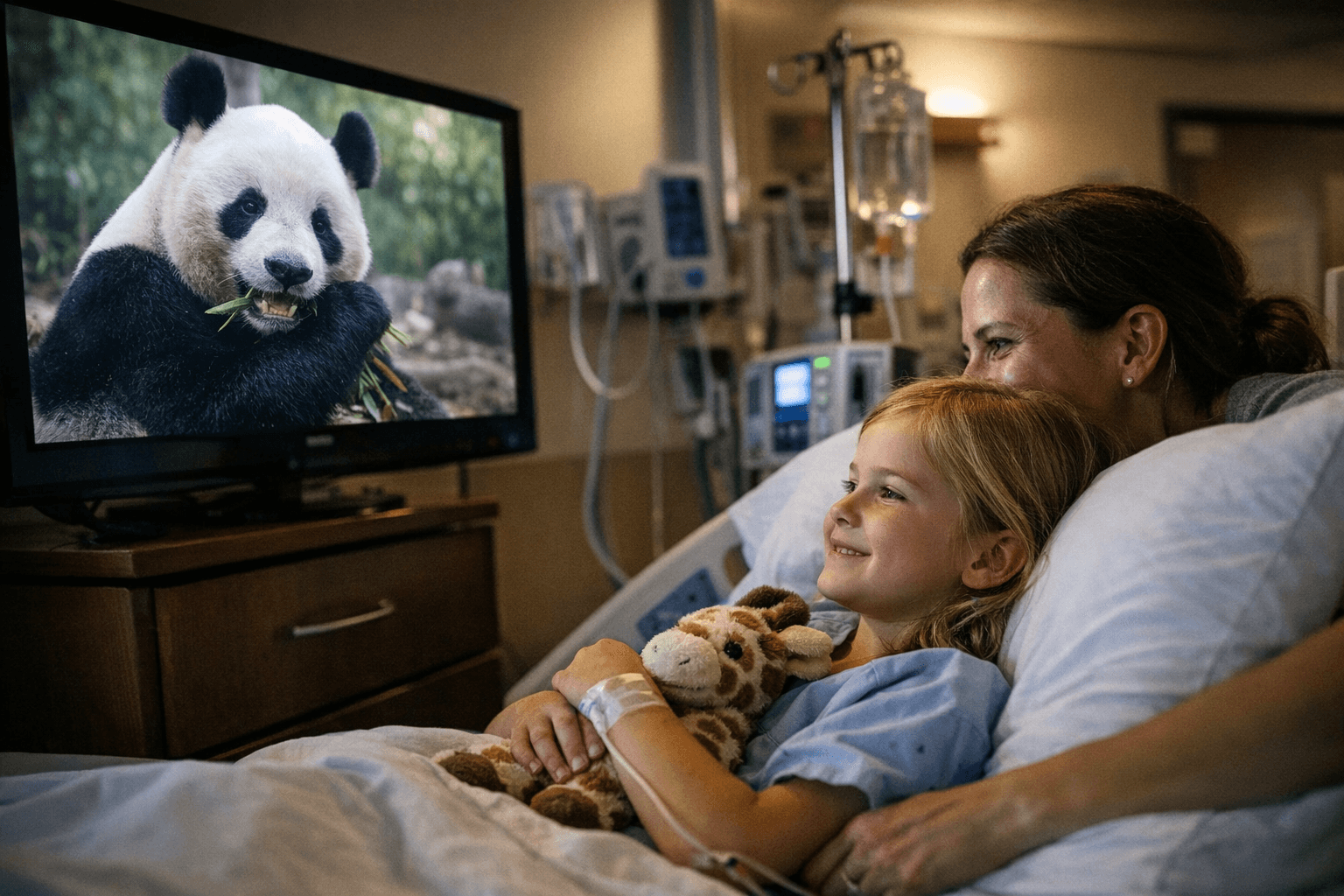
A commercial-free zoo channel built for children’s hospitals has become a quiet part of bedside care, and a San Diego Zoo study found 87% of kids and 83% of parents said it made them happy.
San Diego Zoo Wildlife Explorers now airs around the clock in 368 children’s hospitals and Ronald McDonald Houses across 48 U.S. states, Washington, D.C., and 14 countries. Other recent reporting has put the network at more than 400 hospitals and medical facilities worldwide, with an estimated 25 million viewers each year.
The program began locally at Rady Children’s Hospital and Ronald McDonald House of San Diego, then expanded into a wider distribution model that pairs animal footage with live webcams, keeper presentations and educational segments. Funded by philanthropist T. Denny Sanford, the channel was designed to offer comfort and a sense of normalcy to children who cannot leave the ward or visit the zoo in person.
That framing gives the effort broader significance than novelty alone. For hospitals and child health systems, the question is not whether a giraffe camera or penguin clip can entertain for a few minutes, but whether low-cost digital enrichment can support recovery environments for patients facing long stays, restricted movement and repeated procedures. The zoo’s own data, limited though it is, points in that direction by tying the channel to emotional lift for both children and parents.

The institutional footprint has grown steadily. In March 2019, San Diego Zoo Kids marked its 200th facility launch at UCLA Mattel Children’s Hospital, a milestone that reflected how quickly the channel had moved from a local idea to a widely distributed bedside offering. San Diego Zoo Wildlife Alliance says its broader work now reaches more than 1 billion people in 150 countries through its parks, media channels, websites, educational resources and Wildlife Explorers television programming.
The reach matters because access is uneven in pediatric medicine. Not every child can step outside, and not every family can bridge the isolation of a hospital room with time, travel or money. A 24-hour wildlife channel will not replace clinicians, child life specialists or family presence, but it has become one more institutional tool in a care setting where comfort, distraction and routine can influence how children experience treatment.
This article was produced by Prism’s automated news system from verified source data, official records, and press releases, then run through automated quality and moderation checks before publishing. The system is built and supervised by the people who set the standards it runs under. Read our full AI policy.
Did this article answer your question?