Sanders warns AI could wipe out 100 million U.S. jobs
Sanders says AI could erase up to 97 million jobs in a decade, and he wants workers to share the gains through shorter weeks, profit-sharing and board seats.

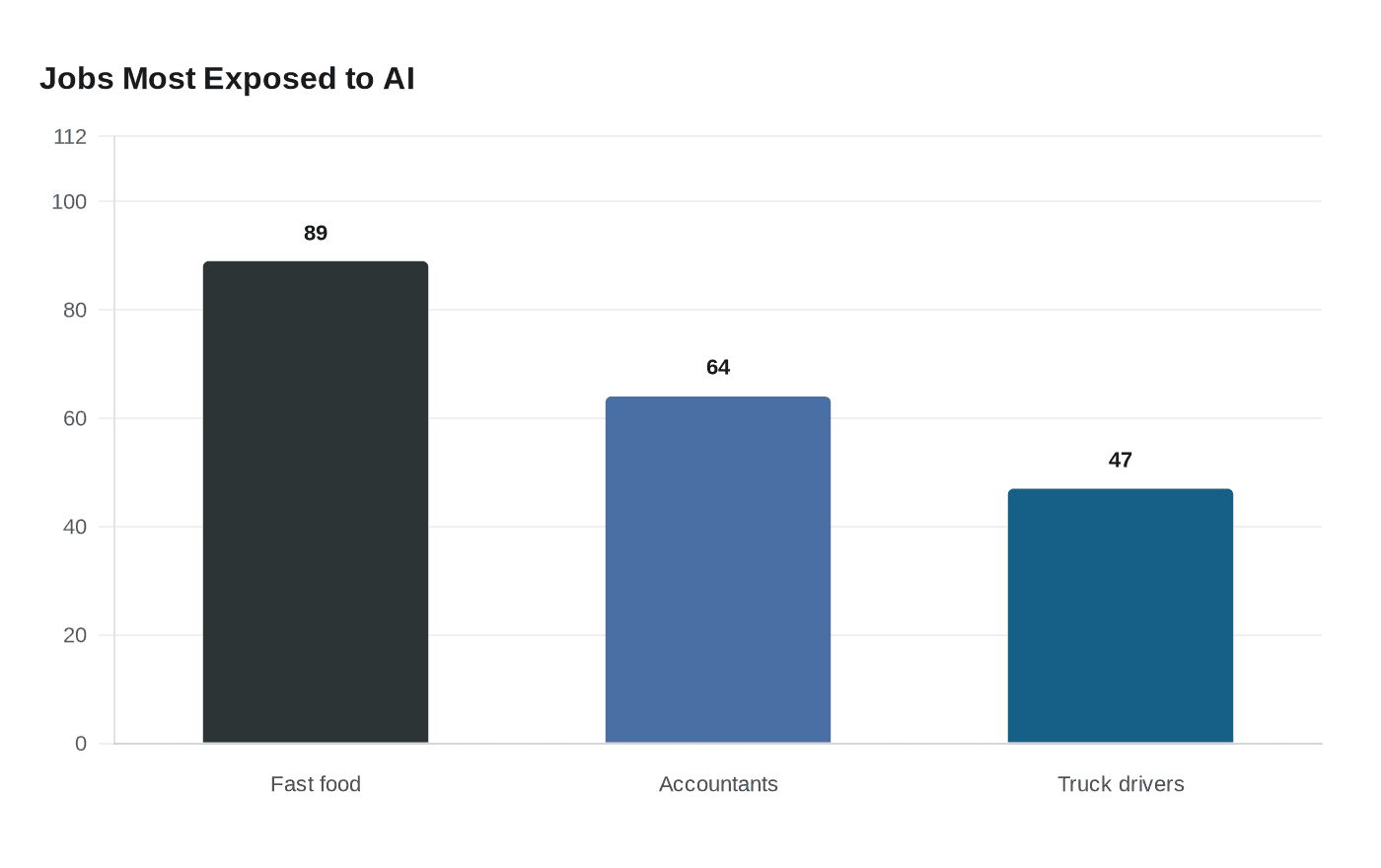
Bernie Sanders is trying to turn the AI debate into a question of ownership. His warning is stark: automation and artificial intelligence could eliminate nearly 100 million U.S. jobs over the next decade, with one model in his Senate HELP Committee report putting the figure at 97 million. The jobs most exposed include 89% of fast food and counter workers, 64% of accountants and 47% of truck drivers.
Sanders has aimed that message at the people financing the technology’s rollout, naming Elon Musk, Larry Ellison, Mark Zuckerberg and Jeff Bezos as among the billionaires pouring “hundreds of billions” into AI and robotics. His argument is not just that machines will change work, but that the financial gains from that change are being claimed by a small elite. Unless Congress intervenes, Sanders says corporations can use AI to slash labor costs, raise profits and widen wealth concentration.

His answer is to give workers a direct claim on the gains. The report calls for a 32-hour workweek with no loss in pay, profit-sharing and worker seats on corporate boards. That would mean AI productivity gains would not only show up in higher shareholder returns, but also in shorter hours, better wages and a formal voice for employees in the companies replacing human labor. In practical terms, Sanders is arguing that if machines do more of the work, ordinary Americans should get more of the income and more of the time back.

Sanders has repeated that case throughout 2025 and 2026. In a Nov. 18, 2025 NBC News interview, he warned that AI could deepen inequality and even reshape war, including through robotic soldiers. In April 2026, he stood in Washington, D.C., with AFL-CIO President Liz Shuler, United Auto Workers President Shawn Fain, American Federation of Teachers President Randi Weingarten and National Education Association President Becky Pringle, all warning that AI threatens blue-collar and white-collar jobs alike. Sanders also called for a moratorium on data center construction and said the country should not throw millions of people out on the street without planning what comes next.
The broader policy fight is already underway. The White House’s October 2023 AI executive order said federal policy should address labor-market implications and include workers, unions, educators and employers. The Bureau of Labor Statistics still projects 6.7 million new U.S. jobs from 2023 to 2033, while the OECD says AI will complement workers in some tasks, replace them in others and create new kinds of work. Sanders’s warning is that without rules on pay, power and ownership, the gains will flow upward long before they reach the people whose jobs disappear.
This article was produced by Prism’s automated news system from verified source data, official records, and press releases, then run through automated quality and moderation checks before publishing. The system is built and supervised by the people who set the standards it runs under. Read our full AI policy.
Did this article answer your question?

