Sanitization Essentials Every Homebrewer Needs for Consistent Beer
Sanitization is the single most impactful habit a homebrewer can adopt to prevent infections and off-flavors. This guide explains why sanitization matters, compares common sanitizers, and gives clear step-by-step routines you can use for glass, plastic, metal, and fermenters.

Sanitization prevents wild yeast and bacteria introduced during transfer, packaging, or from dirty equipment from spoiling beer and undoing hours of work. Most off-flavors and infections in homebrew trace to those contaminants, so a simple, repeatable sanitizing routine protects your batches and your time.
No-rinse acid-based sanitizers such as Star San and Iodophor are fast-acting and convenient when used at the right concentration and contact time. A typical Star San dilution is about 1 ounce (≈29 mL) per 5 gallons (19 L) of water to create roughly 200 ppm acid; allow 30 seconds to 1 minute of contact time. Keep the solution acidic and replace it when it foams less or becomes cloudy, because a pH above about 3 reduces effectiveness. Chlorine bleach is inexpensive and widely available, but it requires thorough rinsing because residual chlorine will oxidize wort and cause chlorophenol off-flavors. Household bleach diluted 1:100 (about 0.5% to 0.6% available chlorine) works for general cleaning but must be rinsed and air-dried. Oxygen-releasing cleaners like PBW are excellent at removing organic soils, kettle grime, and dried proteins, but they are cleaners, not sanitizers; follow them with a no-rinse sanitizer. Rubbing alcohol and isopropyl are useful as spot sanitizers for small surfaces but evaporate quickly and are not practical for full equipment sanitization. Heat and boiling are highly effective for small metal items but impractical for plastic fermenters and large vessels.
Adopt the principle of clean first, sanitize second. Remove visible dirt, trub, and dried residue with PBW or hot soapy water because sanitizers work poorly on soiled surfaces. For kettles and mash tuns that you ferment in place, rinse after cleaning and fill or spray liberally with sanitizer, allow the recommended contact time, then drain; with a no-rinse sanitizer no further rinsing is needed. For fermenters, bottles, and fittings, clean with PBW or warm soapy water and a bottle brush for bottles, then fill or spray to ensure all interior surfaces contact sanitizer for at least 30 seconds. Circulate chemical sanitizer through transfer lines and taps using a pump, or flood connectors with a dedicated sanitizing bottle and purge with CO2 if available. Boil metal caps or sanitize them chemically; plastic caps can be sanitized with a no-rinse solution.
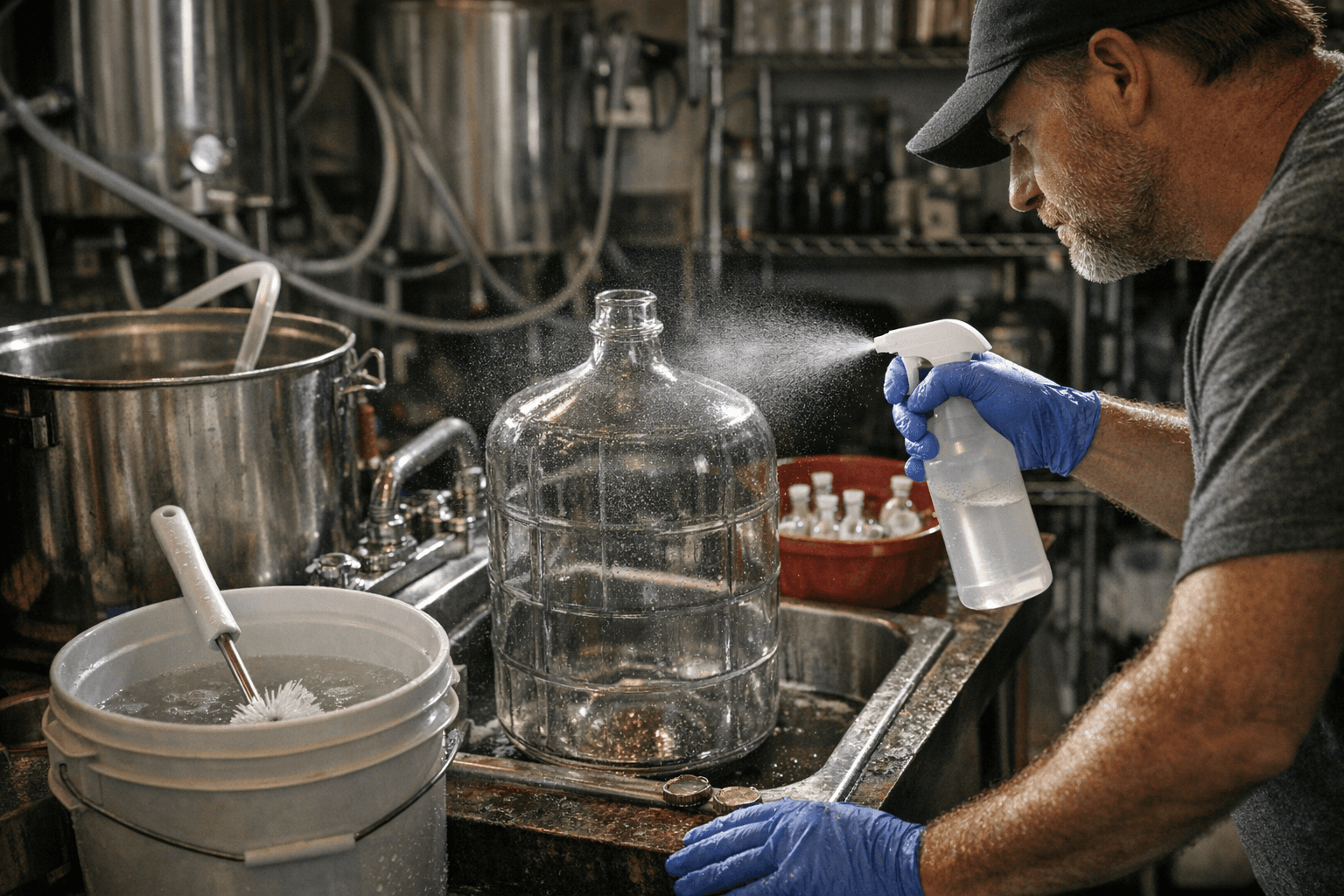
If you used bleach and did not rinse thoroughly, expect possible chlorophenol off-flavors and consider discarding strongly affected batches. Pellicles, sour aromas, or unexpected fruity or funky off-odors usually indicate contamination. Keep a log of what sanitizer you used, dilution, and contact time to help troubleshoot problems. Use gloves for prolonged handling, ensure good ventilation when working with strong cleaners, and store chemicals according to label instructions.
On brew day, clean all equipment with PBW or hot soapy water and rinse, prepare Star San or equivalent at the manufacturer dilution and fill a spray bottle for seals and airlocks, fill your bottling bucket or keg with sanitizer and drain to wet all interior surfaces, sanitize transfer lines, spoons, and fermenter tops right before use, and avoid touching sanitized surfaces or re-sanitize any touch points. Sanitization is simple, inexpensive, and the highest-return habit you can form to protect every batch.
Know something we missed? Have a correction or additional information?
Submit a Tip