Saudi fund nears LIV Golf cut-off after billions in losses
The Saudi fund that built LIV Golf was reported to be weighing an exit after $1.4 billion in losses and a fresh $266.6 million cash injection in February.
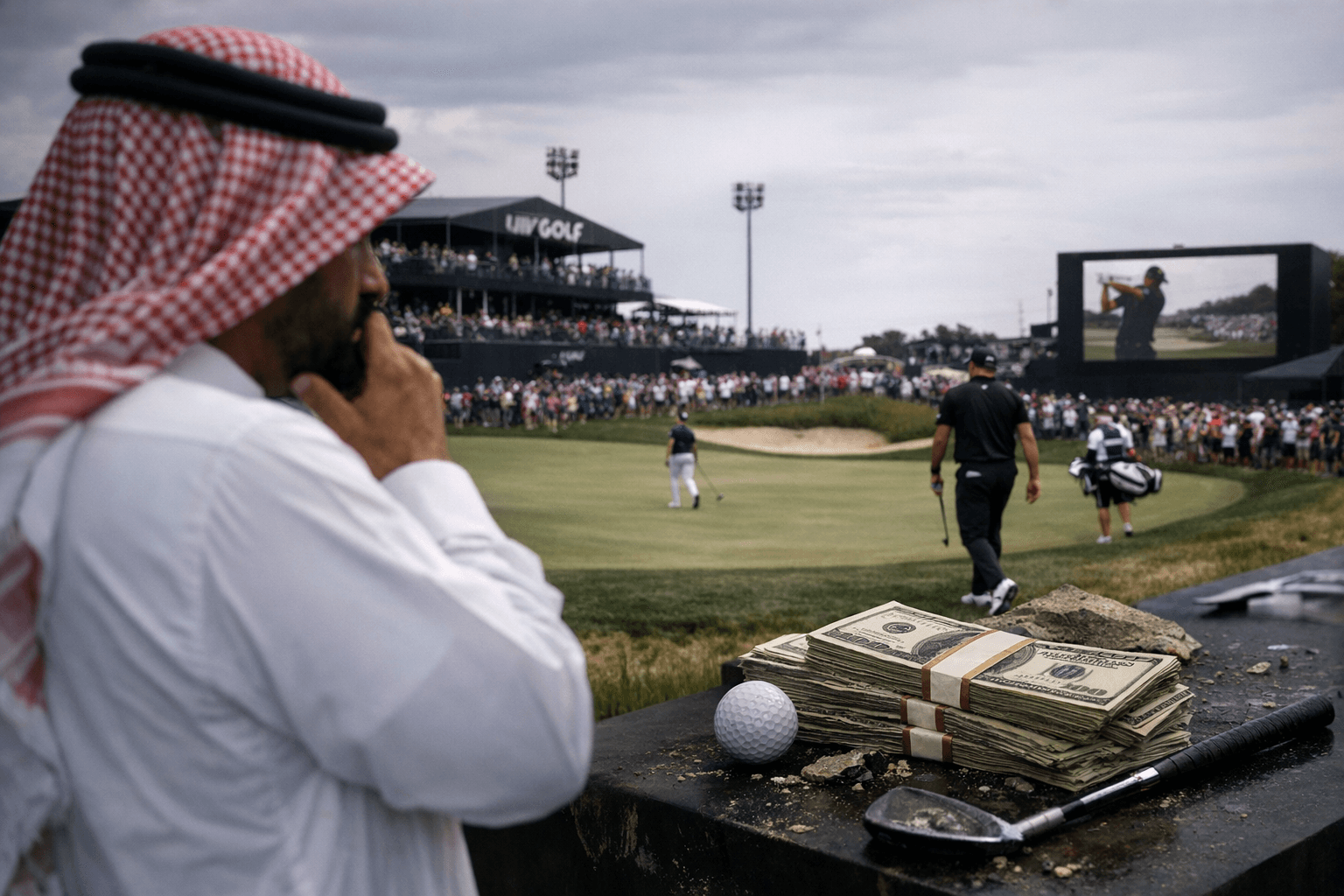
Saudi Arabia’s Public Investment Fund was on the verge of cutting support for LIV Golf, a shift that could force the most expensive experiment in modern golf to confront its finances at last. LIV executives were reportedly summoned to New York for an emergency meeting, and an announcement could come quickly after more than two years of stalled merger talks and mounting losses.
LIV began with its first event at Centurion Club near London on June 9, 2022, selling itself as a break from the PGA Tour’s model with 54-hole tournaments, no cuts, shotgun starts and massive guaranteed purses. Greg Norman was the face of the startup’s early push, while the PIF supplied the capital behind the project. By 2023, the circuit had become the LIV Golf League, and the sport’s power struggle briefly seemed to ease when the PGA Tour, DP World Tour and the PIF announced a framework agreement on June 6, 2023 to combine commercial operations and end litigation. That deal never became a final merger.
The numbers explain why patience may be running out. LIV Golf Ltd. lost £461.8 million, or $590.1 million, in 2024 alone, bringing total losses for that entity to about $1.4 billion since 2022. By early 2026, cumulative investment in LIV Golf had reached roughly $5.3 billion, even after the PIF reportedly approved a $266.6 million capital injection on Feb. 1, 2026. Outside the United States, LIV’s broadcast revenue in 2024 was only £2.8 million, or $3.2 million, a figure that underscored how little commercial traction the league had built compared with the PGA Tour’s roughly $700 million-a-year television contract.
If the backing softens, the effects would reach far beyond one tour’s balance sheet. LIV paid headline contracts that reshaped golf’s labor market, including widely reported deals worth $300 million for Jon Rahm, $200 million for Phil Mickelson, $130 million for Brooks Koepka, $125 million for Dustin Johnson and $125 million for Bryson DeChambeau. Those deals helped LIV lure stars and pressure the established tours, but they also turned the league into a high-cost symbol of Saudi sports investment. A retreat now would suggest the core economics of sportswashing are less durable than the politics behind them, leaving LIV’s future, its players, and the broader PGA ecosystem suddenly exposed to the limits of state-backed spending.
This article was produced by Prism’s automated news system from verified source data, official records, and press releases, then run through automated quality and moderation checks before publishing. The system is built and supervised by the people who set the standards it runs under. Read our full AI policy.
Did this article answer your question?