Savannah Bananas blend showmanship and skill in Banana Ball surge
The Bananas have turned baseball into a faster, cheaper and louder spectacle without burying the players' ambition. Their rise shows how live sports now sell access, entertainment and redemption.
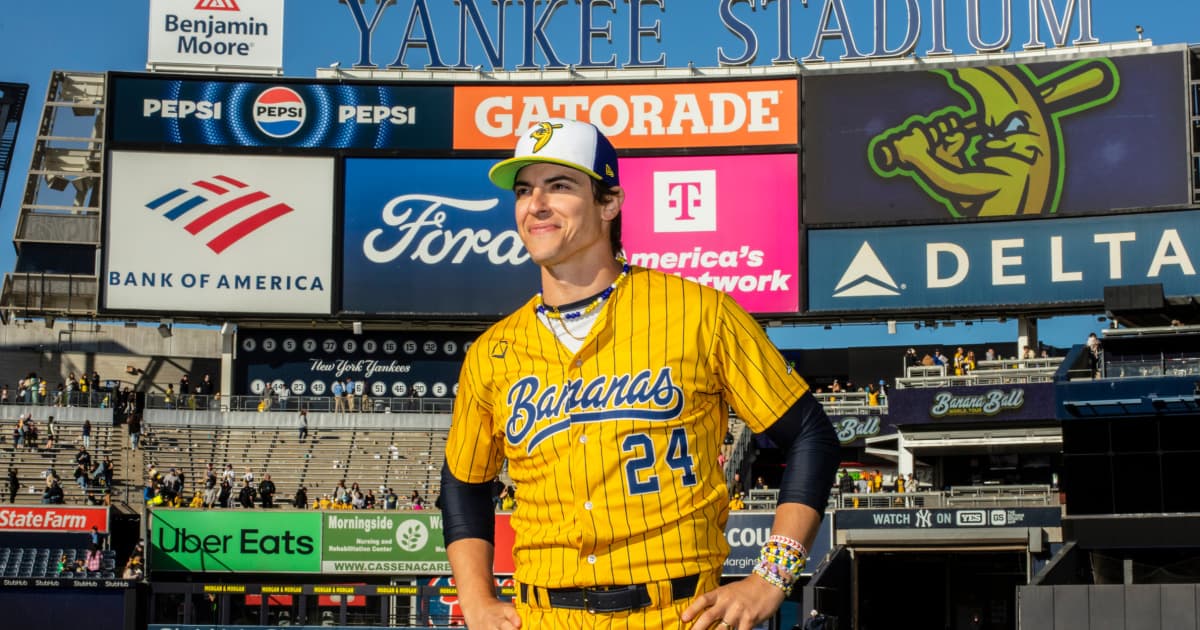
The spectacle with a scoreboard
The Savannah Bananas have made baseball feel like a party, but the organization’s real achievement is more durable than a viral clip. It has built a version of live sports that answers three things many fans now want at once: more entertainment, clearer access and a stronger sense that the players still matter.
That balance is what separates the Bananas from a simple stunt. The dancing, singing and constant motion are the hook, yet the team keeps insisting that competitiveness belongs at the center of the act. In practice, that means a brand of baseball designed to be fast, readable and socially magnetic, while still leaving room for athletic ambition.
How Banana Ball changes the game
Banana Ball is built to keep attention moving. The team’s own rules call for a two-hour time limit, no stepping out, no bunting, stealing first and fans catching foul balls for outs. Those rules do more than create novelty; they compress dead time and force the action to stay in front of the crowd.
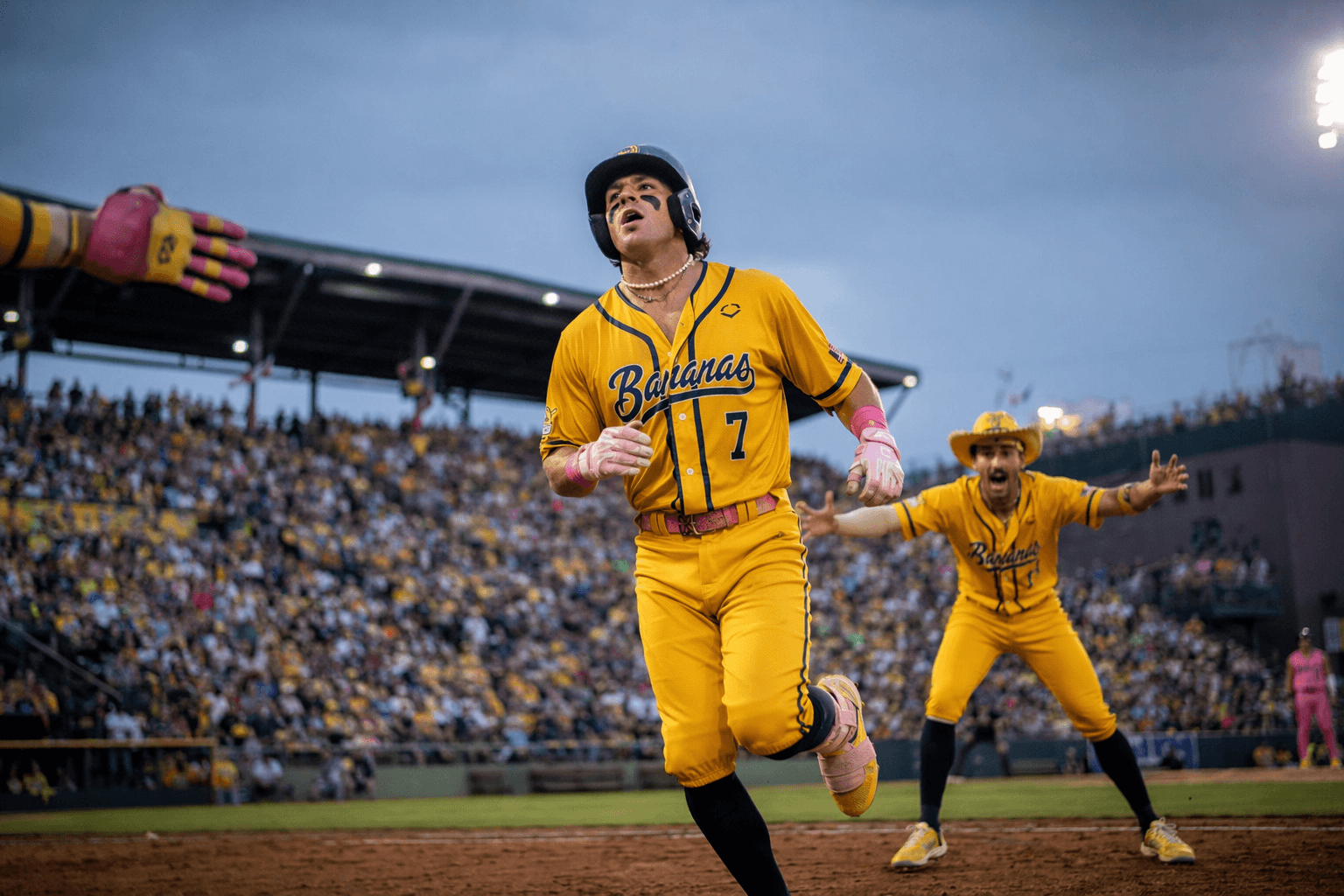
That matters because the Bananas are selling a different live-sports experience than the one that dominates traditional baseball. The format shortens the evening, reduces waiting and gives the stands a direct role in the outcome. Fans are not just watching a game unfold slowly; they are part of a system that rewards speed, chaos and participation.
The result is a product that feels built for the attention economy without abandoning the logic of sport. Every rule change pushes the game toward movement, and every burst of motion gives the crowd a reason to stay engaged. The entertainment is deliberate, but so is the structure underneath it.
From Savannah to a national brand
The Bananas were announced as Savannah’s new baseball team on February 25, 2016, and the organization says it has since grown into Fans First Entertainment. That parent company now fields six independent professional teams as part of the Banana Ball Championship League, a sign that what began in Savannah, Georgia, has expanded into a broader sports entertainment business.
Jesse Cole, who announced the Bananas brand in 2016, became the face of that expansion. Known for wearing a yellow tuxedo, he has made visual identity part of the product, not just the presentation. He later launched his Find Your Yellow Tux site on October 3, 2017, extending the brand’s theatrical style beyond the field and into a larger personality-driven franchise.
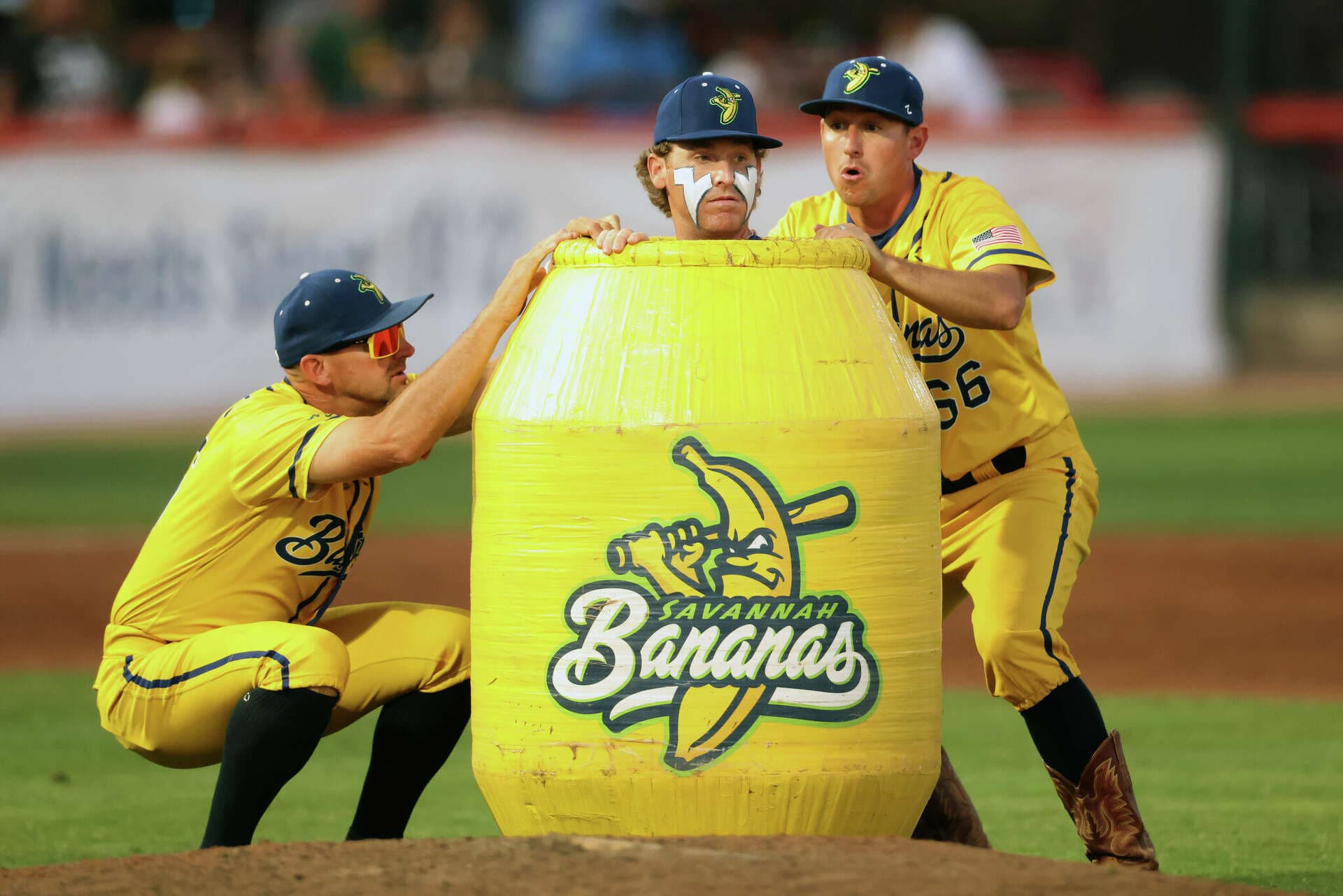
The growth has become impossible to miss. ESPN reported in October 2024 that the Bananas planned to play in 18 MLB stadiums and three football stadiums in 2025, with a goal of attracting 2 million fans. Cole told ESPN the team played in front of 1 million fans in the prior year, a scale that would have sounded absurd for a barnstorming team not long ago.
That touring model is part sports schedule and part national road show. By taking Banana Ball into major league venues and football stadiums, the organization has turned scarcity into demand and geography into spectacle. The premise is simple: if people will not always come to Savannah, bring the brand to them.
Why the ticket model matters
The Bananas have paired showmanship with an unusually transparent sales pitch. The team describes Grayson Stadium as ad-free and says there are no added ticket or merchandise fees, an approach that runs against the hidden-charge habits many fans have come to expect in live sports. The message is not subtle: the experience should feel cleaner, simpler and less transactional.
That philosophy extends to ticket access. The organization says its 2026 Banana Ball Ticket Lottery List was open until October 31, 2025, and that tickets start at $35 when purchased directly from the official site. In a market where premium seating and fee-heavy checkout pages have become standard, that pricing helps explain why the brand has such wide appeal.
The economics are as important as the choreography. Fans are being offered a lower-friction way into live sports at a time when many households are more cautious about entertainment spending. The Bananas have found a way to make affordability feel like part of the brand rather than a compromise.
The players still want the game to count
For all the dancing and crowd work, the organization keeps returning to one point: the players are not props. The Bananas want skill and competitiveness to remain visible, because the show only works if the baseball does too. That tension, between performance and legitimacy, is what gives the team its staying power.
Gabe Howell’s story captures that better than a slogan could. He was drafted by the Atlanta Braves in the 20th round after batting .620 in high school, a number that suggests a player with obvious talent and a high ceiling. But his professional path quickly darkened. In his first rookie-season stretch, he went 3 for 20 with 11 strikeouts, broke his thumb, spent 60 days on the disabled list and was eventually released.
The Bananas have highlighted stories like Howell’s because they fit the team’s broader message of second chances. The organization is not only selling spectacle; it is also giving players a place where reinvention remains possible. That combination of comedy, competence and redemption is rare in sports, and it is central to why the team resonates.
What the Bananas say about live sports now
The Bananas’ rise suggests that many fans do not want to choose between authenticity and entertainment. They want a live event that is accessible, emotionally legible and worth remembering the next day. Banana Ball answers that demand by making the game shorter, the pricing clearer and the atmosphere louder.
At the same time, the team’s success depends on the players taking the baseball seriously enough to make the spectacle believable. That is the deeper lesson of the Bananas’ surge: modern live sports can survive by becoming more playful, but only if the athletic core stays real. The Bananas have figured out how to make baseball feel fresh without pretending skill no longer matters, and that may be their most important innovation.
Know something we missed? Have a correction or additional information?
Submit a Tip

