SC3DP and Fehrmann MaterialsX APAC launch NAMIC-funded AI to optimize LPBF parameters
NAMIC funded SC3DP and Fehrmann MaterialsX APAC to build a machine-agnostic, cloud AI for LPBF parameters, targeting cuts to the up-to-15% of production costs tied to parameter development.
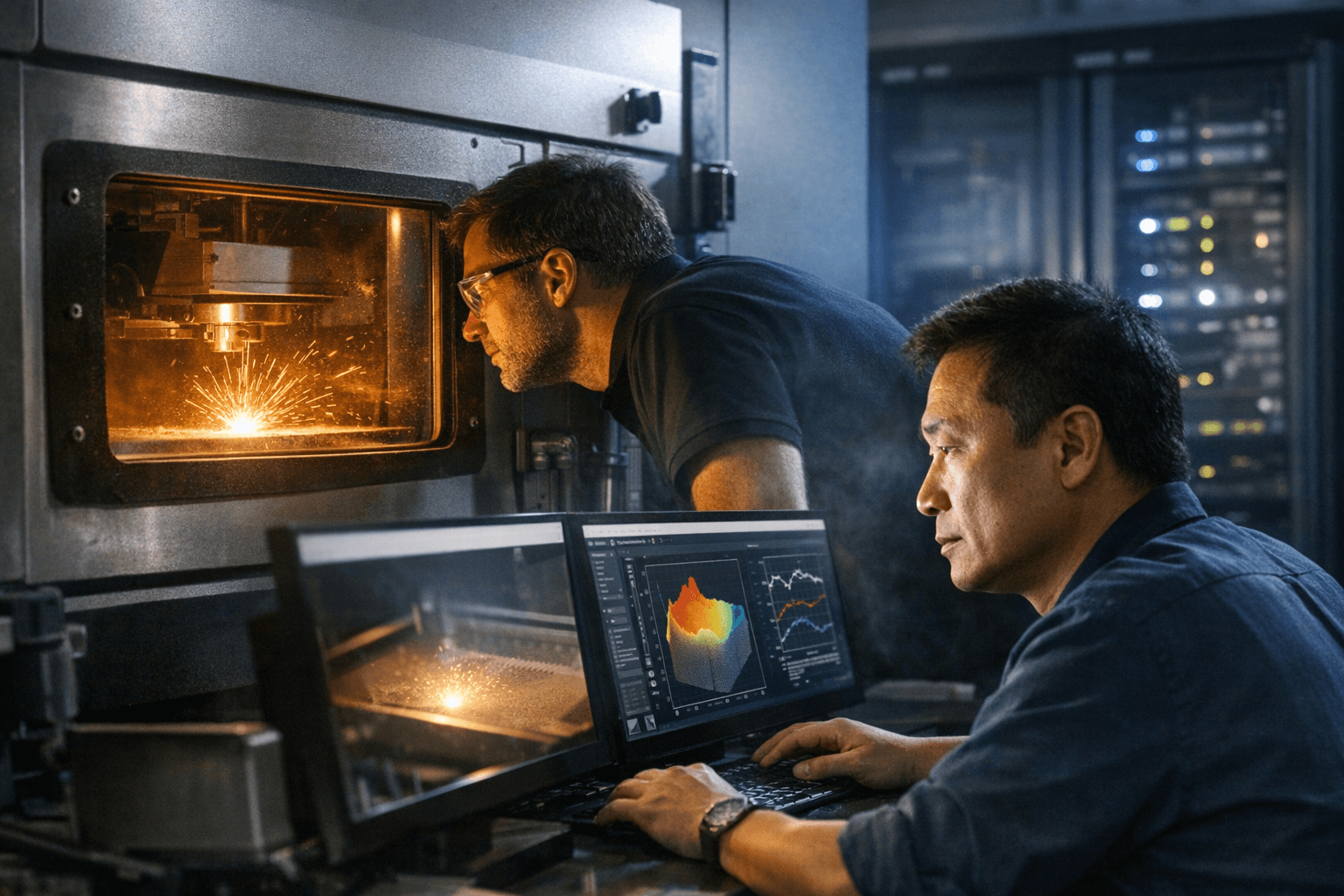
Singapore Centre for 3D Printing (SC3DP) and FEHRMANN MaterialsX APAC announced on March 2, 2026 a NAMIC-funded research initiative to develop a machine-agnostic, cloud-based artificial intelligence platform that generates optimized process-parameter sets for laser powder bed fusion (LPBF), aiming to cut the time and cost tied to parameter development.
The project’s stated technical aim is to “produce machine-agnostic, cloud-based artificial intelligence platform capable of generating optimized parameter sets tailored to the intended end-use application of a given part.” Project proponents highlight a clear economic rationale: “Parameter development—the process of identifying the optimal machine settings for a given material and part geometry—can account for up to 15% of overall LPBF production costs, representing a significant barrier to broader industrial adoption.”
SC3DP brings institutional scale and history to the collaboration. The Singapore Centre for 3D Printing commenced in December 2014, is funded by the National Research Foundation, and is supported by Nanyang Technological University, Singapore and the Economic Development Board. SC3DP’s public materials list eight key research pillars including Aerospace & Defence, Electronics, Biomanufacturing, and a NAMIC Hub @ NTU; an NTU page about SC3DP carries metadata indicating it was Published on 30 Oct 2025.
FEHRMANN MaterialsX APAC supplies materials and industrial-AI expertise to the project. FEHRMANN MaterialsX was founded in 1895 and lists offices including Orchard Rd., Singapore, Stenzelring 19, Hamburg 21107 Germany, Munstermannskamp 1, Luneberg 21335 Germany, and 245 1st Street, 18th Floor, Cambridge, Massachusetts 02142 US. LinkedIn metadata attached to the company notes a company size of 51–200 and 19 associated LinkedIn members; FEHRMANN’s marketing copy states, “We develop high-performance aluminum alloys of the future for the entire world of 3D printing, casting, and extrusion applications,” and “As the only materials developer worldwide, FEHRMANN MaterialsX enables 3D printing and casting from identical high-performance aluminum alloys.” The company has announced an APAC expansion to accelerate AI-driven materials innovation in the region.
NAMIC’s involvement sits inside a broader Singapore industrial policy push. The government announced a S$500 million Future of Manufacturing programme in 2013 - the equivalent of US$359 million - to be distributed across several initiatives over a span of five years, with NAMIC identified as the most significant result. Dr Ho Chaw Sing, managing director of NAMIC and NTUitive, framed the strategic case: “The Singapore government has recognised that in order for our local industries to stay relevant and be competitive in the new digital world, key technologies such as additive manufacturing, automation, data analytics, and smart connected systems will need to be adopted,” said Ho. “The growth of our industries over the next few years will be severely curtailed without the design freedom and innovation enablers such as 3D printing,” Ho said. “NAMIC was set up to help accelerate and expand the 3D printing industry eco-system in Singapore towards value creation in the digital economy,” said Dr Ho Chaw Sing.
EDB materials cite Gilmour Space Technologies as a NAMIC-supported example: the home-grown startup launched its self-made rocket in Australia last year after using 3D printed rocket fuel that combined two materials, and after partnerships with the SUTD-MIT International Design Centre and the Digital Manufacturing and Design research centre.
Key details still unreported in source materials include project start date, duration and specific budget, named principal investigators or project leads from SC3DP and FEHRMANN, the LPBF machines and materials targeted in initial pilots, and the platform’s commercial model and IP ownership. The original user-supplied excerpt of the announcement was truncated at “laser powder bed fusion (L”; subsequent sources confirm the LPBF wording. A photo caption in one release reads “Photo of Davide Sher.”
If successful, the NAMIC-funded platform could shrink the trial-and-error cycle and the up-to-15% cost burden for LPBF parameter development, directly affecting how quickly manufacturers move from alloy formulation and design to validated metal AM production.
Know something we missed? Have a correction or additional information?
Submit a Tip