Scaloni gets soaked as De Paul leads Argentina in World Cup prep
Scaloni got drenched by sprinklers while De Paul took charge in a hydration break, a vivid snapshot of Argentina's World Cup prep and hierarchy.

Water from the sprinkler system hit Lionel Scaloni as he tried to give instructions during a pause for hydration, and Rodrigo De Paul stepped in to take the voice of authority. The scene, captured in Argentina’s 2-0 win over Honduras on June 6, offered a clear look at how the world champions organize themselves when the match pauses and the pressure rises.
Argentina beat Honduras with goals from Lautaro Martínez and Giuliano Simeone, but the most revealing moment came far from the scoresheet. Scaloni used the friendly as part of his final testing ground before the World Cup 2026, and the hydration break showed how much of that process depends on structure, communication and the players who can command the room when the coach is momentarily out of the center of the action.
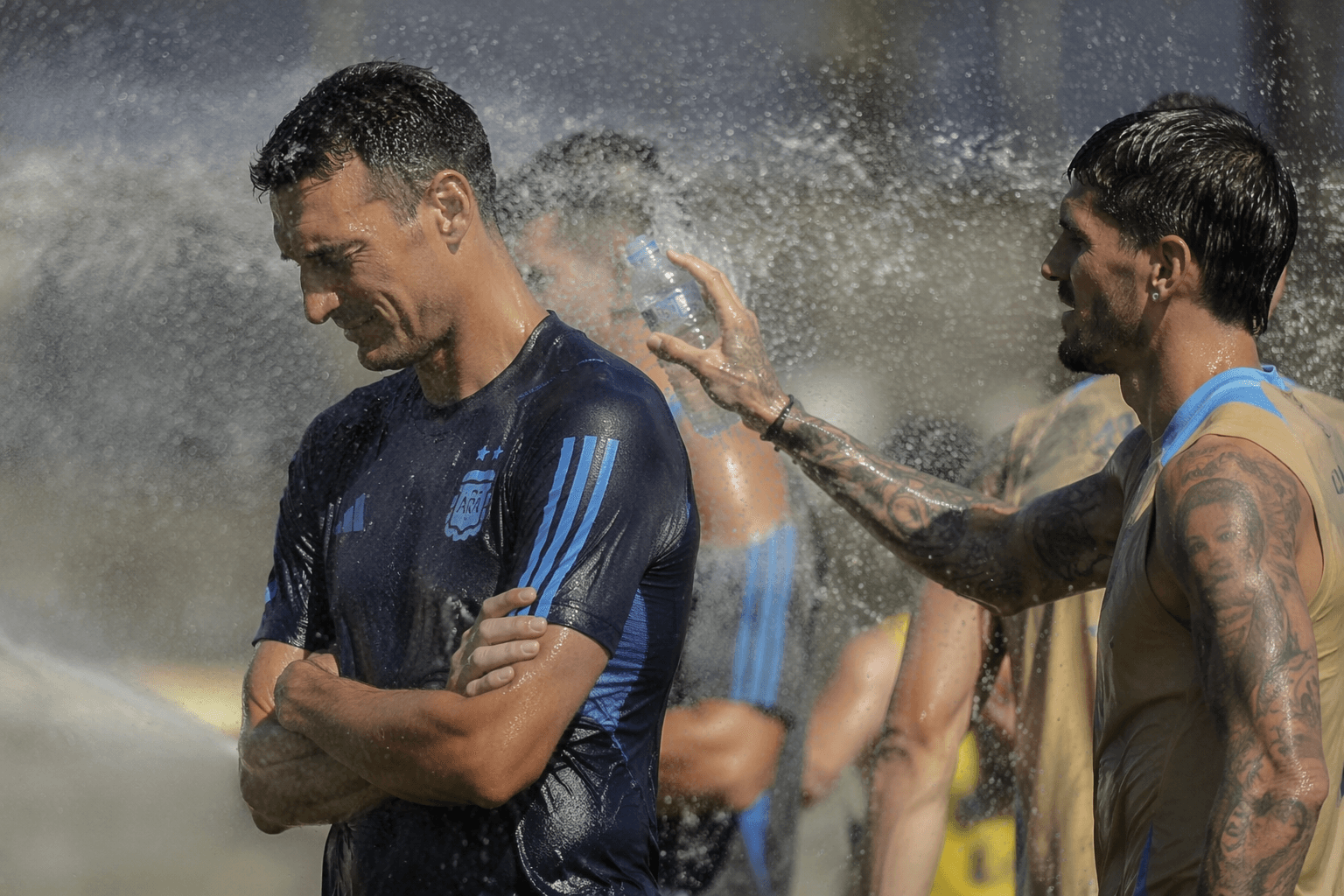
De Paul’s role stood out because it reflected more than energy. He was the player who gathered the group and directed the message, underscoring his place inside the internal hierarchy of the Selección Argentina. In a squad built around Scaloni’s trust and a defined leadership core, the midfielder’s intervention suggested that Argentina’s authority is shared on the field, especially when the coach is occupied with adjustments and the environment itself becomes a factor.
That environment is now part of elite match management. FIFA set three-minute hydration breaks in each half for the World Cup 2026 as a player-welfare measure, and the approach had already been tested at the Club World Cup 2025. The IFAB describes cooling breaks as pauses that usually last between 90 seconds and three minutes in hot and humid conditions, enough time for body temperature to fall and for teams to reset communication before play resumes.
The timing matters because the World Cup 2026 began on June 11 and runs through July 19 across Canada, Mexico and the United States. It is the first tournament with 48 teams, 104 matches and three host countries, a scale that makes climate, scheduling and bench management far more than background details. For Argentina, the soaked coach and the commanding midfielder were a preview of what defending a title now demands: sharper leadership, faster communication and a plan for heat that can alter the rhythm of the game itself.
This article was produced by Prism’s automated news system from verified source data, official records, and press releases, then run through automated quality and moderation checks before publishing. The system is built and supervised by the people who set the standards it runs under. Read our full AI policy.
Did this article answer your question?