Science Editor Watches World's Most Powerful Rocket Launch From Three Miles Away
BBC science editor Rebecca Morelle watched from three miles as NASA's SLS rocket, generating 8.8 million pounds of thrust, sent four astronauts toward the Moon for the first time since 1972.
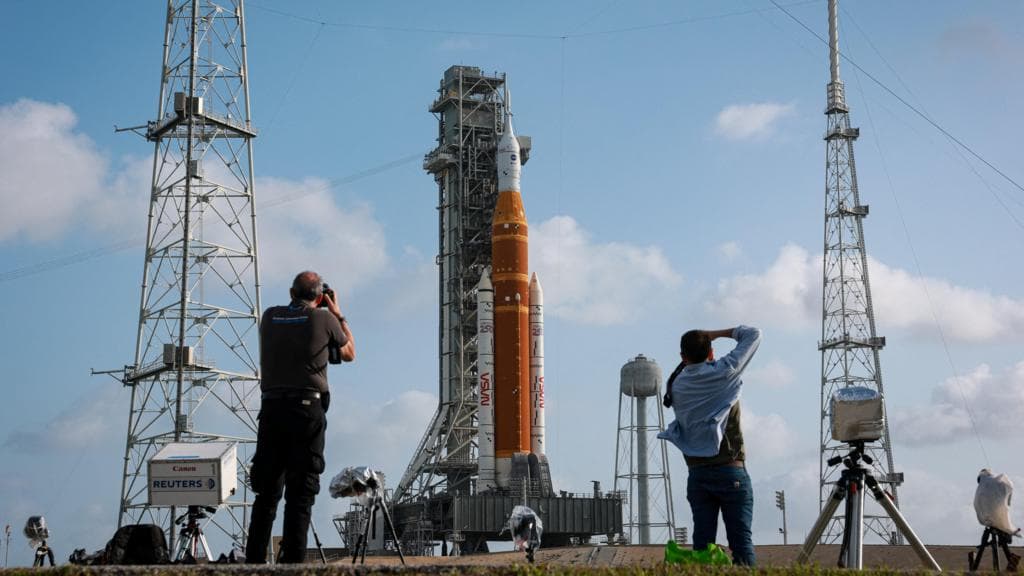
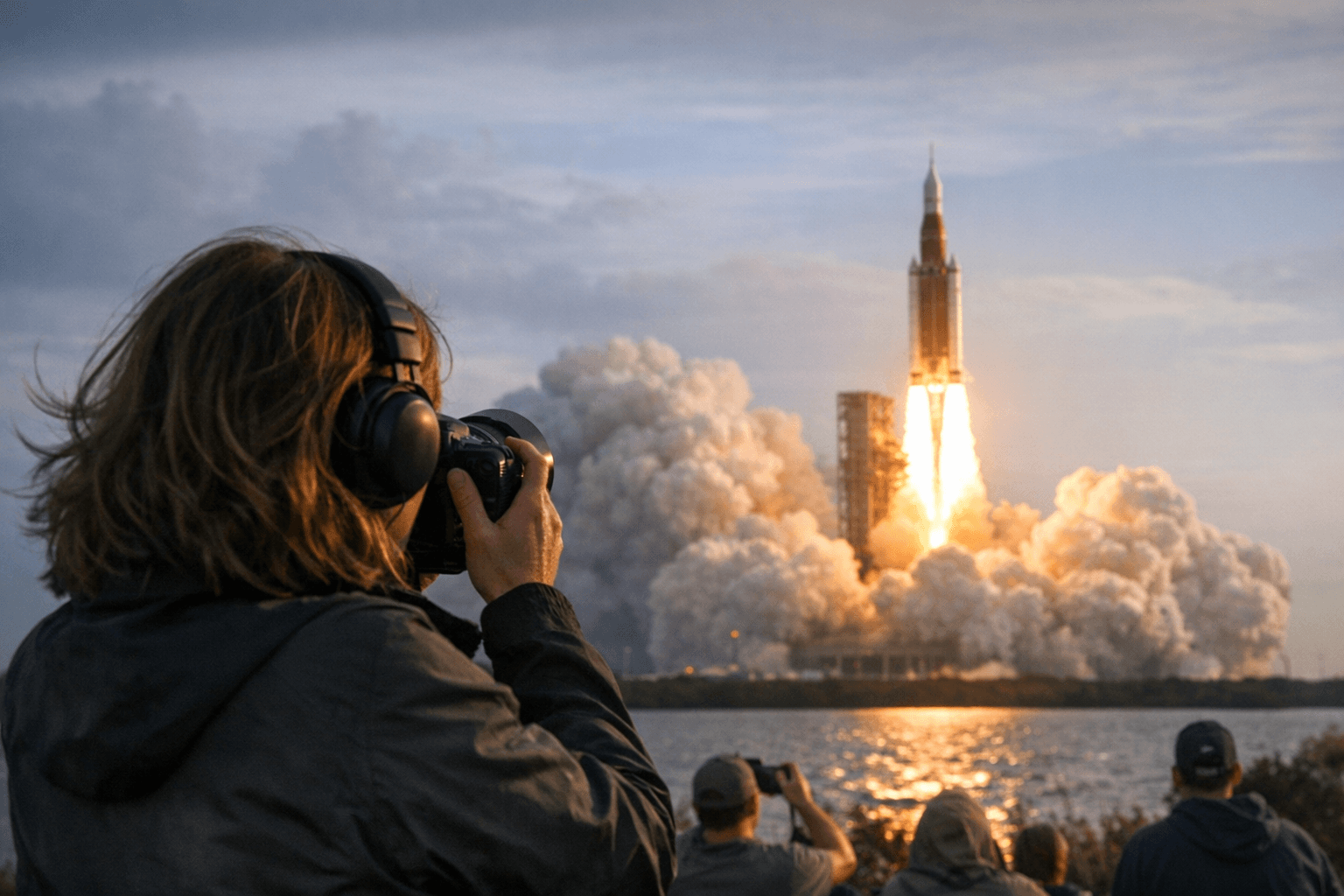
The sound arrives before the rational mind can process it. Standing at the Kennedy Space Center press site on the evening of April 1, BBC Science Editor Rebecca Morelle was roughly three miles from Launch Complex 39B when NASA's Space Launch System ignited beneath four astronauts and the first crewed lunar mission in more than 50 years began. The light came first: a white-orange wall of flame tearing through the Florida dusk. Then, seconds later, the pressure wave hit.
That gap between what the eyes see and what the body feels is not incidental. It is, in its own way, a measurement. Sound travels at roughly 1,100 feet per second. From three miles out, the shockwave from 8.8 million pounds of thrust takes about 14 seconds to reach a human chest. That delay is the physical distance between a spectator and one of the most violent controlled releases of energy ever engineered.
The SLS rocket that lifted off at 6:24 p.m. EDT stands 322 feet tall and weighed 5.7 million pounds at the moment of ignition. Its two solid rocket boosters, each 177 feet tall and generating more than 3.6 million pounds of thrust apiece, provide more than 75 percent of the vehicle's total power during the first two minutes of flight. They cannot be switched off once lit. That is not a flaw; it is the design. The four RS-25 engines at the core stage, veterans of the Space Shuttle program, provide the remaining thrust. Together, they produce 8.8 million pounds of force at liftoff, roughly 15 percent more than the Saturn V that carried Apollo astronauts to the Moon.
The visual spectacle of that kind of thrust is not pyrotechnic showmanship. The roiling smoke column is mostly steam, produced when the launch pad's water suppression system absorbs acoustic energy that would otherwise buckle the structure. What looks like an explosion is, precisely, engineering solving the problem of its own destructiveness.
The crew riding that energy toward the Moon are Commander Reid Wiseman, Pilot Victor Glover, and Mission Specialists Christina Koch and Jeremy Hansen, the latter representing the Canadian Space Agency. Their 10-day mission will not land on the lunar surface. Artemis II is a test flight: the first time humans have traveled beyond low Earth orbit since the final Apollo mission in 1972, but a circumlunar transit rather than a landing. The Orion capsule will loop around the Moon and return, validating life support systems, navigation, and the deep space re-entry profile that future landing crews will depend on.
The milestones are sequential and unforgiving. Solid rocket booster separation occurred roughly two minutes after liftoff. Core stage separation followed. An engine burn from the Interim Cryogenic Propulsion Stage must then achieve the precise trajectory needed for translunar injection. Each step either works or it defines the limit of this mission's success.
That is the tension Morelle was positioned to report from three miles away: the difference between the overwhelming sensory fact of a rocket departing Earth and the disciplined, contingency-laden process that must follow before any mission can be declared a success. Awe is the entry point. The engineering is what determines whether it becomes history.
Know something we missed? Have a correction or additional information?
Submit a Tip