Seasonal bonsai care: placement, watering, repotting, feeding basics
Most forest-type bonsai belong outdoors year-round; follow seasonal, species-specific guidance on placement, watering, feeding, repotting, and winter protection.
Most forest-style bonsai perform best outside, with only brief indoor display for viewing. Keep that principle at the top of your routine: leave junipers and pines in full sun whenever possible, and give maples and elms morning sun with afternoon shade to protect foliage and prevent scorch. Short indoor stints for display are fine, but avoid extended indoor stays that disrupt dormancy and light exposure.
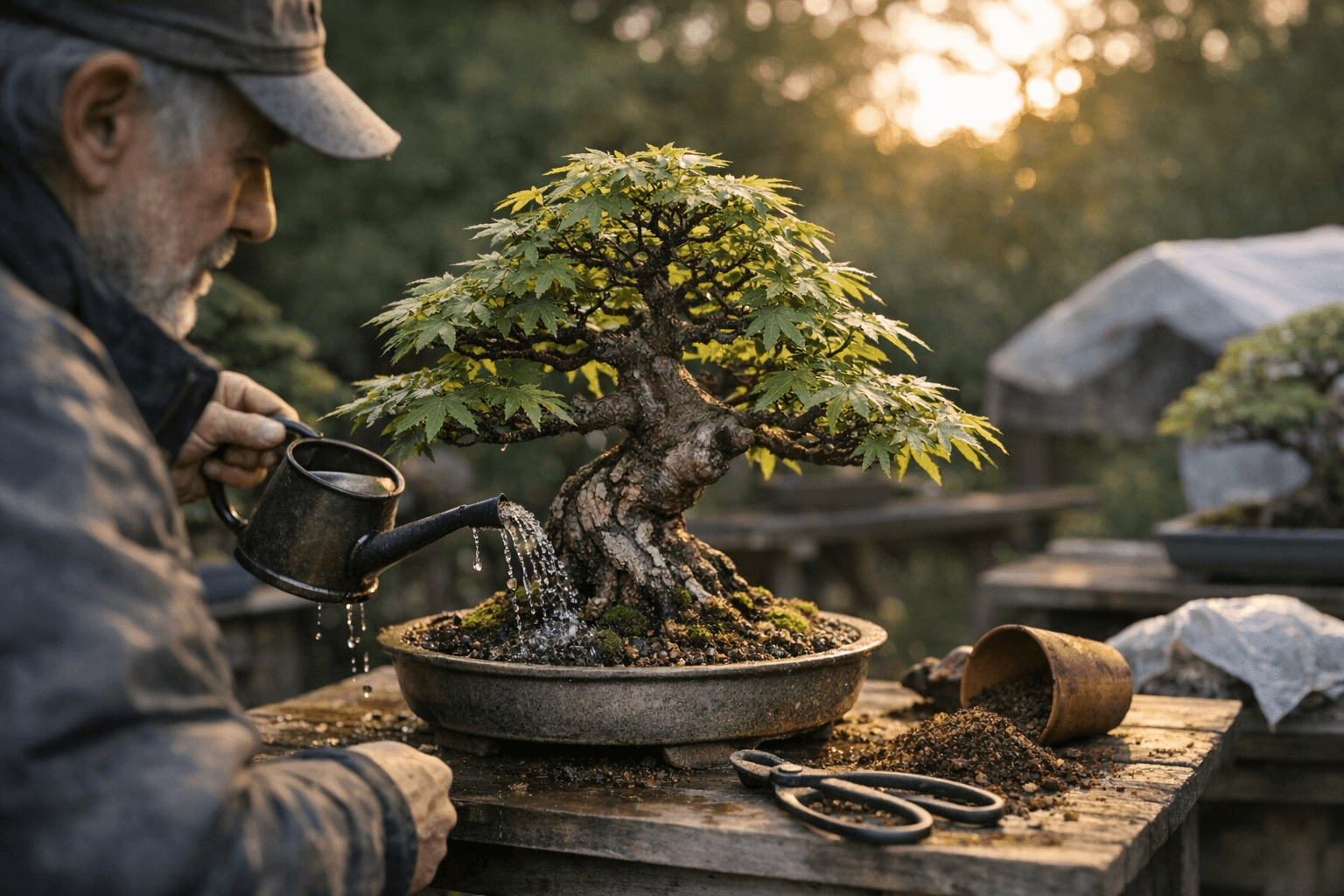
Watering is a matter of observation, not a calendar. Check soil moisture daily in warm weather and before assuming a set schedule. Soak pots thoroughly until water runs out the drainage holes, then allow the soil to approach, but not reach, dryness before rewatering. Avoid waterlogged soil, which suffocates roots and invites rot; a moist but well-draining mix and good pot drainage are essential for nebari health and root vitality.
Repotting belongs in early spring, before new growth breaks. Young trees generally benefit from a repot every two to three years to refresh soil and trim roots, while established specimens need repotting less often. When you repot, remove one-third to one-half of the root mass as needed to keep the tree compact, refresh the soil mix, and check for drainage. Trim roots with the same intention as branch work: to balance vigor and maintain a healthy, stable root-to-canopy ratio.
Feeding should follow the tree's growth cycle. Apply a balanced fertilizer during active growth and reduce or stop feeding as trees move toward dormancy. For most species, regular but moderate feeding during the growing season supports ramification and overall vigor; heavy feeding late in the season delays hardening off and increases winter risk.
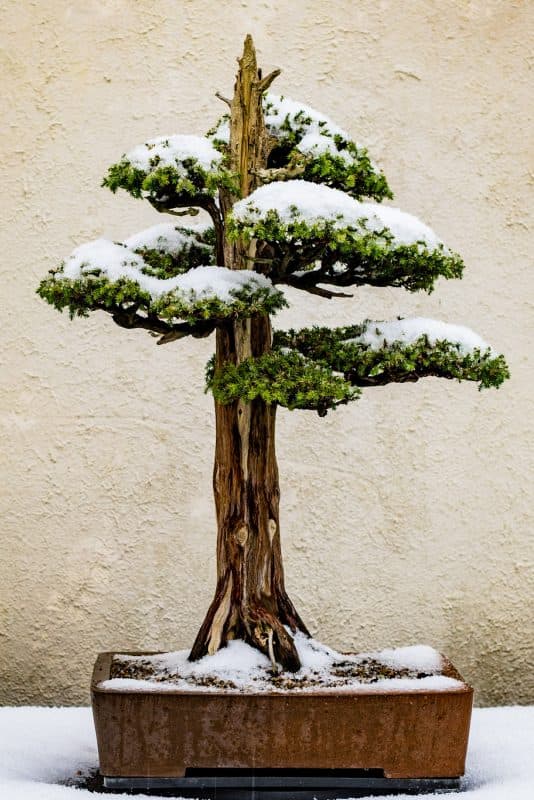
Winter preparation depends on species sensitivity. Protect tender material from freezing with windbreaks, insulated benches, or by moving pots to a protected outdoor microclimate. Allow hardy forest specimens to experience dormancy, which is critical for next season's growth. For sensitive species, reduce watering in dormancy but never let roots remain bone dry; for hardy types, ensure pots are well-drained and slightly raised to prevent ice-wedging.
This set of seasonal practices is directly actionable: prioritize outdoor placement, monitor soil moisture rather than schedules, repot in early spring with root reduction for young trees, feed during active growth, and prepare for dormancy with species-specific protection. Adjust these steps to your local climate and the individual needs of each tree, and you’ll keep your forest bonsai vigorous, stable, and ready for the next styling season.
Know something we missed? Have a correction or additional information?
Submit a Tip