Second North Coast Condor B8 Found Dead in Humboldt County; Necropsy Underway
Mortality signal from condor wingtag B8 led crews to a remote Bald Hills site where the bird was found dead; necropsy at USFWS in Ashland will seek the cause, a concern for local conservation.
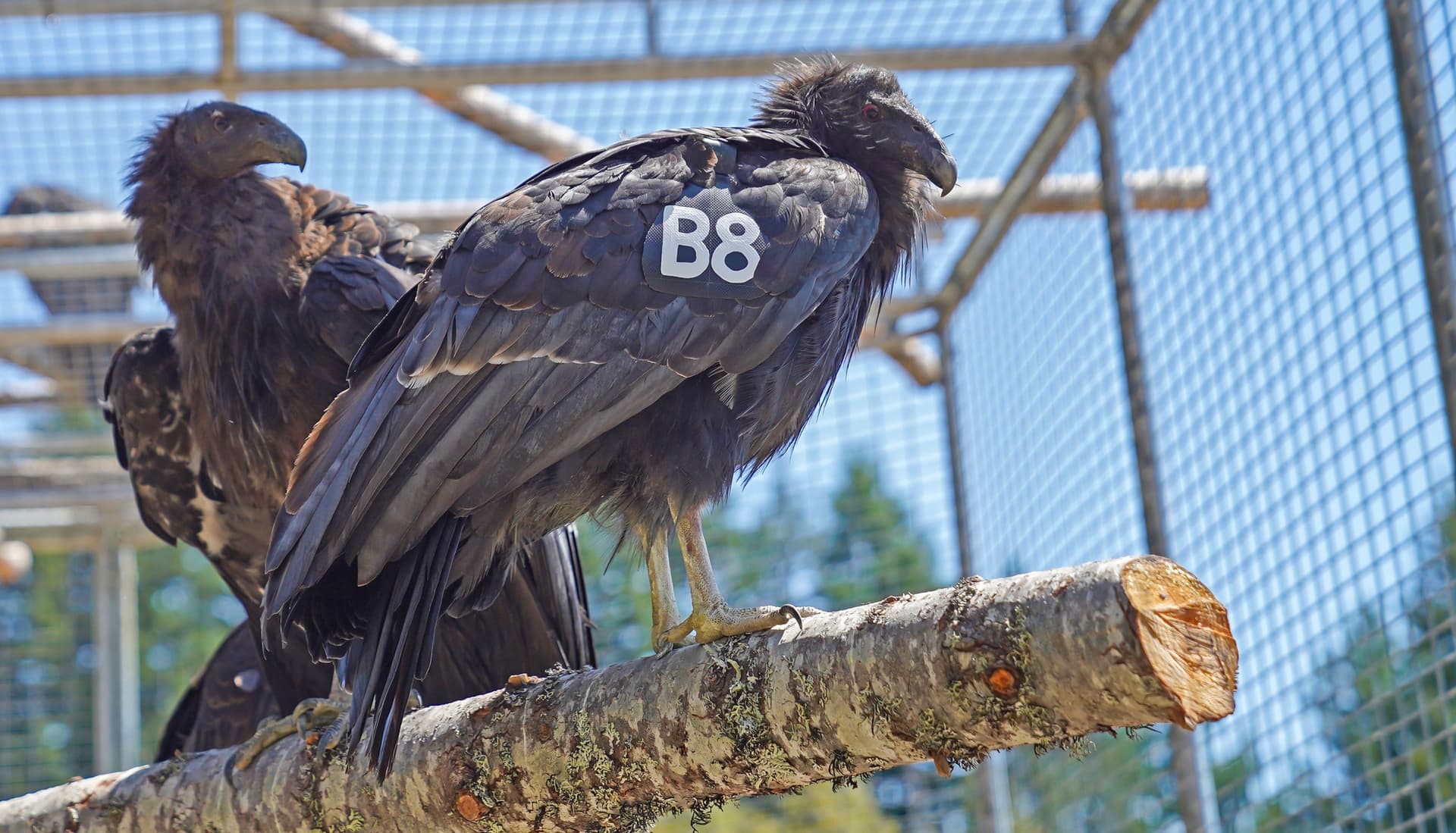
A young California condor known as wingtag B8 was found dead in a remote part of the Bald Hills on Redwood National and State Parks property after a mortality signal from the bird’s transmitter alerted monitoring crews on Jan. 7. The Northern California Condor Restoration Program (NCCRP) mobilized immediately but found the bird already deceased and the remains heavily scavenged; the remains were sent to the U.S. Fish and Wildlife Service Forensics Laboratory in Ashland for a necropsy to determine the manner of death, which is currently unknown. “Following program protocol, remains were sent to the U.S. Fish and Wildlife Service Forensics Laboratory in Ashland for a necropsy to determine the manner of death, which is currently unknown,” the post states.
Program records and social posts identify B8 by multiple local names and numbers. The Yurok name Ne-kew (Our Little Sibling) appears in a social-post excerpt that also lists the bird as wingtag B8, studbook #1237; another account referred to the bird as prey-go-neesh. Age reporting varies by source: one description calls B8 a nearly 3-year-old male, while another gives a more precise age of 2 years and 7 months. B8 had been free-flying since October and was described by Yurok Wildlife Department leadership as the last released of this year’s cohort and a low-ranking but persistent bird that tagged along with more established condors. “Our team felt quite a bit of affection for B8, who was the last released of this year’s cohort. He was low in the condor ‘pecking order,’ but insistent, tagging along and inserting himself wherever the more established birds were congregating. So, we’ve named him 'Ne-kew (Our Little Sibling),” [sic, truncated in source].
This loss follows the death of another North Coast condor, B7, roughly one year earlier. Program pathology for B7 found lead poisoning to be the cause; examiners reported a lead air gun pellet in the ventricular, or gizzard, and high to very high concentrations of lead in liver and bone. Program Manager Chris West reflected on that earlier loss: “The loss of Pey-noh-pey-o-wok was a huge blow to us,” and he added, “Thankfully, we have 17 other amazing birds in our flock carrying our hopes, dreams and prayers.”
The mortality renews questions about threats to the growing North Coast flock and the effectiveness of existing protections. Federal and program figures note that lead poisoning is the single greatest threat to condors; half of all condor deaths in the wild are attributed to feeding on carrion contaminated with lead ammunition fragments, a statistic cited by the U.S. Fish and Wildlife Service. California banned the use of lead ammunition in 2019, but lead exposure continues to complicate recovery efforts nationwide.
Flock counts vary in the immediate aftermath: program officials report the North Coast flock now numbers 24 following B8’s death, while some social posts referenced 25 members prior to the loss. For Humboldt County residents, the death underscores both the fragility of the regional recovery effort and the broader public-policy stakes in preventing toxic exposure. The community can expect the NCCRP and the U.S. Fish and Wildlife Service to release necropsy results when available; those findings will shape next steps in monitoring, public outreach, and on-the-ground mitigation.
Sources:
Know something we missed? Have a correction or additional information?
Submit a Tip

