Selma veteran joins protest against Alabama redistricting plan
Betty Strong Boynton retraced Selma's march route to warn that a Supreme Court ruling and new Alabama maps could erase Black representation again.

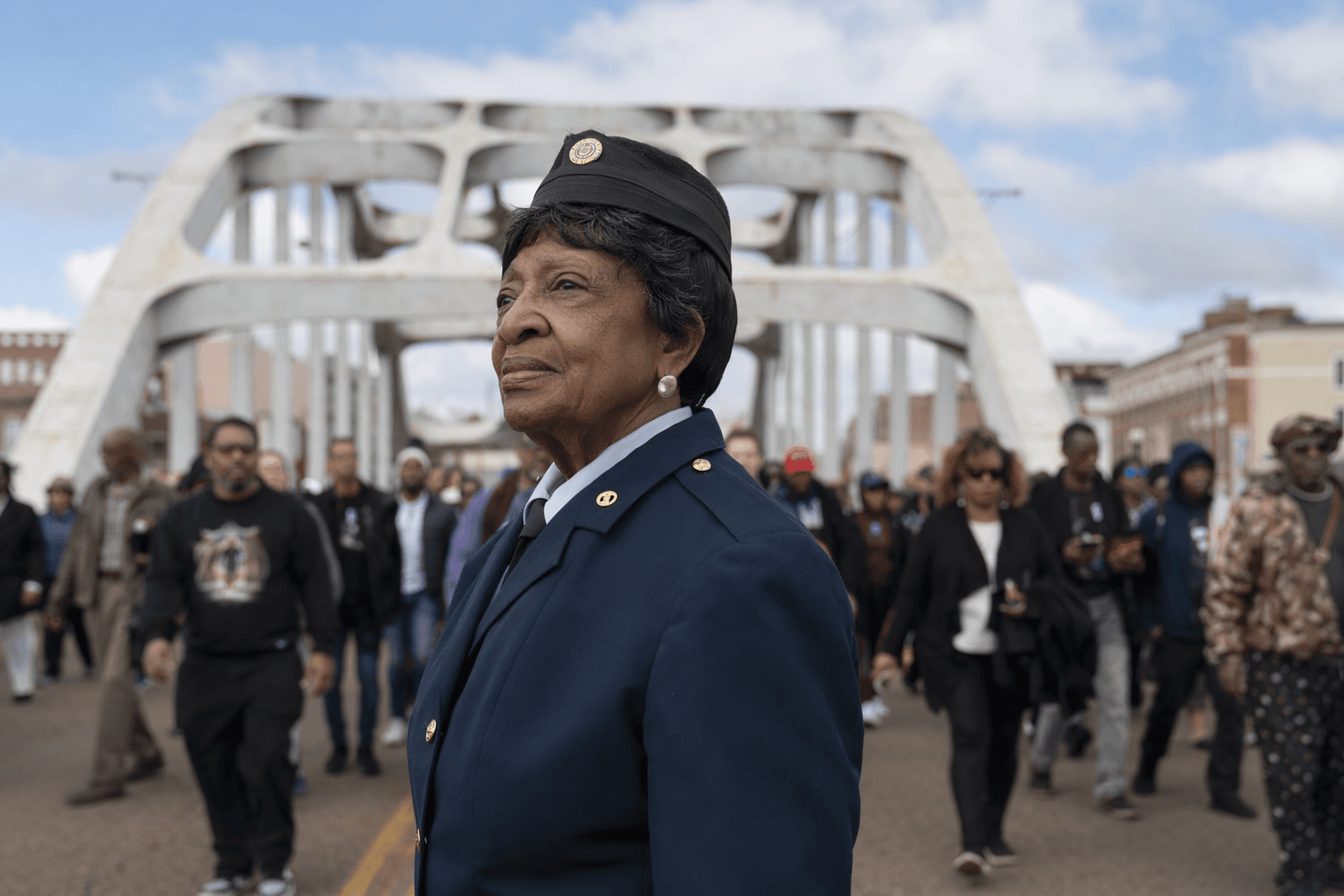
Betty Strong Boynton walked Selma’s old march route again, this time to protest a redistricting plan she and other civil-rights veterans say could strip away hard-won Black political power just ahead of the midterms. The 77-year-old, who the Selma Center for Nonviolence says was born on July 22, 1948, had begun civil-rights work at 14 in 1964 and was attacked during Bloody Sunday on March 7, 1965, on the Edmund Pettus Bridge.
Her return to the streets of Selma underscored how the legal fight over congressional maps has moved from courtrooms back into the same community that helped force Congress to pass the Voting Rights Act six decades ago. Boynton’s generation marched to challenge exclusion in Alabama; now, that same community is watching as the Supreme Court’s April 29 ruling in Louisiana v. Callais weakened a key tool used for decades to challenge maps that dilute minority voting strength.
In Callais, the court held that Louisiana’s second Black-majority congressional district was an unconstitutional racial gerrymander, and the decision left unclear how much of Section 2 of the Voting Rights Act remains effective. Justice Samuel Alito’s majority opinion sharply narrowed the circumstances under which race-conscious districting can be justified, while election-law experts said the ruling could affect nearly 70 of the 435 congressional districts protected by Section 2. In Louisiana, the struck-down district represented by Democrat Cleo Fields stretched more than 200 miles and linked Shreveport, Alexandria, Lafayette and Baton Rouge.
Alabama is now among the states moving quickly to test the ruling’s reach. The Supreme Court on May 11 set the stage for Alabama to eliminate one of its two largely Black congressional districts before the midterms, a shift that could give Republicans an edge in six of the state’s seven House seats. Alabama Attorney General Steve Marshall has said the state wanted a map that would favor Republicans seven-to-zero.
The stakes were sharpened further by a law the Alabama Legislature passed and Gov. Kay Ivey signed on May 8, which could void May 19 primary results in affected districts if the map changes. Black lawmakers and civil-rights groups have warned that the sequence of court orders and legislative moves could force new primaries and reduce minority representation just as campaigning intensifies.

The Alabama push is part of a broader pattern. Alabama, Louisiana, South Carolina and Tennessee are all pursuing new redistricting moves after the court’s ruling, a signal that the next phase of the voting-rights fight may be fought not only over federal protections, but over whether those protections can still stop states from redrawing political power out of Black communities.
Know something we missed? Have a correction or additional information?
Submit a Tip