Seminole Replaces Most LYNX Routes With SCOUT Microtransit, Saving $5.5M
Seminole County replaced most fixed-route LYNX buses with SCOUT microtransit to cut costs and expand on-demand service, a change that has saved about $5.5 million and affected thousands of local riders.

Seminole County moved most of its fixed-route LYNX bus service to an on-demand microtransit system called SCOUT on Jan. 11, 2026, a shift officials cited as necessary because many LYNX routes had low ridership and high operating costs. County officials say the transition has saved roughly $5.5 million compared with running the old LYNX routes, and SCOUT has carried nearly 20,000 riders since launch.
Early usage data shows the new service is attracting a mix of former bus riders and trips that previously used ride-hail services. A county survey found 16% of SCOUT riders were former LYNX users, 37% had used Lyft or Uber before SCOUT, and 32% said they would not have been able to make the trip without the new service. Those figures highlight both a cost-saving shift and an accessibility gain for some riders, while also signaling that the change alters commuting patterns for a portion of the community.
SCOUT operates as an on-demand system: riders can book trips through the SCOUT smartphone app or by phone, and the fare structure includes a base fare and discount programs for eligible riders. For people without smartphones, phone booking remains an option and the county has posted SCOUT support links and contact information for assistance. A limited set of LYNX fixed routes and ACCESS paratransit services continue to operate to serve essential corridors and riders with access needs.
The county is still adjusting to operational challenges common to on-demand systems. High cancellation rates have complicated routing and matching, producing inefficiencies that can lengthen wait times and reduce ride-pooling opportunities. Those operational kinks are the focus of ongoing tweaks to dispatching and scheduling as officials balance reliability with the cost savings that motivated the transition.
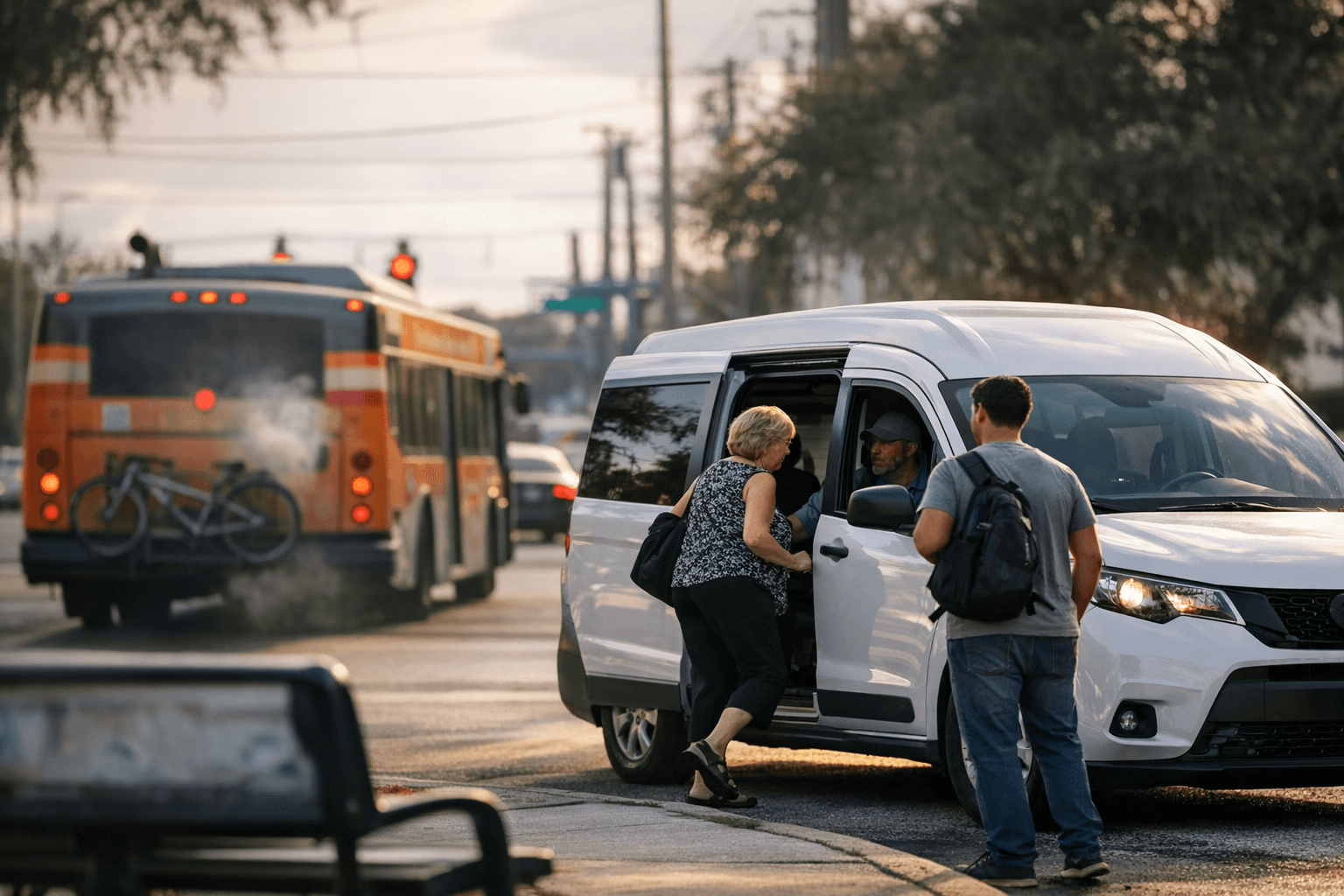
For Seminole residents, the switch means more flexibility for some trips and potential disruption for others who relied on fixed schedules. Commuters who previously timed connections to fixed LYNX routes may need to learn new booking routines, while riders in lower-density neighborhoods who have struggled with limited fixed-route coverage may find SCOUT fills gaps. The survey result that nearly one-third of SCOUT riders would otherwise have been unable to travel underscores a tangible accessibility benefit for parts of the county.
Seminole County officials plan to continue monitoring SCOUT’s performance, rider feedback, and cancellation rates as the program matures. Riders seeking help with SCOUT bookings or fare programs should consult the county’s posted SCOUT support links and contact information for assistance as the service settles into regular operation.
Sources:
Know something we missed? Have a correction or additional information?
Submit a Tip