Senate Bill Would End Chassis Rule Raising Manufactured Home Costs
A chassis mandate can add about $10,000 to a single-section manufactured home. Congress is moving to drop it, but zoning and financing rules would still limit relief.

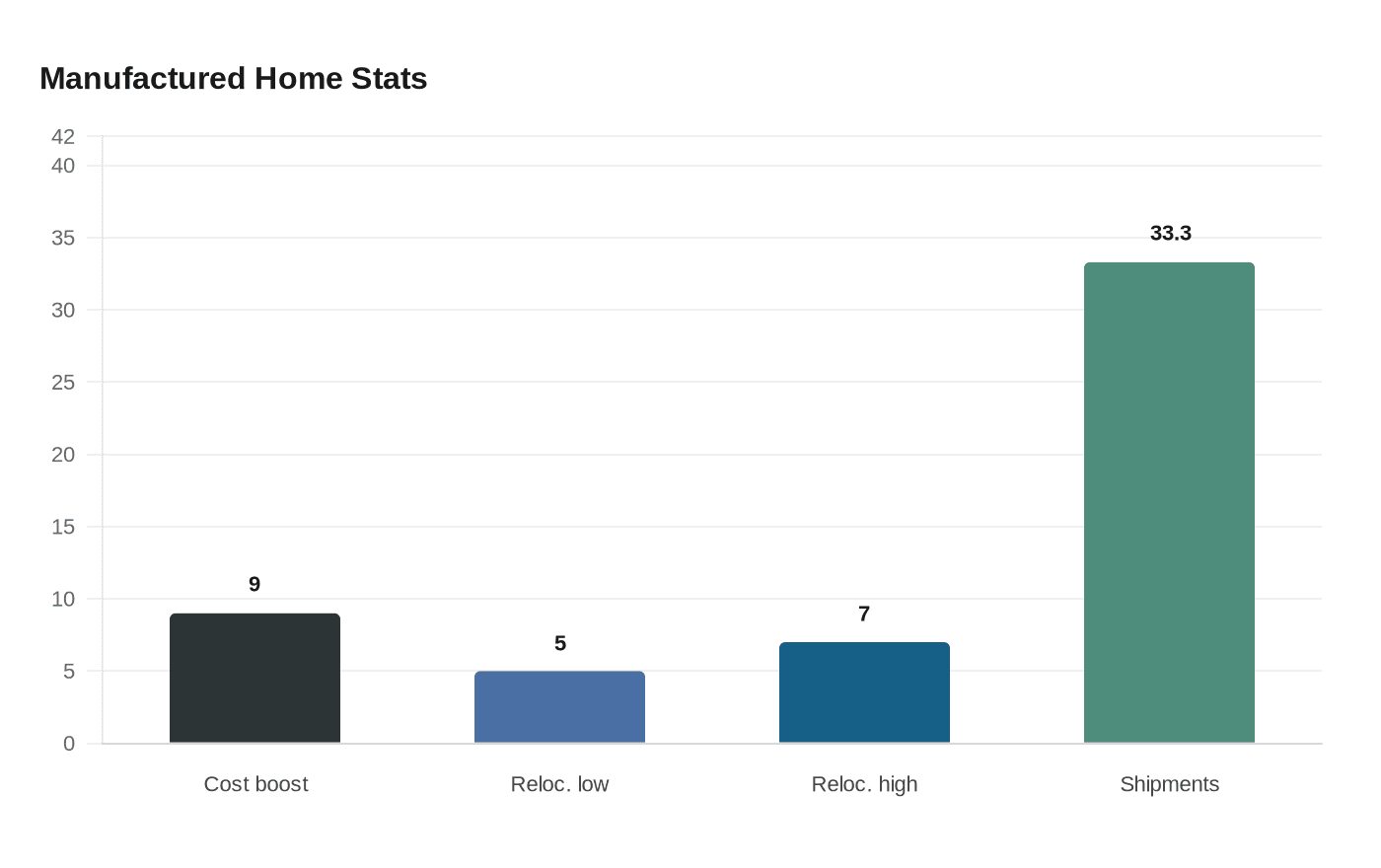
A little-known federal requirement is still adding real money to some of the cheapest homes in America. By forcing manufactured homes to be built on a permanent chassis, the rule can add about $10,000 to the price of a single-section home, or roughly 9% of average cost, making an already low-cost option harder to afford.
Sen. Thom Tillis, R-N.C., introduced S. 2414, the Housing Supply Expansion Act of 2025, on July 23, 2025. The bill would rewrite the 1974 manufactured housing law by striking the words “on a permanent chassis” and replacing them with “with or without a permanent chassis.” It has bipartisan Senate backing from Ruben Gallego of Arizona, Tim Scott of South Carolina, Brian Schatz of Hawaii, Katie Britt of Alabama, Alex Padilla of California and Mike Crapo of Idaho.
The policy fight is about more than steel. The National Manufactured Housing Construction and Safety Standards Act of 1974 defined a manufactured home as one built on a permanent chassis, a rule meant to preserve transportability when homes were moved more often. Today, Pew says only about 5% to 7% of manufactured homes are ever relocated after delivery. Pew also says shipments remain at about one-third of 1990s levels, a sign the industry has not fully recovered from the Great Recession.

Housing researchers say the chassis now acts less as a necessity than a cost driver. The Lincoln Institute of Land Policy describes it as a 10- to 12-inch-deep metal frame that helps with towing but raises the home and can make it harder to add a second story or basement. Removing the mandate, advocates say, could lower material costs, give manufacturers more design flexibility and expand where homes can be placed, including in cities and suburbs.
Support has come from housing advocates and lawmakers in both chambers. The National Low Income Housing Coalition endorsed the Senate bill, saying it could reduce costs and expand design and location possibilities, even as zoning and density rules still block many sites. In the House, Emanuel Cleaver of Missouri and John Rose of Tennessee introduced companion legislation on November 25, 2025, joined by Mike Flood of Nebraska, Lou Correa of California, Monica De La Cruz of Texas and Scott Peters of California. Cleaver said manufactured housing is a key component of the nation’s housing supply, while Rose said striking the restriction would help bring home prices down.
The legal wrinkle is simple: because the chassis requirement is embedded in the 1974 statute, HUD cannot erase it on its own. Only Congress can. Lincoln Institute researchers said that even if the rule changes, chassis could still be used for transport and possibly reused by manufacturers, and removing them after delivery would not affect stability, which depends on the foundation. Buyers using FHA, VA or USDA-backed loans would still have to meet HUD’s Permanent Foundations Guide, and state and local installation codes would still apply.
This article was produced by Prism’s automated news system from verified source data, official records, and press releases, then run through automated quality and moderation checks before publishing. The system is built and supervised by the people who set the standards it runs under. Read our full AI policy.
Did this article answer your question?

