Senators push to strip helicopter language, demand clear safety standards
A bipartisan group of senators urged revisions to the annual defense authorization bill after safety officials and victims' families warned its helicopter provisions leave critical gaps. Their intervention follows sharp criticism from the National Transportation Safety Board and renewed calls for enforceable visibility standards after a midair collision that killed 67 people.
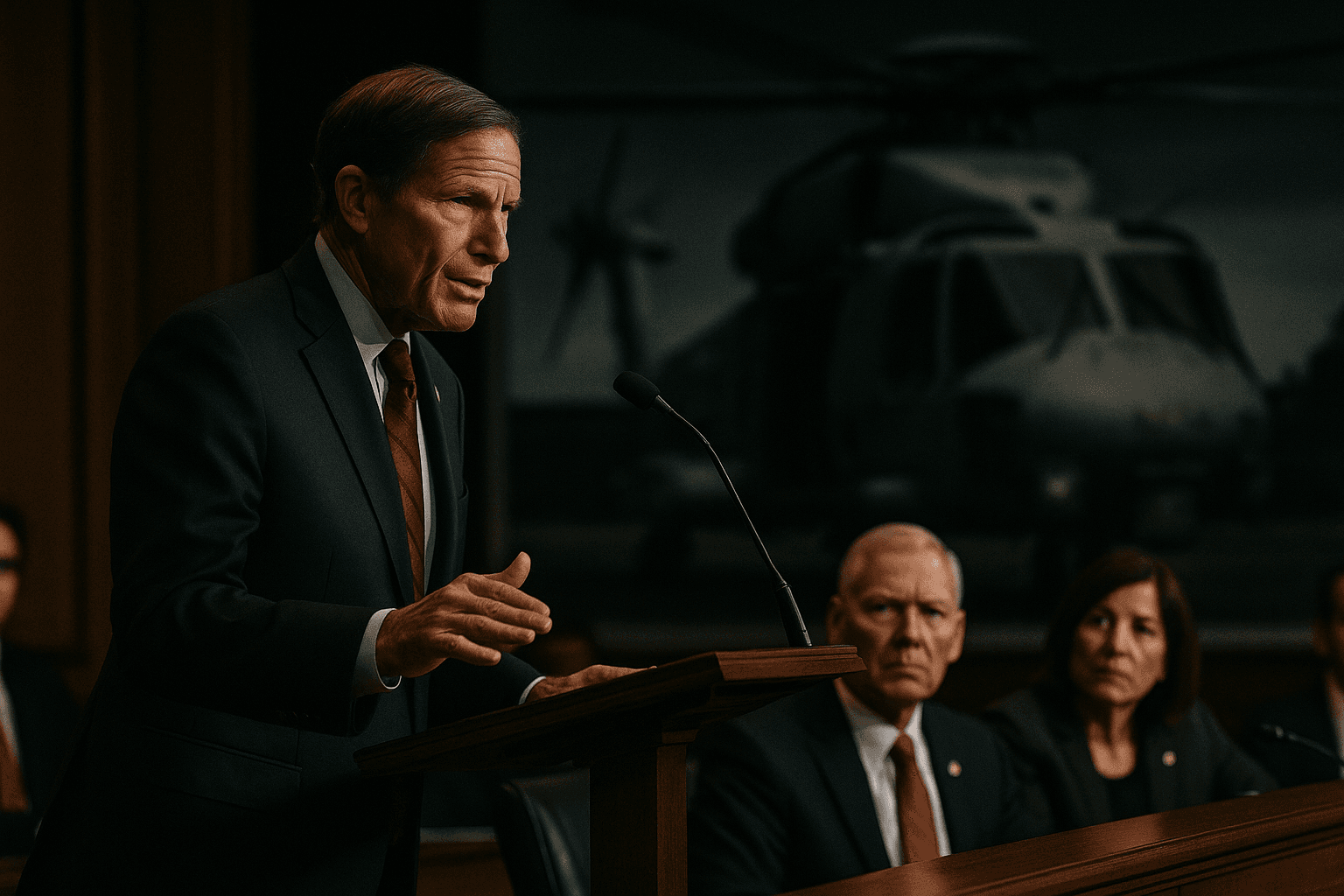
On December 11, a bipartisan coalition of U.S. senators including the chair and the top Democrat of the Senate Commerce Committee publicly pressed lawmakers to remove or revise language in this year’s defense authorization bill that they say would weaken safety for military helicopters operating near civilian aviation. The move follows a Reuters account on December 10 and criticism from the National Transportation Safety Board that the measure could “would make skies less safe.”
The contested text would require U.S. military helicopters conducting training missions to broadcast alerts to nearby commercial aircraft but does not define the technical form those alerts should take. The absence of specifics on transponder changes, traffic collision avoidance system style signals, dedicated military to civilian datalinks, or standard radio procedures has alarmed senators, safety officials and relatives of the 67 people killed in the January 29 midair collision near Reagan National Airport.
Equally contentious is a provision that permits the Department of Defense to waive the broadcast requirement after completing a risk assessment and concluding that identified risks have been addressed. Critics contend the waiver authority could swallow the mandate, turning a nominal safety requirement into a discretionary checkbox. Senate critics on December 11 urged instead explicit, enforceable standards that cannot be easily set aside.
Families of the victims have been outspoken, saying the bill “does not resolve the visibility and coordination failures that contributed to the tragedy” and urging lawmakers to adopt “real, enforceable visibility standards for all military aircraft operating near civilian traffic.” Those demands put pressure on negotiators to craft language that addresses not just training helicopters but a broader class of military flights in congested commercial airspace.
The public health and community implications extend beyond the immediate loss of life. A midair collision that kills dozens creates long term trauma for survivors and families, strains emergency and mental health services, and erodes public trust in aviation safety governance. Communities living near major airports already contend with disproportionate noise and pollution burdens, and residents say they should not bear added risks because of imprecise policy language that privileges operational flexibility over mandatory protections.
The policy debate now centers on technical specificity, oversight and accountability. Lawmakers and safety experts argue that a broadcast requirement without technical standards cannot guarantee detectability by civilian traffic, and that a waiver mechanism with vague criteria offers inadequate checks. The NTSB, whose role is to investigate transportation disasters and recommend safety fixes, raised parallel concerns in the reporting that prompted senators to press for change.
What happens next will be watched closely by families, aviation safety advocates and communities near airports. Senate committee markups, amendments to the annual defense authorization measure, and any formal response from the Department of Defense or the NTSB will determine whether the measure is rewritten to include precise technical requirements, limit waiver authority, or broaden enforceable visibility standards. For now, the dispute highlights the tension between military flexibility and civilian safety, and the demand from grieving families that policy changes prevent another devastating accident.
This article was produced by Prism’s automated news system from verified source data, official records, and press releases, then run through automated quality and moderation checks before publishing. The system is built and supervised by the people who set the standards it runs under. Read our full AI policy.
Did this article answer your question?

