SEO Market Hits $83.9 Billion in 2026, Organic Search Drives 53% of Traffic
The global SEO services market reached $83.9B in 2026, with organic search accounting for 53% of web traffic — numbers that reshape agency pricing and pipeline models.

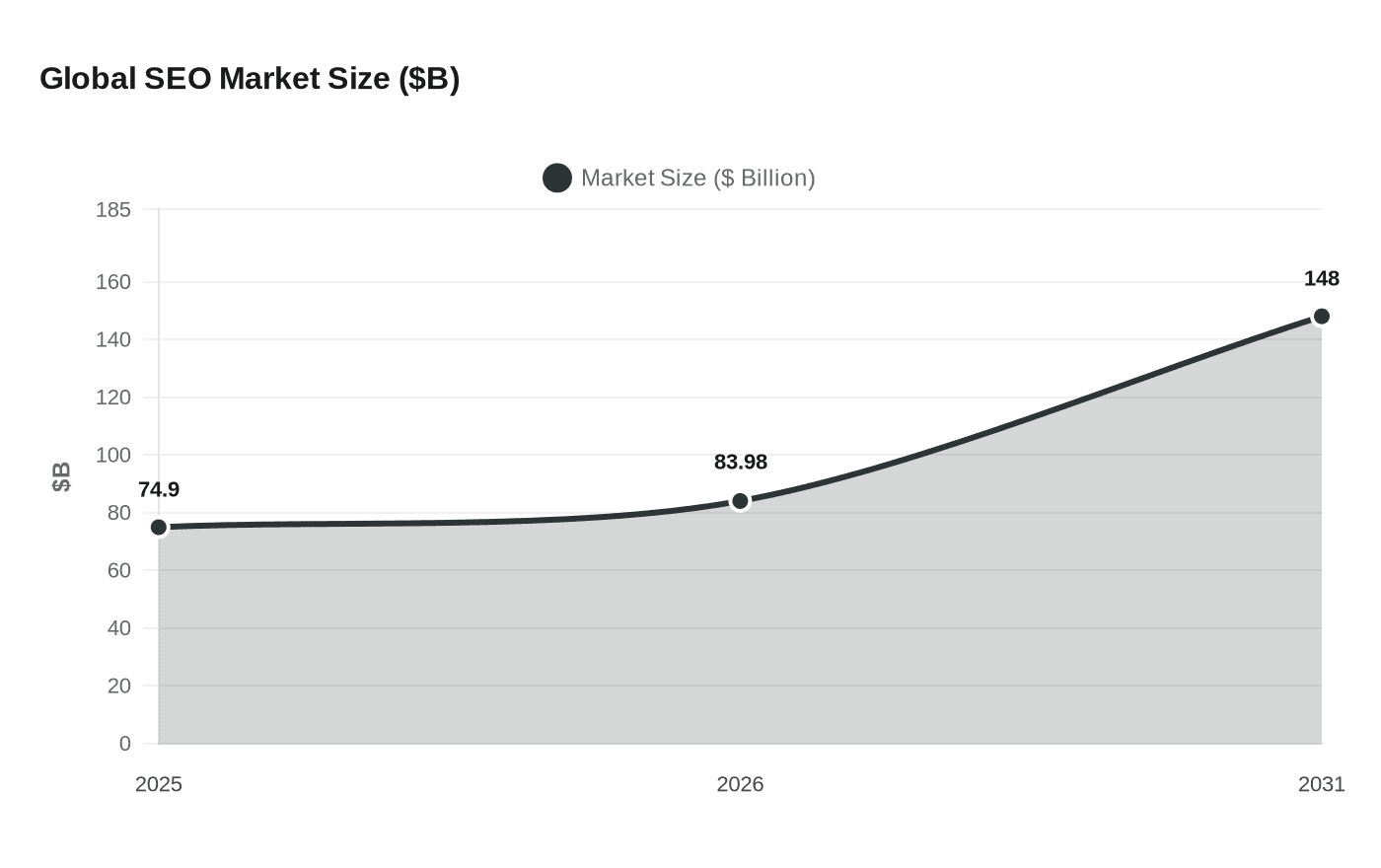
The global SEO services market was valued at $83.98 billion in 2026, up from $74.9 billion in 2025, according to Mordor Intelligence projections compiled in a SharkPlatform industry summary distributed through AccessWire in late March. At a 12.12% compound annual growth rate, the market is on track to hit $148 billion by 2031 — a trajectory that gives agency principals hard numbers to anchor retainer pricing conversations and headcount plans for the year ahead.
The most sales-deck-ready figure in the package is the 53% organic traffic share. Organic search accounts for roughly 53% of website traffic globally, making it the single largest acquisition channel ahead of paid search, social, and direct. That number has staying power in client conversations precisely because it is channel-agnostic; it argues for SEO investment regardless of what a client's paid media mix looks like. For industries where organic share climbs above 60%, the case for a dedicated retainer rather than a project engagement becomes structurally sound.
Position data sharpens the argument further. The first Google result captures approximately 27% of clicks, meaning rank-one organic placement delivers a measurable traffic premium that clients can attach a revenue value to during pipeline modeling. Pair that with the fact that long-tail queries represent roughly 70% of all searches, and the strategic implication for agencies is concrete: keyword breadth and content volume programs are not optional add-ons but core deliverables if a client wants to capture the full addressable query set.

The conversion-side stat that holds up best under scrutiny is the 14.6% average close rate for organic leads, which outperforms most outbound and paid channels by a significant margin. That figure, sourced from aggregated industry data, is the one to stress-test before dropping it into a proposal. The methodology behind close-rate comparisons varies widely by industry vertical and deal cycle, so agencies should validate against their own CRM data before citing it as a universal benchmark. Used as directional context rather than a precision guarantee, it supports the argument that organic leads are higher-intent and warrant a longer investment horizon.
Budget allocation norms round out the planning picture. Businesses typically direct 10 to 20% of their digital marketing budgets toward SEO, and enterprise organizations frequently exceed $100,000 annually on optimization programs alone. For agencies building tiered service packages, those spending bands define the ceiling and floor for mid-market and enterprise proposals without requiring custom discovery on every deal.
One structural caveat applies to the full dataset: the AccessWire-distributed summary aggregates figures across multiple sources including Statista and Mordor Intelligence, and not every claim carries equal methodological rigor. The market-size and CAGR numbers trace back to identifiable research firms and hold up as benchmarks. The click-through and close-rate figures are widely cited but draw on studies with varying sample sizes and date ranges. Agencies that lean on the former in investor decks or strategic planning documents are on solid ground; those citing the latter should frame them as industry directional estimates rather than guaranteed performance targets.
Google's scale anchors everything: 8.5 billion searches processed daily, and nearly 90% global search market share. Zero-click searches have crossed 58% as AI Overviews expand, which adds complexity to pure traffic forecasts but does not diminish the underlying market size argument. If anything, increasing search complexity justifies higher fulfillment costs and creates the conditions where white-label and AI-assisted delivery models can capture margin that manual execution cannot.
Sources:
Know something we missed? Have a correction or additional information?
Submit a Tip