Serbia Says Sanctioned NIS Refinery Will Reopen Mid-January
Serbia announced that its lone large refinery in Pančevo will resume operations in mid-January after receiving a temporary licence from the U.S. Treasury’s Office of Foreign Assets Control, a move that could ease immediate fuel shortages but leaves longer-term capacity and ownership questions unresolved. The short licence window and a March deadline to resolve Russian ownership create potential volatility for domestic fuel markets and regional energy security.
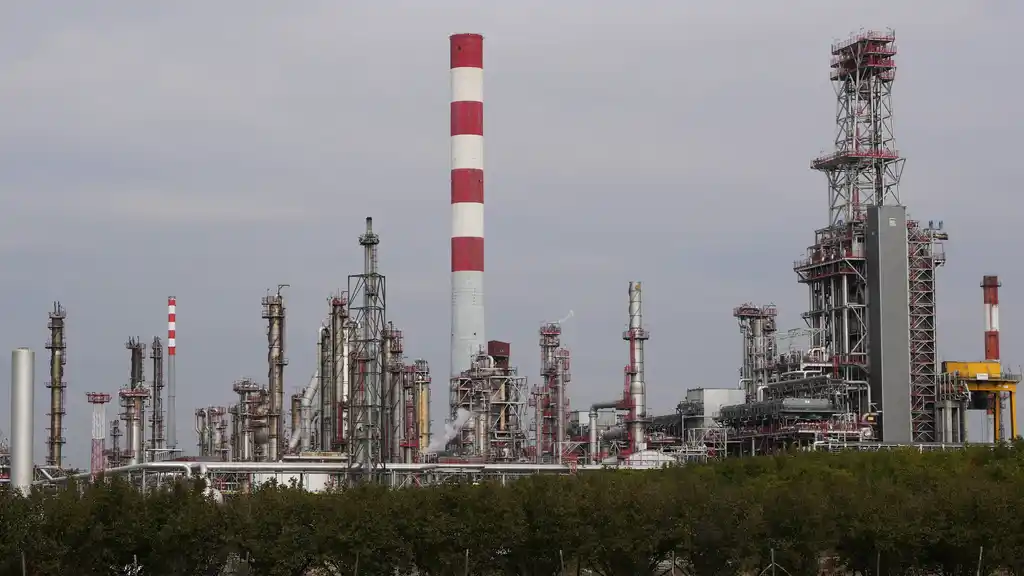
Serbian President Aleksandar Vučić said on Jan. 4, 2026 that Naftna Industrija Srbije (NIS) will restart processing at its Pančevo refinery on Jan. 17 or 18 after receiving a temporary operating licence from the U.S. Treasury Department’s Office of Foreign Assets Control. Vučić said the first crude shipment, about 85,000 tonnes, is expected to arrive by Jan. 15 and that production of petroleum derivatives would begin around Jan. 25 or 26. The Pančevo facility had been offline for roughly 36 days following U.S. sanctions imposed in October 2025 on NIS as part of broader measures targeting the Russian energy sector.
The temporary OFAC licence permits limited operation through Jan. 23, 2026, creating a narrow window for the restart and immediate commercial activity. JANAF, the operator of the Croatian pipeline used to transit crude to Pančevo, has reported receiving a transit licence that clears the path for the expected delivery. The quantity cited by Belgrade, 85,000 tonnes, equates to roughly 620,000 to 630,000 barrels of crude oil, sufficient to move the refinery from cold idle toward full operation if processing and logistics proceed on schedule.
Ownership of NIS remains a central source of uncertainty. Gazprom holds roughly 11.3 percent, Gazprom Neft 44.9 percent, and the Serbian government about 29.9 percent, with the remainder held by small shareholders and employees. Washington has set a March 24, 2026 deadline tied to negotiating the transfer of the Russian owners’ stakes, and Belgrade says it supports ongoing talks between the Russian shareholders and Hungary’s MOL. The outcome of those negotiations will be decisive for operations beyond the short OFAC licence window and for investor confidence.
Economically, the immediate effect of the restart would be to relieve acute domestic supply constraints that arose during the shutdown. Short-term retail fuel prices and wholesale margins in Serbia and neighboring markets have been vulnerable to the loss of Pančevo’s throughput; resumption of processing should moderate upward pressure on pump prices and reduce urgent import needs. However, the gap between the OFAC licence expiry on Jan. 23 and the projected derivatives output date of Jan. 25 to 26 highlights a legal and operational tension: sustaining refining operations past the licence deadline will require further U.S. action or a completed transfer of Russian-held equity.

Policy implications extend beyond Serbia’s borders. The use of temporary waivers by OFAC underscores the United States’ capacity to calibrate sanctions to manage near-term market stability while retaining leverage to force ownership changes over time. For regional energy security, the episode illustrates how dependence on cross-border transit routes and foreign ownership structures can amplify geopolitical risk in critical industrial assets.
Longer term, the Pančevo episode may accelerate efforts by Balkan governments and regional companies to reduce exposure to sanctioned entities and to diversify crude supply routes. For Serbia, the stakes are high: the refinery is central to domestic refining capacity and the broader industrial base, and its fate will shape fuel costs, trade balances, and political relations with both Moscow and Brussels in the months ahead.
This article was produced by Prism’s automated news system from verified source data, official records, and press releases, then run through automated quality and moderation checks before publishing. The system is built and supervised by the people who set the standards it runs under. Read our full AI policy.
Did this article answer your question?

