Service members seek legal advice over disputed boat strikes killing 200-plus
Service members have called legal hotlines over boat strikes that killed 205 people, as internal and international scrutiny grows over who ordered them and why.
Service members are turning to legal hotlines as U.S. strikes on boats in the Caribbean Sea and Eastern Pacific Ocean have killed more than 200 people, exposing rising unease inside the military over orders many lawyers say may be unlawful.
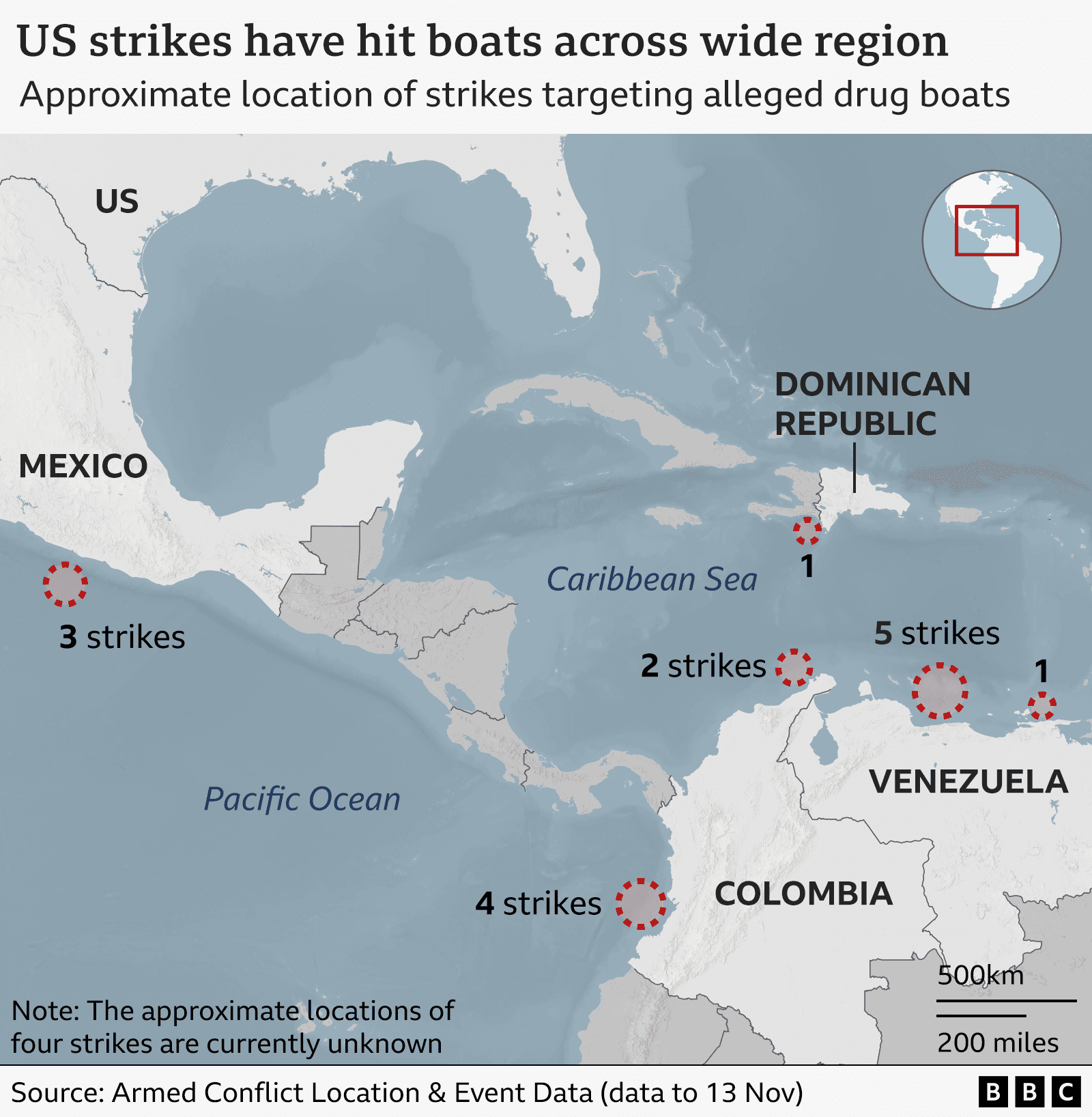
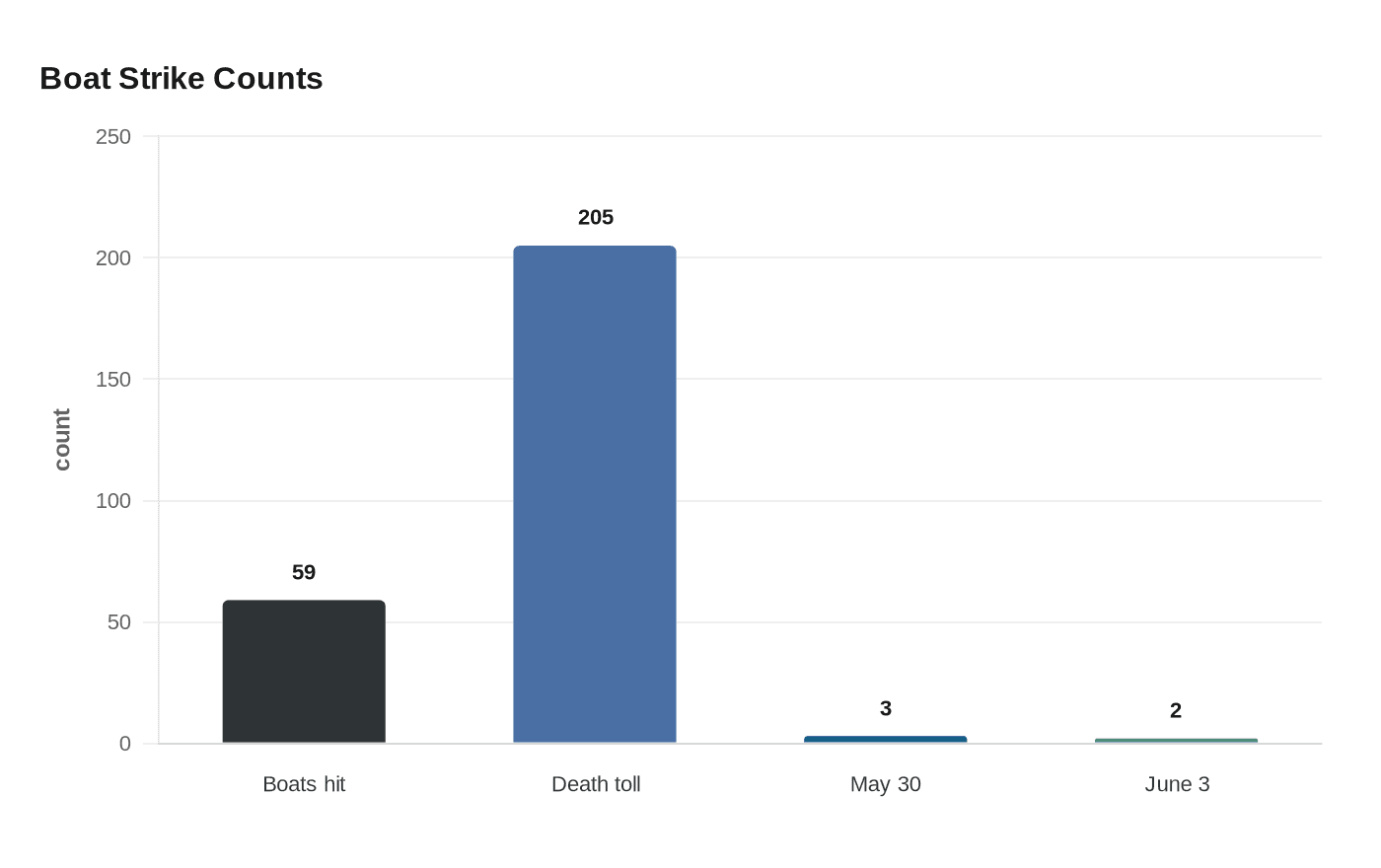
The campaign began on Sept. 2, 2025, off the coast of Venezuela and expanded into wider maritime waters far from the U.S. mainland. By June 3, 2026, the military had hit at least 59 boats. A strike on May 30 killed three men and pushed the death toll to 205, and another strike on June 3 in the eastern Pacific killed two men, according to U.S. Southern Command.
The legal fault line has sharpened as service members seek advice about whether they could be asked to carry out strikes they believe may violate rules of engagement or international law. The GI Rights Hotline said it has received calls from service members since the campaign began in September 2025. Quaker House, in North Carolina, said two service members contacted it with worries about the legality of the strikes and about possible punishment if they refused orders.
Secretary of State Marco Rubio said on June 2 that the Defense Department determined the strikes were legal and that each strike has a legal officer making that call. The Trump administration had already set the broader frame in October 2025, when Donald Trump declared that the United States was in an "armed conflict" with drug cartels and designated some groups as terrorist organizations.
But legal experts and former military lawyers have questioned that position, and United Nations experts said the attacks appear to be unlawful killings carried out without judicial or legal process. The UN experts also said officers should refuse superior orders that are manifest violations of the law, pushing the issue beyond policy debate and into the realm of individual military responsibility.
The dispute is not only external. NBC News reported that the senior judge advocate general at U.S. Southern Command raised legal concerns before the strikes began and was overruled, underscoring that the argument over legality reached deep into the chain of command before the first boat was hit.
Congressional scrutiny has also intensified after reports that a follow-up strike on Sept. 2 may have killed survivors of the first attack. Lawmakers from both parties have backed reviews of the campaign, and Sen. Tim Kaine said a strike on survivors, if true, would rise to the level of a war crime. The controversy now reaches beyond the boats themselves to the orders, the lawyers, and the service members being asked to carry them out.
This article was produced by Prism’s automated news system from verified source data, official records, and press releases, then run through automated quality and moderation checks before publishing. The system is built and supervised by the people who set the standards it runs under. Read our full AI policy.
Know something we missed? Have a correction or additional information?
Submit a Tip