Seven-step wedding dress fittings timeline with essential alteration checklist
Plan fittings around two windows—order samples 8–10 months for production gowns (3–6 months off‑the‑rack) and expect about three fittings, with alterations commonly starting 4–8 weeks before the wedding.
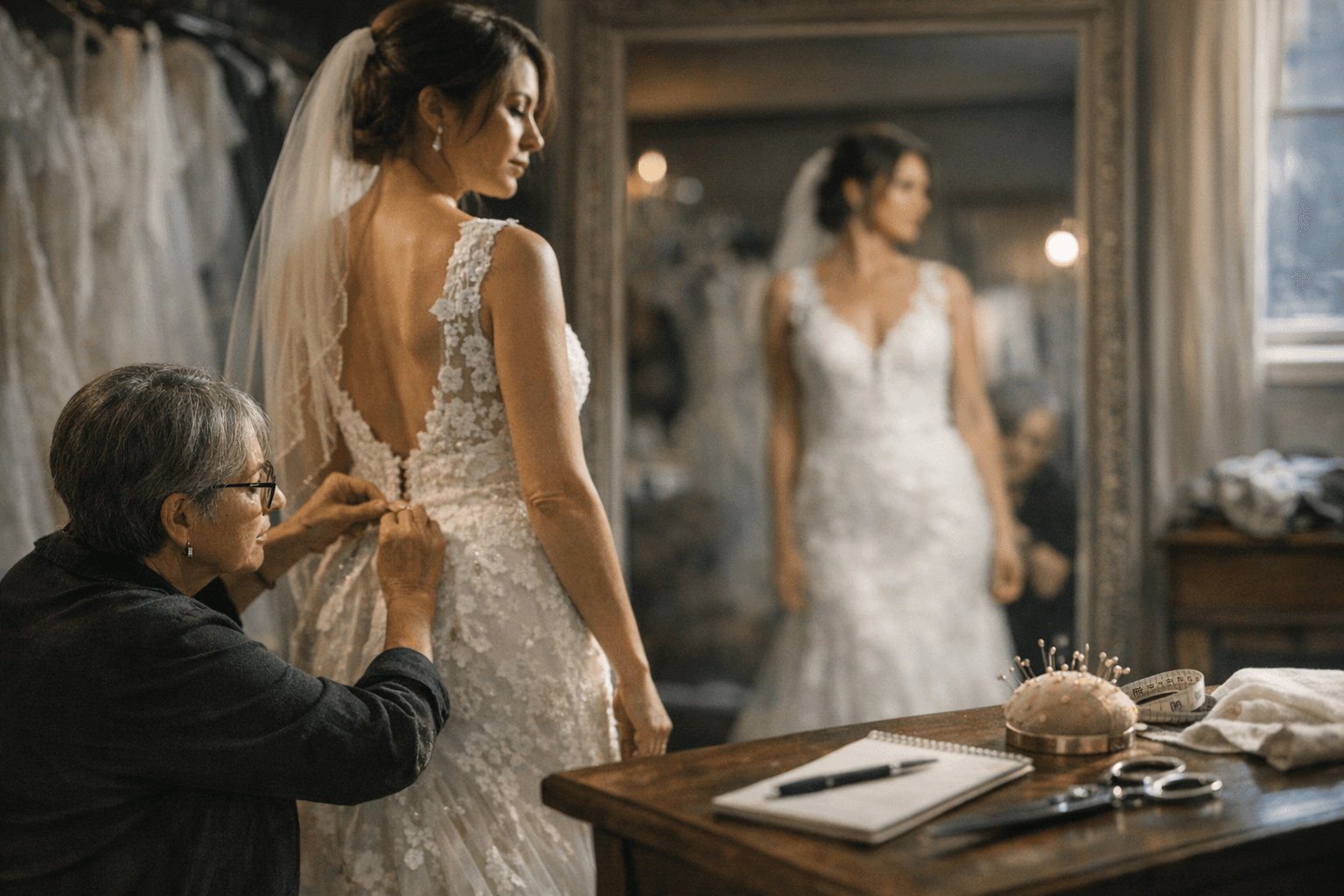
You bought the dress; now the real work begins. In a cramped salon under warm lamps your seamstress will pin the bust, sides and waist, mark your hem and map a bustle so the gown actually moves like you do. Alterations are not optional theatre—they’re what turns a beautiful dress into a bride‑made garment.
1. Decide your purchase and sample try‑on window
If your dress requires production, book your sample try‑on and place orders 8–10 months before the wedding; if you’re grabbing off‑the‑rack, aim for 3–6 months out. This is the decision point that sets the rest of your schedule: production gowns need lead time, off‑the‑rack buys compress the timeline.
2. Lock in your seamstress and set expectations
Contact your seamstress or boutique as soon as you have a purchase timeline—most seamstresses will schedule fittings based on your specific timeline and their workload. Be clear about your wedding date so they can map first, second and final appointments; remember, the closer your fittings are to your actual wedding date, the more accurate your final fit will be.
- Pin at the bust, sides and waist to take in or release fabric
- Discuss and pin hem length so your shoes won’t sabotage the silhouette
- Talk through and possibly pin the bustle location
3. First fitting / initial alterations assessment (what actually happens)
This appointment is when the gown starts to become yours. Depending on your purchase timing, this first alterations appointment often happens in the 2–3 months before the wedding (per the operational schedule), though the sample try‑on for ordered gowns happens earlier (8–10 months) or 3–6 months for off‑the‑rack. Expect the seamstress to:
This is the stage for honest vision‑setting: “Every bride’s needs are different. Because bodies change over time, your seamstress won’t know what’s needed until the gown is on your body!”
4. When to begin alteration work (the 4–8 week rule)
A common rule: start alterations 4–8 weeks before your wedding date or the day you’ll wear your dress. That window balances fabric settling and last‑minute body shifts with the time your tailor needs to make changes. If your seamstress’s workload is heavy or your dress needs major structural changes, adjust earlier—but use the 4–8 week guideline as your baseline.
5. Second fitting: refinement, bustle practice and the video pro tip
Most schedules place the second fitting about 4–6 weeks before the wedding; this is when you try on the partially altered gown and refine fit. If hem and bustle are done and everything sits perfectly, this appointment can double as your final check. Otherwise the seamstress will pin new tweaks and set a final appointment. Pro tip from the salon floor: “pro tip: have someone take a video” when you learn the bustle so you don’t forget the looping knots after a champagne toast.
6. Final fitting / dress wedding‑day readiness
Expect the final fitting 1–2 weeks before the wedding for the last minor adjustments and bustle rehearsal. This is typically your last check—the seamstress finishes final tweaks and runs you through how the dress moves. “After this fitting, your dress is fully wedding‑day‑ready!” If everything is smooth, you leave with a dress that hugs, drapes and moves exactly the way you want.
7. Reality checks, exceptions and the essential three‑stage checklist
Most people have about three fittings. These are the first, second, and final fittings. But be realistic: if you need major structural work or your body changes, you may need additional appointments. Whether you bought a made‑to‑measure Grace + Ivory wedding gown or another designer dress, every bride goes through the alterations phase. Keep this short, in‑shop checklist handy:
- Purchase/sample timeline
- Ordered/production gowns: sample try‑on 8–10 months before wedding.
- Off‑the‑rack: sample try‑on 3–6 months before wedding.
- Alteration/fitting windows (operational)
- First fitting: ~2–3 months before wedding — assess gown, pin initial adjustments (bust, sides, waist), discuss hem and bustle.
- Second fitting: ~4–6 weeks before wedding — try on partially altered gown, refine fit, learn bustle (video it); may be final if all fits.
- Final fitting: ~1–2 weeks before wedding — last minor adjustments, bustle review; dress is wedding‑day‑ready.
- Practical reminders
- Start alterations 4–8 weeks before the wedding is a solid rule of thumb.
- Seamstress scheduling varies—be flexible and honest about your timeline.
- “Do all wedding dresses need alterations? Short answer: yes.” Alterations ensure your gown hugs, drapes and moves exactly the way you want.
Wrap it up like this: fittings are a process, not a panic. Follow the two planning tracks—early sample try‑on for ordered gowns or a compressed plan for off‑the‑rack—and then treat the 2–3 months to 1–2 weeks window as sacred alteration time. Most brides finish in three appointments; when you and your seamstress hit that final fitting, you’ll leave with the one line every bride wants to hear: your dress is wedding‑day‑ready.
Know something we missed? Have a correction or additional information?
Submit a Tip