Shareholder group As You Sow sues Chubb to force climate subrogation vote
As You Sow sued Chubb on March 3, 2026, seeking a court order to force a proxy vote on whether the insurer should study subrogation to reduce climate losses and protect homeowners.

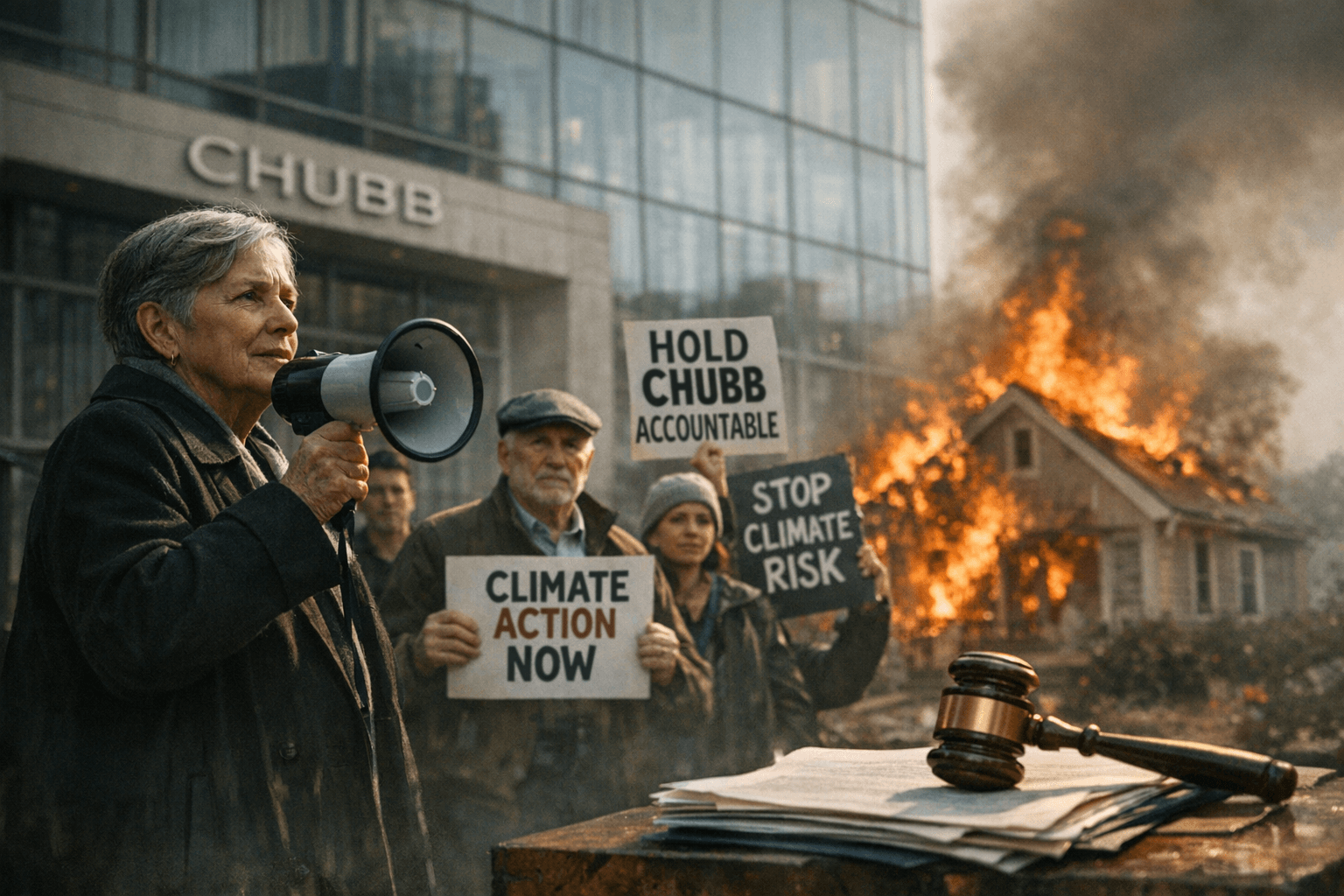
As You Sow filed suit against Chubb Limited on March 3, 2026 in the U.S. District Court for the District of Columbia seeking a court order to force the insurer to include a shareholder proposal on its 2026 proxy ballot. The proposal asks shareholders to vote on whether Chubb should commission a report assessing whether pursuing subrogation claims against parties responsible for climate change could reduce insurer losses, benefit shareholders and help preserve affordable homeowners insurance.
The litigation, brought by As You Sow and represented by the Public Citizen Litigation Group, challenges Chubb’s decision to exclude the proposal from its proxy materials. Nicolas Sansone, the lead attorney for Public Citizen, framed the case as a test of shareholder rights and related SEC precedent, saying, “This case implicates the right of a company’s shareholders to have their voices heard on matters of great significance to long-term corporate strategy. SEC rules forbid a company from excluding shareholder proposals, like As You Sow’s, that go beyond day-to-day business operations and require the evaluation of matters related to important public policy issues.”
As You Sow, which described itself in its release as “the nation’s leading shareholder representative,” cast Chubb as a “global insurance giant” in its filing materials. Bloomberg Law identified Chubb as a “Fortune 500 insurance company” and characterized the suit as the fifth investor organization this year to use omission litigation to force proxy votes, a trend that has accelerated since the Securities and Exchange Commission altered its review process.
In November 2025 the SEC announced it would no longer substantively review corporate no-action requests under Rule 14a-8, a move Public Citizen and other advocates say has pushed contested proxy matters into federal court. Public Citizen described the SEC action as effectively forcing disputes into litigation, an expensive and lengthy process. “By stepping back, the SEC injected uncertainty into the engagement process,” said Giovanna Eichner, shareholder advocate at Green Century Capital Management, as quoted in reporting on the wider trend.
Investor groups and companies have already clashed in a string of post-SEC-change cases. As You Sow pointed to recent settlements and reversals as precedent: Pepsi agreed to include previously excluded proposals after litigation brought by PETA, and AT&T reached a settlement with four New York City pension funds in February. Asher Smith, a lawyer who represented PETA in the Pepsi matter, said, “It was us bringing the lawsuit that forced Pepsi to follow the necessary procedure here.”
The pace of filings has increased for some advocates. Reporting in the Daily Record and Insurance Journal says As You Sow filed 47 proxy resolutions this year, and that companies have blocked up to a half-dozen of those proposals. That compares with eight exclusions out of 63 such resolutions last year, the outlets reported.
As You Sow’s complaint seeks a straightforward remedy: an order requiring Chubb to place the subrogation-report proposal on its 2026 proxy ballot. The complaint and docket number were filed in federal court and are subject to review. Daily Record noted that an SEC spokesman declined to comment on the broader enforcement shift that has triggered the wave of litigation.
The outcome of the suit could determine not only whether shareholders get to vote on this particular climate-oriented study, but also how aggressively companies can use the post-SEC landscape to screen proposals tied to public policy and long-term corporate strategy. As the legal skirmishes multiply, the immediate consequence is clear for homeowners and investors: litigation, settlements and proxy votes will help shape how insurers allocate costs tied to climate-driven losses and whether cost recovery through subrogation becomes part of corporate risk management.
This article was produced by Prism’s automated news system from verified source data, official records, and press releases, then run through automated quality and moderation checks before publishing. The system is built and supervised by the people who set the standards it runs under. Read our full AI policy.
Did this article answer your question?


