Sheriff Explains Why Adams Stayed Level 2 While Neighbor Reached 3
Adams County stayed at a Level 2 snow emergency while a neighboring county moved to Level 3; the sheriff explained his decision and what residents should know about travel and enforcement.
Sheriff Kenny Dick addressed community concerns in an open-letter published Feb. 3, 2026 in the People’s Defender after Adams County remained at a Level 2 snow emergency while a neighboring county escalated to Level 3. The letter, the paper said, “explains the factors considered,” but the published notice did not include the full text of the letter, the specific factors listed by the sheriff, or the name of the neighboring county.
The distinction matters because county sheriffs in Ohio have the legal authority to set snow emergency levels and to restrict travel when conditions require it. As county-sheriff guidance cited by Butlersheriff explains, “The snow emergency level issued by county sheriffs in Ohio is meant to give citizens a sense of roadway conditions, and in some cases, to limit or restrict travel on roadways in the interest of safety.” That guidance also notes that “the authority to declare snow emergencies is placed on the county sheriff by Ohio law and, in order to clarify the definition, sheriffs of Ohio’s 88 counties adopted guidelines to be followed when closing highways due to severe weather.”
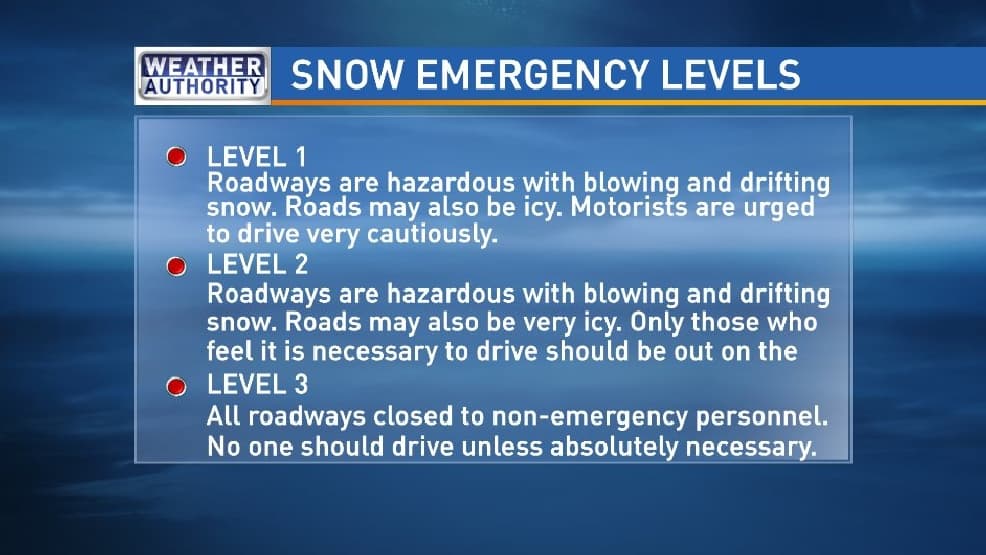
Those statewide guidelines use three levels to describe conditions. Butlersheriff sets out the definitions in plain language: “LEVEL 1: Roadways are hazardous with blowing and drifting snow. Roads may also be icy. Motorists are urged to drive very cautiously.” “LEVEL 2: Roadways are hazardous with blowing and drifting snow. Roads may also be very icy. Only those who feel it is necessary to drive should be out on the roads. Contact your employer to see if you should report to work. Motorists should use extreme caution.” “LEVEL 3: All roadways are closed to non-emergency personnel. No one should be driving during these conditions unless it is absolutely necessary to travel or a personal emergency exists. All employees should contact their employer to see if they should report to work. Those traveling on the roads may subject themselves to arrest.”
The legal exposure for ignoring a sheriff’s order is real. “Any person who knowingly hampers or fails to obey a lawful order of the sheriff declaring a snow emergency and temporarily closing highways, roads and/or streets within his/her jurisdiction may be subject to criminal prosecution under Ohio Revised Code Section 2917.13, ‘Misconduct at an emergency’ or other applicable law or ordinance,” Butlersheriff notes.
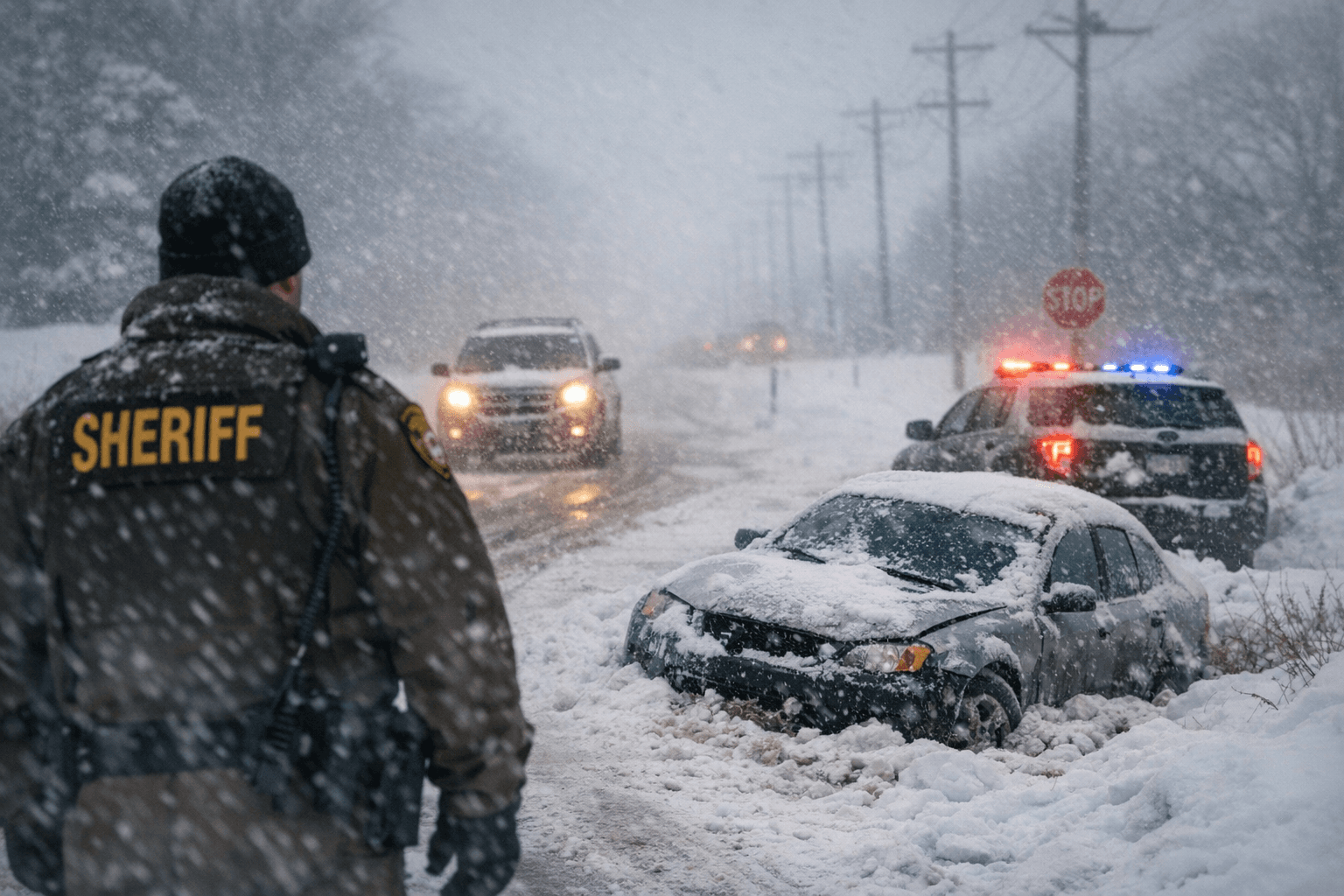
For Adams County drivers this means treating the Level 2 designation seriously: limit trips to necessities, contact employers about reporting to work, and give extra caution to backroads and county routes. As the guidance reminds residents, “Remember, it’s impossible to know the condition of every road in the county. These are only guidelines for the majority of roads. If, for example, a Level 1 Snow Emergency is in effect, there may be secondary roads that could be hazardous enough to be rated at level 2 or even possibly level 3.”
Sheriff Dick’s open-letter set out the rationale in broad terms, but local officials and residents can expect follow-up updates if conditions change. For now, the practical step is simple: avoid nonessential travel, check local alerts from Adams County, and contact your employer before heading out.
Know something we missed? Have a correction or additional information?
Submit a Tip
%3Amax_bytes(150000)%3Astrip_icc()%2F1095-BHealthCoverage-1-c2b35a65cb7046028b47940d68f4260c.png&w=1920&q=75)