Shigeo Fujita's Dry Bonsai: maintenance-free sculptures fetch luxury, provoke debate
Shigeo Fujita's dry bonsai sculptures use preserved trunks and artificial foliage to sell to luxury clients and spark debate over what counts as bonsai.
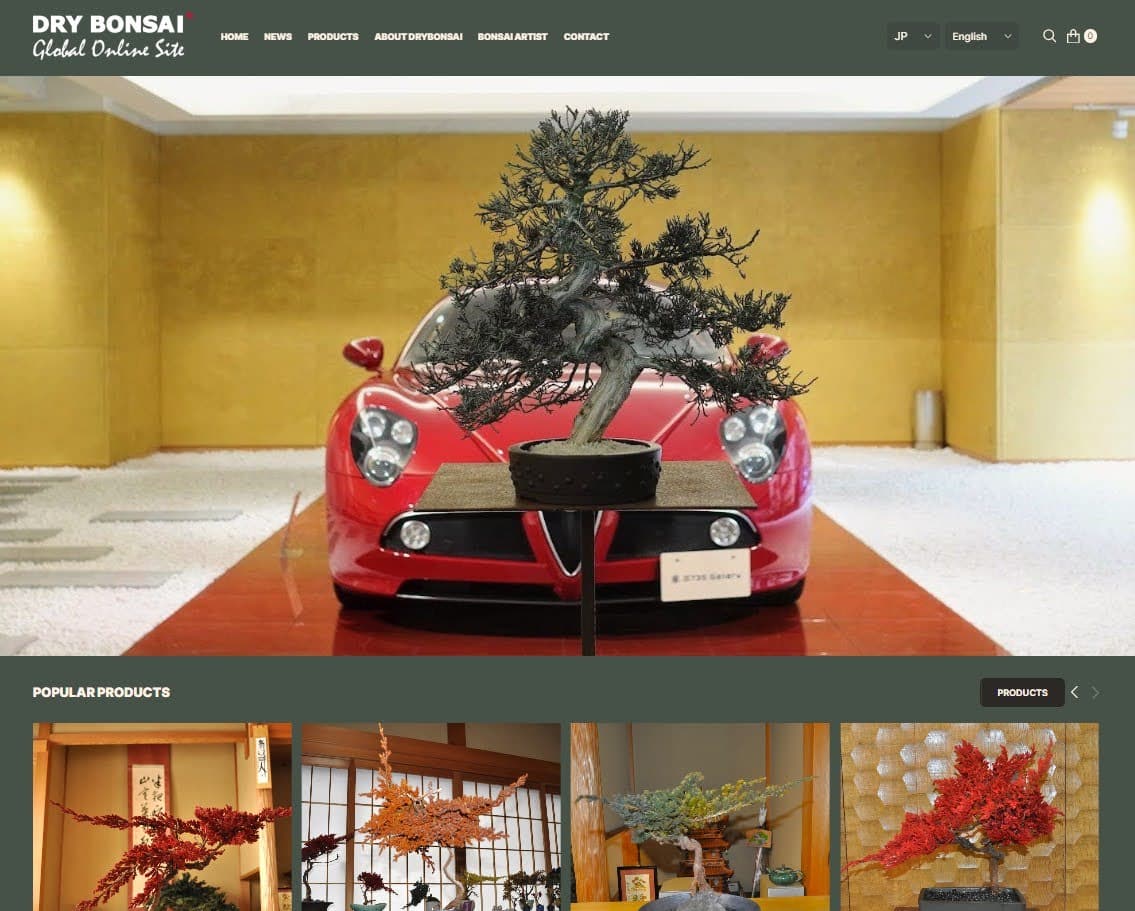
Shigeo Fujita has built a niche turning deadwood and preserved trunks into maintenance-free bonsai sculptures that now fetch luxury commissions and international buyers. His atelier produces pieces that range from palm-size display works to elaborate, high-end installations priced in six-figure JPY territory, and clients have included Rolls-Royce and upscale retailers with exports reaching markets such as Milan. The rise of dry bonsai reframes possession and display for collectors who cannot accommodate living plants or import them across borders.
A profile released January 25, 2026 walked through Fujita's studio process, showing how trunks are chosen and prepared. Fujita and his team select naturally aged or intentionally dried material, then clean and sterilize the wood to stabilize it. Trunks are fixed to bases with adhesives and internal supports to secure posture and nebari-like balance. Preserved or artificial foliage and moss are added and often color-treated to maintain a consistent visual effect year-round. The finished objects are designed to require no watering, pruning, or seasonal protection, making them attractive for corporate lobbies, private collections, and international display.
The practical value is immediate for buyers who want the bonsai silhouette and deadwood patina without the hour-to-hour care live specimens demand. Verify provenance and the maker's background before purchase: works assembled by artists with formal bonsai training are more likely to display convincing proportion, line, and negative space. Makers argue that deep bonsai knowledge is essential to create pieces that read like genuine bonsai rather than mere floral props. That argument underpins pricing and market positioning, and it shapes what galleries and retailers choose to stock.
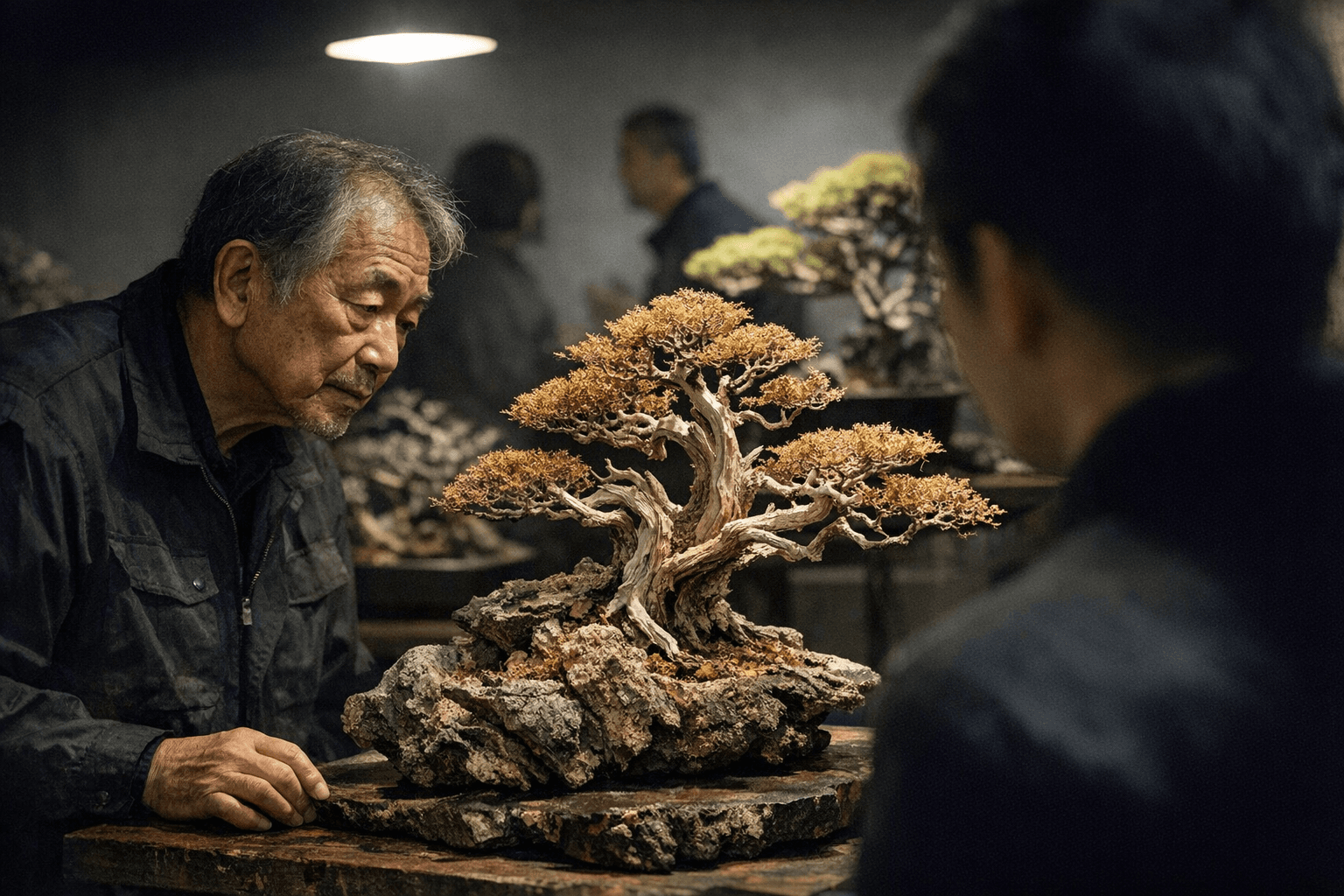
At the same time, dry bonsai provokes debate in the community. Purists contend that removing the living element breaks the relationship between keeper and tree that is central to bonsai practice. Others welcome dry bonsai as an extension of deadwood work and jin technique, a legitimate sculptural expression that preserves and honors aged trunks. The discussion stretches beyond aesthetics to regulatory and logistical realities: preserved pieces bypass quarantine and phytosanitary rules that complicate living-plant exports, opening markets that were previously closed to many growers and artists.
For people buying, selling, or showing bonsai, dry bonsai is both opportunity and test. Check construction details, ask about the trunk's origin and stabilization methods, and weigh how much weight you place on the living connection in your collection. Expect more commissions to arrive from interior designers and luxury brands, and expect the debate over authenticity and technique to continue as dry bonsai finds its place alongside traditional potted specimens.
Know something we missed? Have a correction or additional information?
Submit a Tip