Shinkei raises $22 million to scale humane fish-killing robot
Shinkei’s Poseidon robot can kill a fish in about seven seconds, and the startup just raised $22 million to turn humane slaughter into a seafood standard.
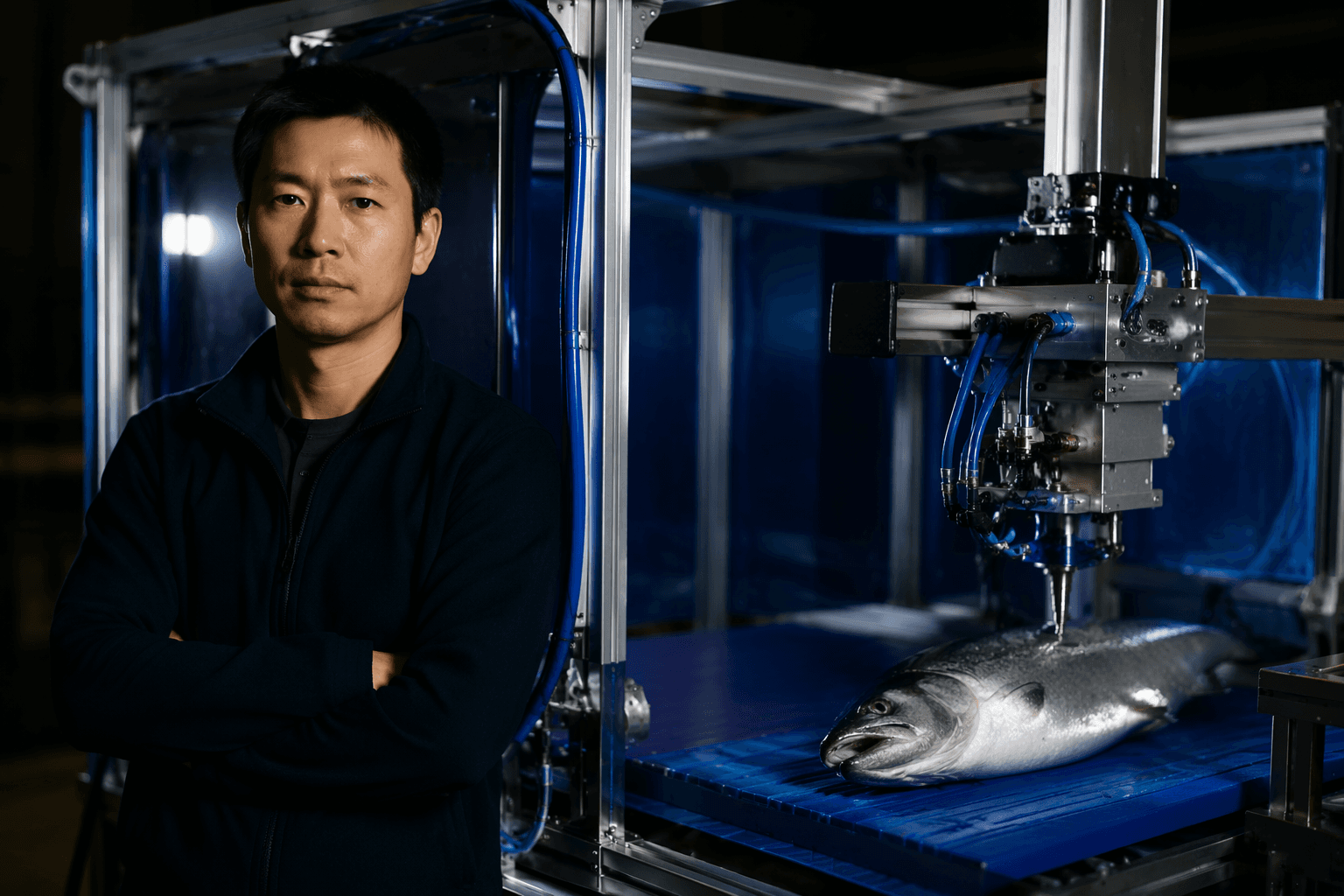
A refrigerator-sized robot that can identify a fish’s species, locate its brain and kill it in about seven seconds is now at the center of a larger wager on how seafood gets processed. Shinkei is betting that a machine built around humane slaughter can do more than improve novelty value: it can lift product quality, reduce labor friction and make animal welfare a repeatable industrial practice.
The company raised a $22 million Series A in June 2025, bringing total funding to roughly $30 million. Founders Fund and Interlagos co-led the round, with additional backing reported from investors including Jaws Ventures, Mantis VC, Cantos, Overwater Ventures, Shrug and CIV. The capital is meant to help Shinkei scale robotic seafood processing and widen distribution.
Shinkei’s Poseidon system is an automated version of ike jime, the Japanese method intended to minimize stress and trauma at harvest. Saif Khawaja founded Shinkei in 2022 to modernize that approach for the U.S. market, and he later launched Seremoni as the company’s consumer-facing seafood brand. Khawaja is also a founding member of the National Fisheries Institute’s Sushi Council, a precompetitive group formed in 2024 that brings together fish farmers, harvesters, processors, distributors and end-users, with 26 founding companies.
The business case rests on more than ethics. Industry and educational sources have long described ike jime as a humane kill method that can improve flavor, texture and shelf life, and scientific reviews have linked stressful slaughter to higher lactic acid buildup and worse flesh quality. Less stressful handling can preserve seafood longer, which matters in a market where freshness and consistency drive price.
Shinkei says it already processes thousands of pounds of fish each week across five U.S. regions and six species. That scale is the real test for the company’s thesis: whether automation can turn a craft technique into a standardized process that works on boats, in distribution channels and eventually in retail.

If it works, the payoff would extend beyond premium sushi supply. Shinkei also frames the model as a domestic supply-chain play, one that could keep more processing and jobs onshore while reducing reliance on imported seafood. The hard part is whether a humane-kill standard can travel from a high-end niche into the industrial center of the seafood business.
This article was produced by Prism’s automated news system from verified source data, official records, and press releases, then run through automated quality and moderation checks before publishing. The system is built and supervised by the people who set the standards it runs under. Read our full AI policy.
Know something we missed? Have a correction or additional information?
Submit a Tip