Sho Miyake Brings Two Acclaimed Films, Expanding U.S. Profile
Sho Miyake’s two U.S. arrivals show how quiet, human-scale Japanese cinema is breaking through through festivals and curated arthouse runs.

Two films, one sharper U.S. profile
Sho Miyake’s arrival in the United States comes with two films that explain exactly why his name is traveling further: Small, Slow But Steady and Two Seasons, Two Strangers. Both are built on restraint, isolation, and the uneasy pull toward other people, and together they offer a clear view of the kind of international cinema finding room with American audiences right now.
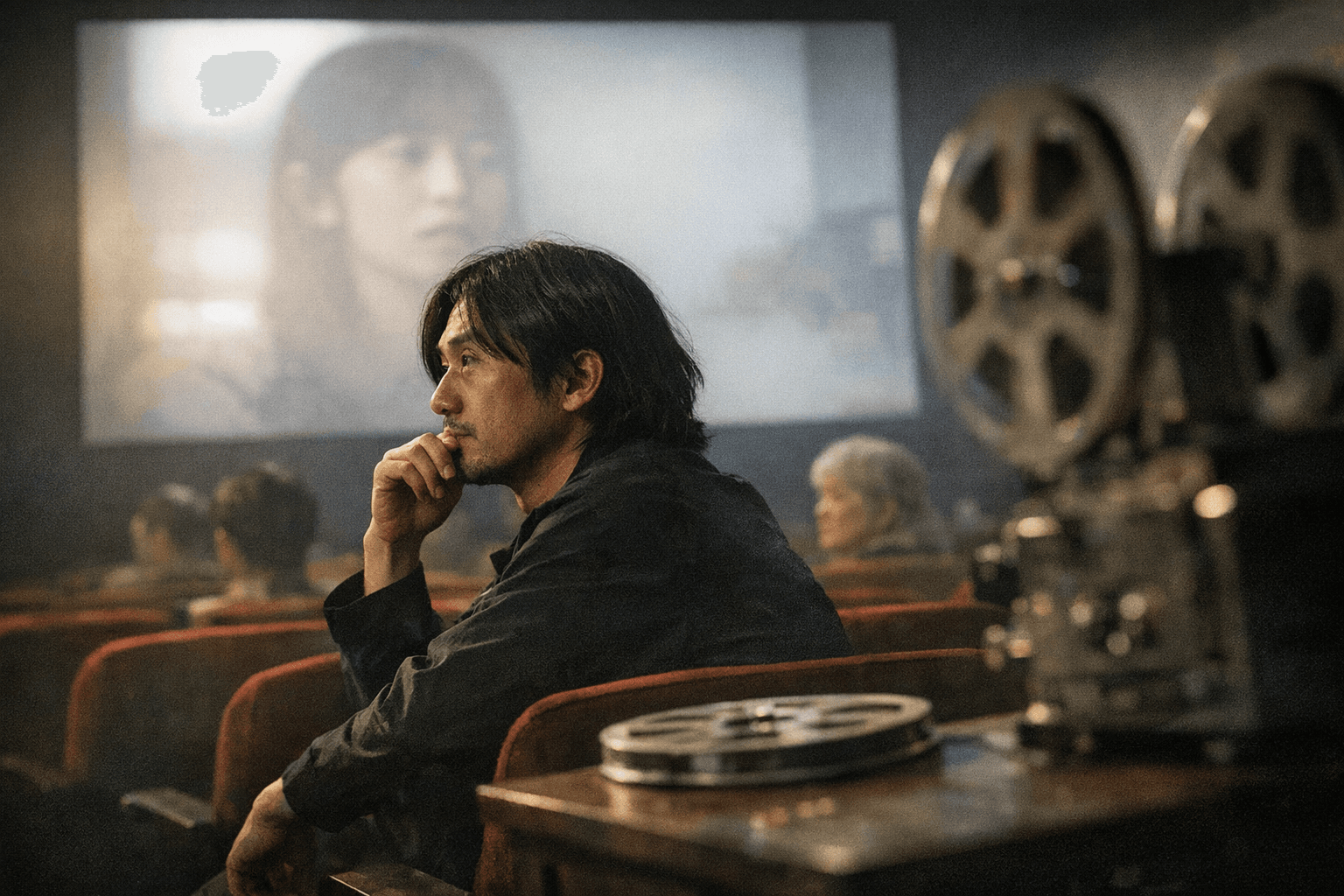
The timing matters because Miyake is not entering the market through a single splashy release. He is arriving through the same network that has helped many serious foreign-language filmmakers build durable followings in the U.S.: major festivals, curated screenings, and a theatrical run in New York. That route tells its own story about the current arthouse landscape, where reach often depends less on mass marketing than on prestige, critical support, and carefully chosen venues.
Small, Slow But Steady and the power of restraint
Small, Slow But Steady premiered in the Berlinale’s main competition in 2022, placing Miyake’s work squarely inside one of the world’s most watched festival stages. The film centers on Keiko, a boxer with a hearing impairment played by Yukino Kishii, and its strength lies in how closely it tracks the pressure between discipline and self-doubt.
The film was widely praised for its minimalistic style, and that restraint is central to Miyake’s appeal. He does not build drama through noise or spectacle. Instead, he finds tension in silence, in gestures, in routines that become emotionally loaded because they are so carefully observed. Keiko’s story gives the film a human scale that feels intimate rather than grand, and that intimacy is part of what makes Miyake’s work resonate beyond Japan.
Just as importantly, Small, Slow But Steady fits the larger pattern running through Miyake’s filmography: seclusion and unease are not decorative themes, but structural ones. His films return again and again to people who want connection but are unsure how to achieve it, a dynamic that makes his work feel especially pointed in a culture saturated with louder, faster forms of media.
Two Seasons, Two Strangers and a bigger festival breakthrough
If Small, Slow But Steady introduced more viewers to Miyake’s sensibility, Two Seasons, Two Strangers has expanded the stakes. The film won the Golden Leopard at the 2025 Locarno Film Festival, and that victory made Miyake the first Japanese director in 18 years to take Locarno’s top prize. That is a significant marker, not just for his career but for the place of Japanese cinema on the festival circuit.
The film is adapted from two works by manga artist Yoshiharu Tsuge, which gives it a literary and visual lineage that suits Miyake’s measured style. Its story follows a screenwriter’s journey, and its cast includes Shim Eun-kyung, Shinichi Tsutsumi, and Yumi Kawai. The combination of source material, performance, and direction suggests a film interested in interior movement more than plot mechanics, which is exactly where Miyake tends to be most precise.
Two Seasons, Two Strangers also matters because of how it reached American viewers. It screened at New Directors/New Films 2026, one of the most closely watched showcases for emerging and boundary-pushing cinema, and then moved into a weeklong run at New York’s Metrograph beginning April 24, 2026. That kind of rollout is telling: the film is being positioned not as a niche curiosity, but as a serious part of the conversation around contemporary international cinema.
What Miyake’s path says about U.S. arthouse distribution
Miyake’s growing U.S. profile is inseparable from the venues and institutions carrying his work. Berlinale, Locarno, New Directors/New Films, and Metrograph are not random stops. Together they form a pipeline that helps films with modest scale but strong critical credentials reach audiences who actively seek out discovery.
That pipeline also reveals how quiet storytelling continues to find an audience in a noisy media environment. Miyake’s films do not compete by being louder than everything around them. They compete by offering a different kind of attention, one rooted in stillness, observation, and emotional hesitation. For American viewers, that can feel like a corrective to the speed and bluntness that dominate much of contemporary screen culture.
The current arthouse landscape favors precisely this sort of transit for international films: festival recognition creates legitimacy, repertory-style theaters create visibility, and limited runs create urgency. The weeklong Metrograph engagement for Two Seasons, Two Strangers is a good example. It is a focused release model, but one that can build the kind of word-of-mouth support that larger commercial campaigns often cannot.
From Hokkaido to the festival circuit
Miyake’s background helps explain the patience of his cinema. Born in 1984 in Hokkaido, Japan, he directed his first theatrical feature, Playback, in 2012. That early start matters because it frames his current rise not as an overnight discovery, but as the product of a filmography that has steadily deepened.
Across that work, the central concerns remain consistent. Seclusion, unease, and the difficult desire to connect recur in different forms, whether the character is a boxer navigating physical limitation or a screenwriter moving through a story shaped by Tsuge’s manga. Miyake’s films are understated, but they are not emotionally thin. They derive force from what remains unresolved.
That is what makes his U.S. moment worth watching. The attention around Small, Slow But Steady and Two Seasons, Two Strangers suggests that American arthouse audiences are still responsive to films that trust silence, ambiguity, and human scale. In Miyake’s case, the breakthrough is not about a single hit. It is about a body of work gaining recognition through the institutions best positioned to reward subtlety, and that may be the clearest sign yet that his profile is still rising.
This article was produced by Prism’s automated news system from verified source data, official records, and press releases, then run through automated quality and moderation checks before publishing. The system is built and supervised by the people who set the standards it runs under. Read our full AI policy.
Did this article answer your question?