Silent Friend spans a century through one ginkgo tree
A single ginkgo tree links three lives, three eras, and a larger reckoning with how people belong to nature as ecological anxiety grows.
A century held inside one tree
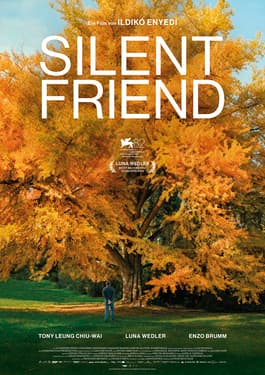
Silent Friend turns a university botanical garden into the center of a much larger cultural argument. In Ildikó Enyedi’s 2025 historical drama, a giant ginkgo tree at the University of Marburg in Germany links three stories set in 1908, 1972, and 2020, giving the film a structure that is as ecological as it is emotional. Rather than treating nature as background scenery, the film makes the tree the constant witness, the still presence that outlasts human certainty, academic ambition, and personal change.
That choice gives the film its force in the current conversation about climate, memory, and cultural inheritance. Silent Friend is not built to frighten viewers or preach at them; Enyedi has framed it as a work about perception, curiosity, and oneness, with the goal of leaving audiences more connected to the natural world. In an era when ecological loss often arrives as abstraction, the film’s power comes from its scale of attention: one living organism, observed across more than a century, becomes a way to think about what people notice, protect, and overlook.
How the film is built
Silent Friend is divided into three timelines, each rooted in the same place but shaped by a different historical moment. The 1908 storyline centers on Grete, played by Luna Wedler. The 1972 section follows Hannes, played by Enzo Brumm. The 2020 story features Tony Leung Chiu-wai as a neuroscientist visiting the university as a guest researcher, where he becomes fascinated by the tree and is described as Professor Wong in the film’s materials.
That structure matters because it gives the film a wide historical lens without losing intimacy. The University of Marburg botanical gardens become a fixed point, while the surrounding world changes in language, technology, scientific assumptions, and social mood. Cineuropa described the ginkgo as the one constant witness across the film’s three timelines, and that is exactly the idea that gives the drama its shape: human lives move through the space, but the tree remains, observing generations as they pass.
The cast and the human stories
The cast gives the film its emotional range. Tony Leung Chiu-wai and Léa Seydoux are among the stars, and both bring international visibility to a project that is deeply European in setting and concerns. Tony Leung’s role is especially notable because it was described as his first European film, a detail that fits the movie’s own pattern of crossings, between continents, disciplines, and ways of seeing.
Luna Wedler’s performance earned particular recognition at Venice, where she received the Marcello Mastroianni Award. Her 1908 storyline anchors the film’s earliest chapter, while Enzo Brumm’s Hannes carries the 1972 portion into a different intellectual and social climate. The film does not rely on a single plotline to generate meaning; instead, it lets each era reveal a different human response to the same living presence, whether that response is wonder, study, or quiet attention.
Why the ginkgo tree matters
The tree at the center of Silent Friend is not just a visual motif. It is the film’s argument about continuity in a fractured world. A ginkgo tree already carries cultural weight as a species associated with longevity and survival, and Enyedi uses that symbolism with restraint, letting the tree’s physical presence do most of the work. It stands in the University of Marburg botanical gardens as a reminder that the natural world is not a decorative layer atop human history, but an actor in it.
That idea resonates beyond the film because it mirrors a broader public concern. Climate discourse often gets trapped in statistics, policy language, or disaster imagery, but Silent Friend offers a different register: attention, patience, and proximity. The film suggests that ecological consciousness begins not with a slogan but with sustained observation, and that a single tree can reveal the limits of human self-importance more effectively than any lecture.
Venice recognition and critical attention
Silent Friend premiered in the main competition of the 82nd Venice International Film Festival on September 5, 2025, placing Enyedi’s film among the most closely watched titles of the season. It won the FIPRESCI Prize, a sign that critics responded to the film’s formal ambition and its unusual emotional structure. The Venice recognition also lifted the profile of the project well beyond the art-house circuit, especially because it arrived with major international names attached to the cast.
The awards underscore how distinctive the film is within contemporary cinema. A story that stretches across 1908, 1972, and 2020, and uses one tree as its central organizing principle, is not built for speed or easy payoff. Its strength lies in accumulation, in the way details from one era echo another, and in how scientific curiosity, private longing, and environmental awareness begin to overlap.
What Silent Friend is saying now
The film arrives at a moment when the relationship between culture and nature is under renewed pressure. As ecological anxiety rises, many viewers are looking for stories that do more than document loss; they want forms that can make attention itself feel like an ethical act. Silent Friend answers that need by placing human drama inside a living landscape and asking what it means to return to the same place across generations.
Enyedi’s interest in perception, curiosity, and oneness gives the film a rare confidence. It does not treat the natural world as a symbol to be decoded and discarded. It treats the ginkgo tree as a presence that changes how the human stories are understood, and that makes Silent Friend feel unusually timely. In the end, the film’s enduring image is not of catastrophe, but of continuity, a single tree holding time together while people, and their ideas about the world, keep changing around it.
This article was produced by Prism’s automated news system from verified source data, official records, and press releases, then run through automated quality and moderation checks before publishing. The system is built and supervised by the people who set the standards it runs under. Read our full AI policy.
Did this article answer your question?