Silk-Covered Mannequin Reaches Stratosphere in Art and Science Fusion
A silk-covered mannequin floated to 33 km above Earth on April 9, merging high-altitude balloon science with an environmental art statement against the curvature of the planet.
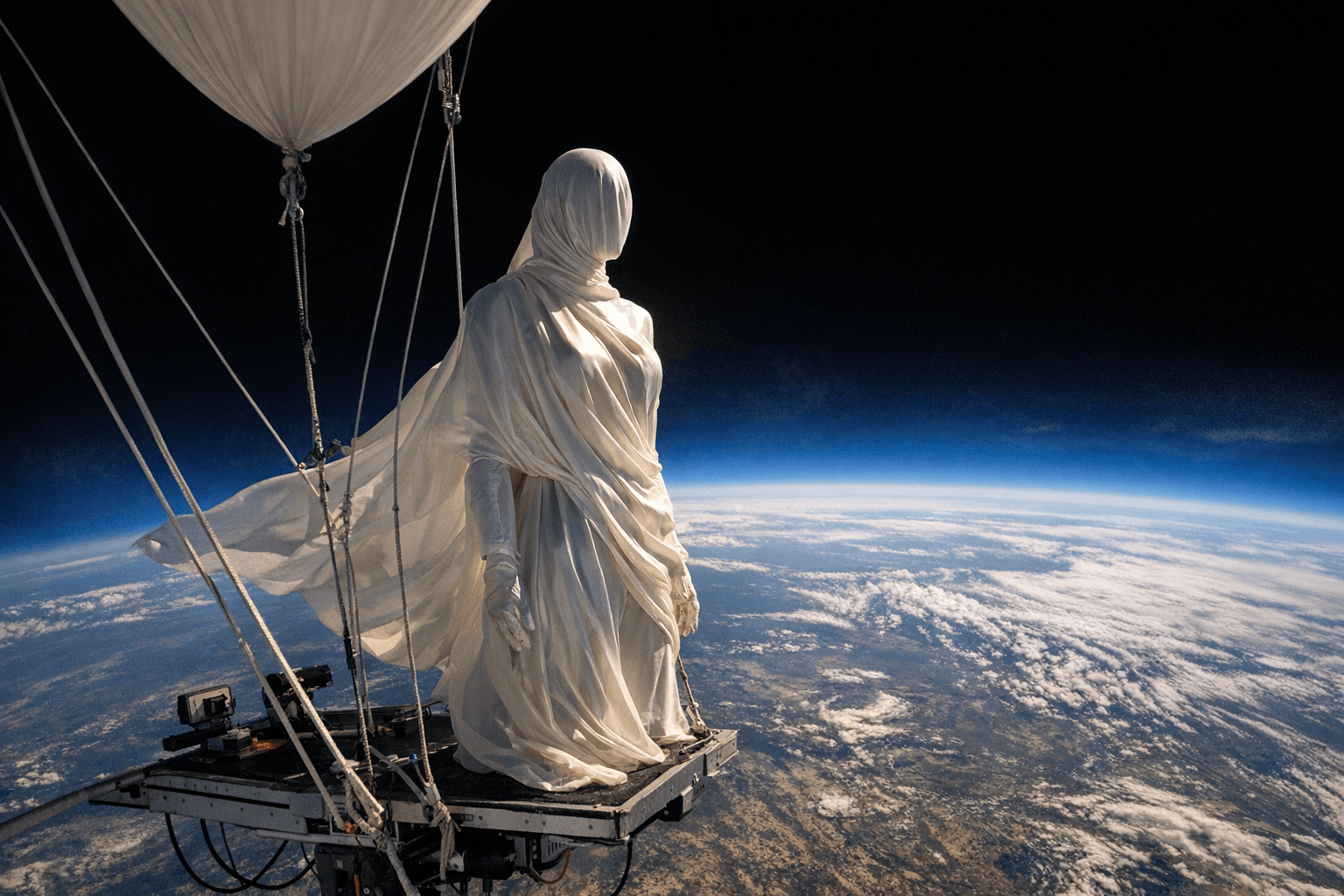
A delicate, silk-covered mannequin floated at the edge of the stratosphere on Wednesday, reaching an altitude of roughly 33 kilometers, about 20 miles, above Earth in a project that fused high-altitude balloon engineering with environmental art.
The ascent placed the figure visibly against the curvature of the planet and the deep black backdrop of near-space, creating imagery the creators framed as both aesthetic and symbolic. The payload was recovered after the flight using standard high-altitude balloon tracking techniques, completing a round-trip to one of the most inhospitable environments accessible without a rocket.
At 33 kilometers, the conditions are genuinely punishing. Atmospheric pressure drops to a tiny fraction of its sea-level value, and temperatures plunge to extremes that challenge any exposed material. That a silk figure survived the ascent and descent intact reflects the precision of the gondola engineering behind the launch, which employed conventional balloon technology to lift the lightweight payload and monitor its position throughout the flight.
The creators positioned the project as part science experiment and part environmental statement, using the contrast between a fragile, human-scale object and the vastness of near-space to provoke reflection on humanity's relationship with Earth. The visual of delicate fabric against an infinite black sky was entirely deliberate: a carefully staged image intended to spark conversations about environmental stewardship, scientific curiosity and the intersection of art and technology.
Stratospheric balloon flights have become an increasingly accessible tool for artists and small research teams. Unlike orbital launches, they carry modest costs and produce substantially lower emissions than any rocket-powered alternative, making them attractive for projects that want to engage the public in climate and atmospheric conversations without a heavy ecological footprint. Balloon payloads also offer functional data-gathering opportunities, with instruments capable of recording temperature, pressure and radiation levels across altitudes that commercial aircraft never reach.
The silk mannequin project joins a growing body of near-space installations that treat the stratosphere as both canvas and argument. By placing a recognizably human form at the atmospheric boundary, the creators drew a direct line between the fragility visible in the silk fabric and the fragility of the planet suspended below it. The stratosphere, once the exclusive domain of national space agencies and defense contractors, is increasingly the site of something stranger and more personal than telemetry data.
This article was produced by Prism’s automated news system from verified source data, official records, and press releases, then run through automated quality and moderation checks before publishing. The system is built and supervised by the people who set the standards it runs under. Read our full AI policy.
Did this article answer your question?