Simple undercoat trick speeds painting small raised details
A community member posted a short technique tip on December 29, 2025, showing how undercoating small raised details early can reduce corrective work and speed painting. The tweak is simple, block in the bump color first, then paint around it, and it shifts sequencing away from old linear workflows toward a more efficient approach.

On December 29, 2025, a community member shared a concise, practice-focused tip that has immediate utility for miniature painters dealing with lots of small raised details. Using Dalek skirts as an example, the author described treating each tiny protrusion as a separate component: undercoat the bumps in the final color, or block them in early, and then paint the surrounding areas. That small change in sequencing reduces fiddly corrections and cuts down on rework.
The value of the technique comes from its simplicity. When tiny elements are left to the end of a painting pass, touching up surrounding colors after painting them can require multiple corrective passes. Blocking the bump color first protects that detail while the larger surfaces are developed, so edges stay cleaner and time spent fixing mistakes drops. The community member framed the tip as an experience-based tweak rather than a full technique overhaul, noting that shifting the order of operations delivers better results with less effort.
This approach also reflects a broader move away from strictly linear workflows. Instead of finishing one area completely before moving on, overlap and staging let you lock in colors for the most delicate parts early and then build layers around them. For painters who batch models or face armies with repeating raised features, the time savings can multiply across an entire project. The technique is especially useful when you need consistent contrast across many uniform details, such as the bumps on sci-fi skirts, rivets, or studded armor.
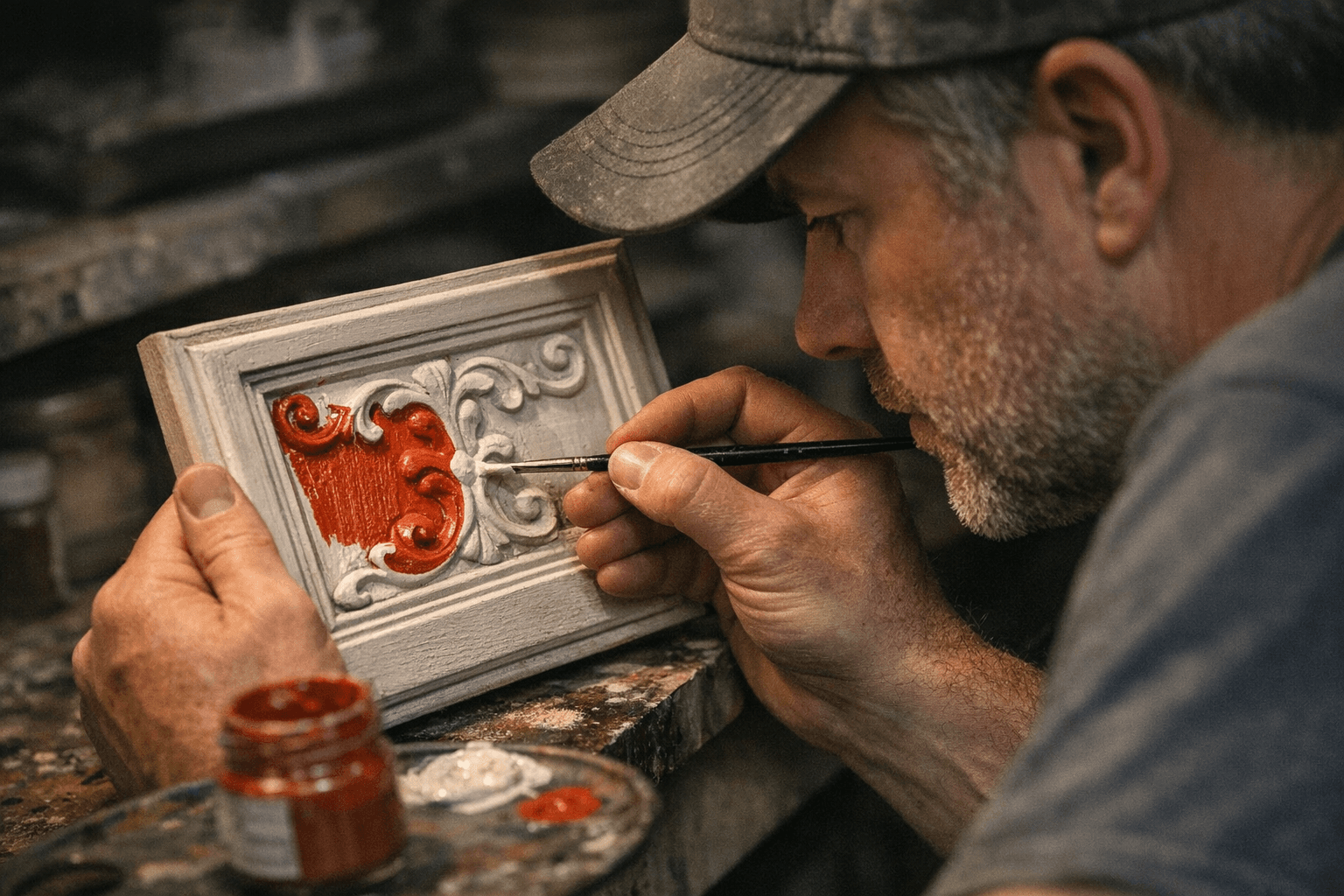
Practical application is straightforward. Undercoat or carefully block in each raised element with the color you want to remain; proceed to paint adjacent panels and larger surfaces; return for final touches only when surrounding work is stable. The workflow reduces the number of corrective passes, speeds throughput, and tends to preserve sharper edges on small details.
The tip is a reminder that small sequencing changes can yield big dividends in studio efficiency. Try it next time you face a model with lots of tiny raised parts, and compare total time and touch-ups against your usual process. If you regularly encounter fiddly corrections, this single adjustment may be one of the quickest ways to improve both speed and finish quality.
Know something we missed? Have a correction or additional information?
Submit a Tip