Six Beloved, Defunct Ballparks That Still Shape Minor League Memories
Six shuttered ballparks, from Rosenblatt to Cashman, still steer team branding, local economies, and fan rituals, their stories revealing how Minor League Baseball reinvents place and memory.
“For every action there is an equal and opposite reaction,” Benjamin Hill writes, and the arc of Minor League Baseball’s ballparks proves him right: when a team moves, the market and the myths move with it. The six parks profiled here — Rosenblatt Stadium, Greer Stadium and Fort Negley, Adelanto Stadium, Jim Perry Stadium, Cashman Field, and New Britain Stadium — are no longer daily homes to affiliated clubs, but each supplies a ledger of cultural, business, and social consequences that still matter to Triple-A and independent‑league communities.
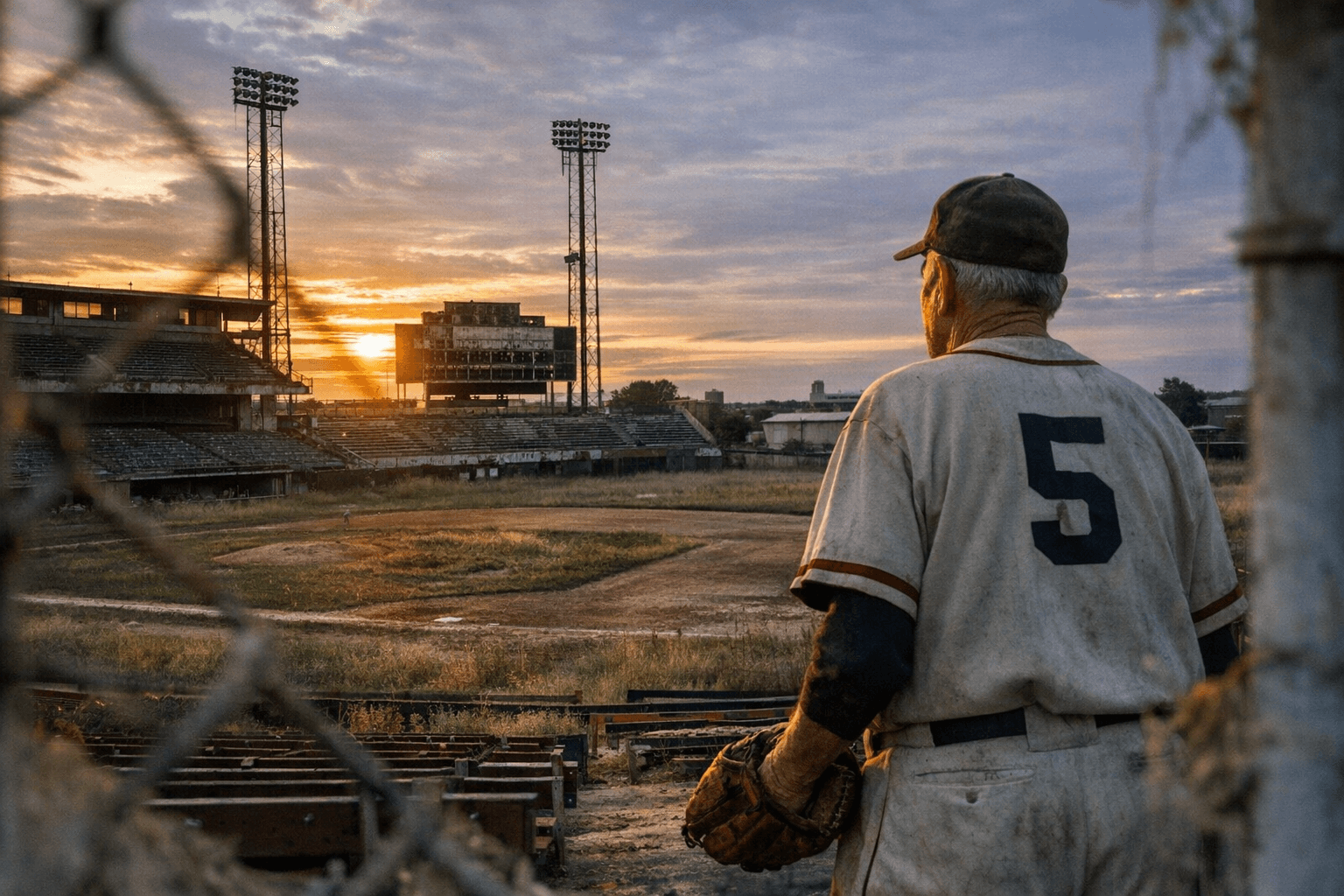
Rosenblatt Stadium, Omaha, Neb. Rosenblatt Stadium served as the home of the Omaha Royals from 1969 to 2010, a factual spine for decades of local baseball life. Its long residency anchored regional fan rituals and civic identity: a generation learned minor‑league rhythms there, from summer schedules to volunteer ushers and local sponsorships. When a stadium that hosts a team for four decades closes or moves, the economic ripple is measurable: sponsorships relocate, seasonal jobs evaporate, and routine tourism patterns shift. Rosenblatt’s memory, preserved in oral histories and in the Omaha baseball archive, continues to inform how cities evaluate new ballpark projects and how fans assign meaning to old seats and ticket stubs.
Greer Stadium and Fort Negley, Nashville, Tenn. Hill traces Greer Stadium back to a deeper landscape, noting that “in 1862, the occupying Union Army constructed Fort Negley south of Nashville’s city center,” and that “one‑hundred‑sixteen years later the grounds of Fort Negley became home to a different sort of impressive fortification, Greer Stadium.” Greer, in Hill’s words, “exuded a funky charm, with its ramshackle concourse, faded blue seats, and a backdrop of riotously colored outfield billboards. Towering above it all was the ballpark’s legendary guitar‑shaped scoreboard, ringed in red and topped with the Sounds' musical note baseball logo.” That vivid image matters because it ties a ballpark’s aesthetic to a city’s brand: Nashville’s music identity was literally built into the stadium’s skyline. The Sounds’ move into First Horizon Park in 2015, built on Sulphur Dell’s footprint, and Greer’s demolition in 2019, illustrate a pattern where redevelopment and preservation collide: the guitar scoreboard became a cultural artifact, Fort Negley remains a historical site, and the demolished stadium leaves behind questions about public land use, historical memory, and who benefits when teams chase new market amenities.
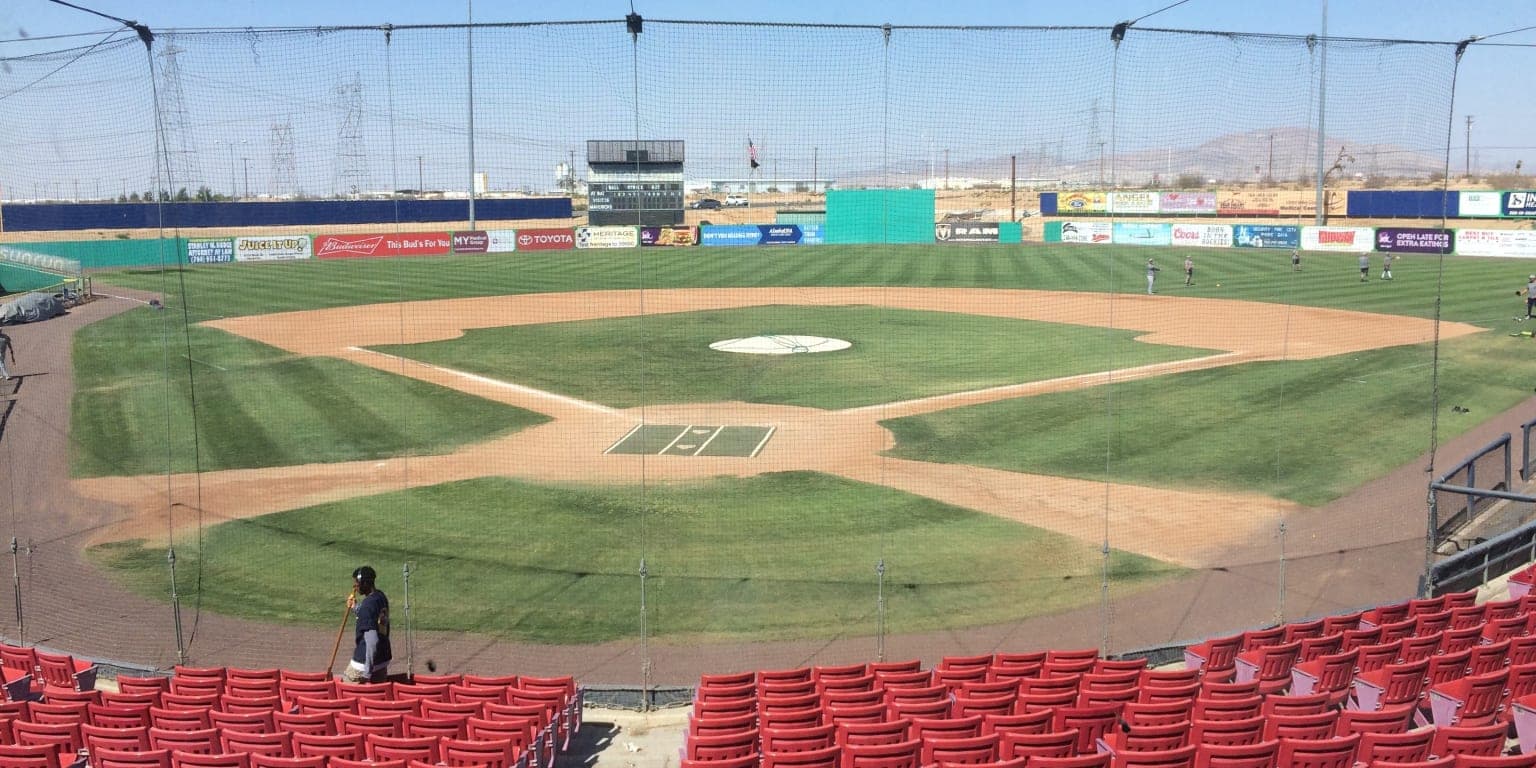
Adelanto Stadium, Adelanto, Calif. Adelanto Stadium’s compact fact is clear: it hosted a California League team from 1991 to 2016. That two‑and‑a‑half decade run makes Adelanto a portrait of lower‑class A life in a desert market: seasonal crowds, long travel distances for visiting clubs, and a reliance on local festivals and promotions to fill seats. The stadium’s timeline also speaks to structural trends in minor‑league economics, where smaller markets and aging facilities often struggle to keep pace with contemporary expectations for suites, premium concessions, and year‑round revenue streams. Adelanto’s story is a reminder that not every ballpark becomes a magnet for redevelopment; sometimes the imprint is social, producing memories of hot‑dog vendors, youth clinics, and the odd night when the lights and a steady breeze felt like enough.
Jim Perry Stadium, Buies Creek, N.C. Jim Perry Stadium is both a collegiate field and a temporary minor‑league refuge. Home to Campbell University’s Fighting Camels, it “hosted the Buies Creek Astros for two seasons,” and Hill recalls: “I attended a game there in August of 2017, towards the end of their inaugural (and also penultimate) campaign. It was a memorable ballpark to visit, mostly because it was never intended to host Minor League Baseball (and likely never will again).” The Jim Perry story illustrates how leagues and clubs lean on local partners during transitions, pressing smaller facilities into short‑term service while new parks are constructed. The Buies Creek Astros’ temporary stay ended when a new Fayetteville ballpark opened, the franchise rebranded as the Fayetteville Woodpeckers in a move slated for April 2019. Jim Perry’s continuing life as a college venue, summed up in Hill’s cheer, “Still in use? Of course. Go Flying Camels!”, shows how multiuse community assets can soften the blow of franchise mobility and preserve regular programming for youth teams, ADA access, and local revenues.
Cashman Field, Las Vegas, Nev. Cashman Field opened in 1983 and was the home of the Las Vegas 51s/Stars from 1983 to 2018, a long tenure in an unusually transient market. Hill’s travel vignette captures the human texture of that tenure: “In 2016, I embarked upon a sprawling trip out west that included Las Vegas’s Cashman Field. It was a strange evening, but I enjoyed wandering around and, among other things, meeting Beer Man Bruce.” That personal beat functions as a share‑hook: a named character, a vivid scene, and a civic pivot point. The business arc here is unmistakable: the 51s’ move into the new Las Vegas Ballpark in Summerlin in 2019 and their rebranding as the Aviators reflect the modern formula for franchise elevation, where suburbanized, amenity‑rich sites promise higher corporate hospitality revenue and modern concessions. Cashman, repurposed as the home of the United Soccer League’s Las Vegas Lights FC, exemplifies adaptive reuse: legacy venues can find second lives, but the sport, demographic, and revenue mix often change, affecting job types and neighborhood activation patterns.
New Britain Stadium, New Britain, Conn. New Britain Stadium was home to the New Britain Rock Cats from 1997 to 2015, and Hill’s recollections are characteristically tactile: “In 2012, some friends and I swung by New Britain so I could play air guitar atop the dugout (among other things). Three years later, I returned to New Britain so I could witness the last Rock Cats game in franchise history.” The Rock Cats’ transition into the Hartford Yard Goats in 2016, with the Yard Goats playing the 2016 season on the road until Dunkin’ Donuts Park opened in 2017, is a case study in franchise logistics and political negotiation: stadium financing, municipal incentives, and regional branding must align or teams sit out a season. New Britain Stadium’s ongoing use by the New Britain Bees of the independent Atlantic League demonstrates how independent circuits can sustain legacy venues and local workforces, even as affiliated teams consolidate into higher‑value facilities elsewhere.
Conclusion These six parks map a set of recurring minor‑league dynamics: franchise relocation and rebranding, stadium lifecycle and repurposing, and the stubborn cultural weight of place. From Rosenblatt’s long Omaha tenancy to Cashman’s reinvention as a soccer venue, the economics are straightforward and the memories are not: promotions calendars, quirky scoreboard art, and Beer Man Bruce matter to fans and to the local businesses tethered to game nights. The statistic that 98.8 percent of readers view without sharing, and that only 1.3 percent of articles get shared, suggests another consequence: these stories of place are undervalued in the broader sports conversation, yet they contain the strongest share‑hooks — named characters, quantified moves, and clear impacts on daily life. Minor League Baseball’s defunct parks therefore do more than collect dust: they teach cities how to build, how to pivot, and how to remember.
Know something we missed? Have a correction or additional information?
Submit a Tip