Six hundred protesters march to Davos as security tightens for WEF
About 600 demonstrators completed a two-day trek to Davos to coincide with the World Economic Forum, highlighting inequality and prompting tightened security that reshaped community spaces.
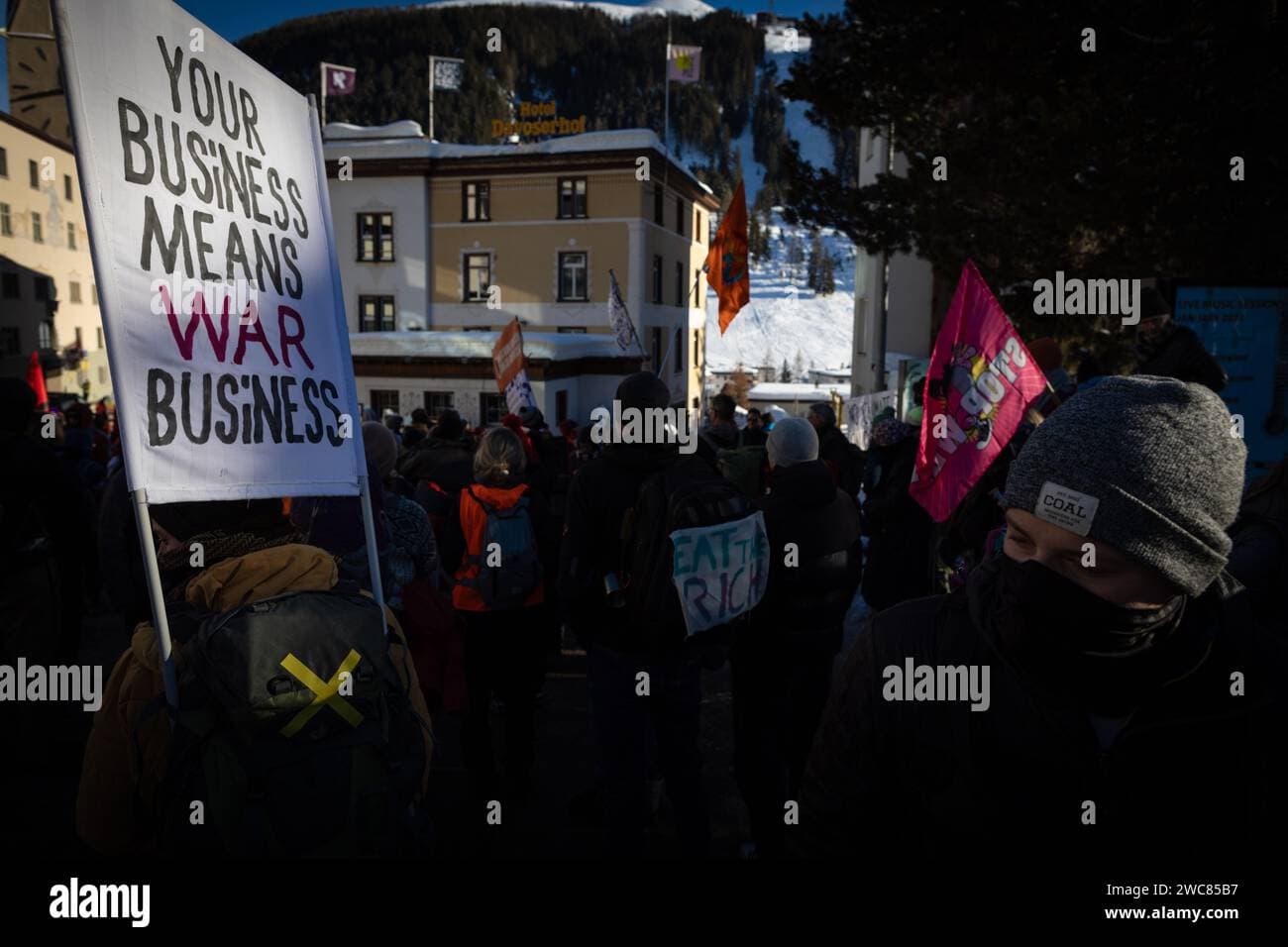
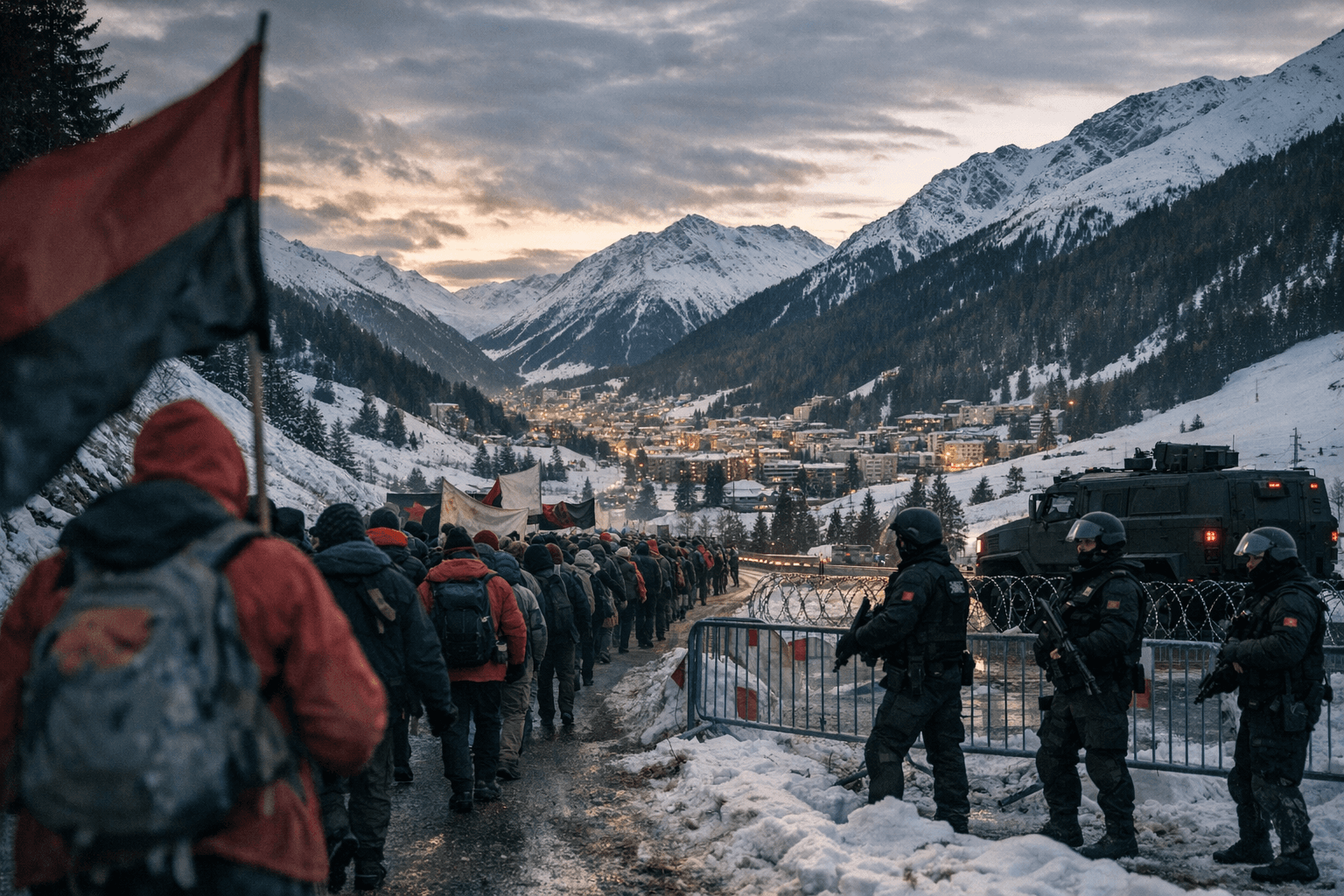
About 600 demonstrators completed a two-day march from Küblis to the mountain resort of Davos, arriving Sunday to join coordinated anti-World Economic Forum actions as Switzerland prepared for the gathering of global leaders. Organisers and multiple outlets described the turnout as larger than last year’s roughly 400 marchers and characterised the event as an international effort aimed at drawing attention to inequality, corporate influence and climate-driven injustice.
Roughly half the marchers were Swiss; the remainder came from England, Spain, Germany and parts of South and West Africa. The crowd included activists, community organisers and civil society groups. Demonstrators carried placards and chanted slogans such as “Democracy rather than WEF dictatorship” and “Democracy rather than oligarchy,” framing the action as opposition to what they described as an entrenched concentration of corporate and political power. Reported demands ranged from calls to end capitalism and wars that activists say accelerate climate change to appeals for an economy that prioritises public needs and a democratisation of global economic governance.
Malian farmer and lawyer Massa Koné, participating in his first visit to Switzerland, told the Keystone-ATS news agency that “the WEF has lost its raison d’être,” arguing that poverty and inequality are rising globally. Organisers, including a collective referred to as Strike-WEF, said the expected presence of US President Donald Trump at the summit intensified the urgency of the protest and helped drive higher visibility and participation than in 2025. Marchers planned to join an authorised demonstration organised by the youth wing of Switzerland’s Social Democratic Party as the forum opened.
Local authorities tightened security in and around Davos in anticipation of the forum, imposing strict access measures and deploying Swiss Army anti-aircraft cannons, according to reporting from the scene. Preparations for the summit also repurposed hotels, shops and churches along Davos’s main promenade as exhibition and pavilion spaces for countries and companies, including prominent displays by Saudi Arabia and India. Coverage said Ukraine would highlight the realities of Russia’s war while the U.S. pavilion planned events on artificial intelligence and space exploration as part of a 250th-anniversary programme. The WEF expected more than 3,000 leaders from over 130 countries to attend the five-day meeting.
The security and logistical changes ahead of the WEF prompted concerns about the immediate impact on Davos’s residents and public services. Converting community spaces into exhibition venues may reduce local access to accommodation and gathering places at a time of heightened police presence, and such disruptions can have outsized effects on vulnerable populations who rely on local social and health services. Public health authorities have long warned that large, securitized events risk complicating emergency response, straining local resources and limiting mobility for those who need routine care; those risks are amplified in remote alpine towns with limited hospital capacity.
The WEF’s public statements dismissed calls to bar high-profile attendees, saying disinviting President Trump was “irrelevant,” while affirming the forum’s role as a neutral platform. As the summit begins, the arrival of the marchers and the authorised youth demonstration will test how Davos balances global diplomacy with community needs, and how activists’ critiques of global governance resonate amid heavy security and constrained local space.
This article was produced by Prism’s automated news system from verified source data, official records, and press releases, then run through automated quality and moderation checks before publishing. The system is built and supervised by the people who set the standards it runs under. Read our full AI policy.
Did this article answer your question?

